
Telegram has become more than a messaging app. For creators, educators, publishers, analysts, community builders, and niche media brands, it is now a serious distribution and revenue channel.
This guide explains what works, what Telegram officially supports, and how to choose the right model based on your audience size, niche, and content style.
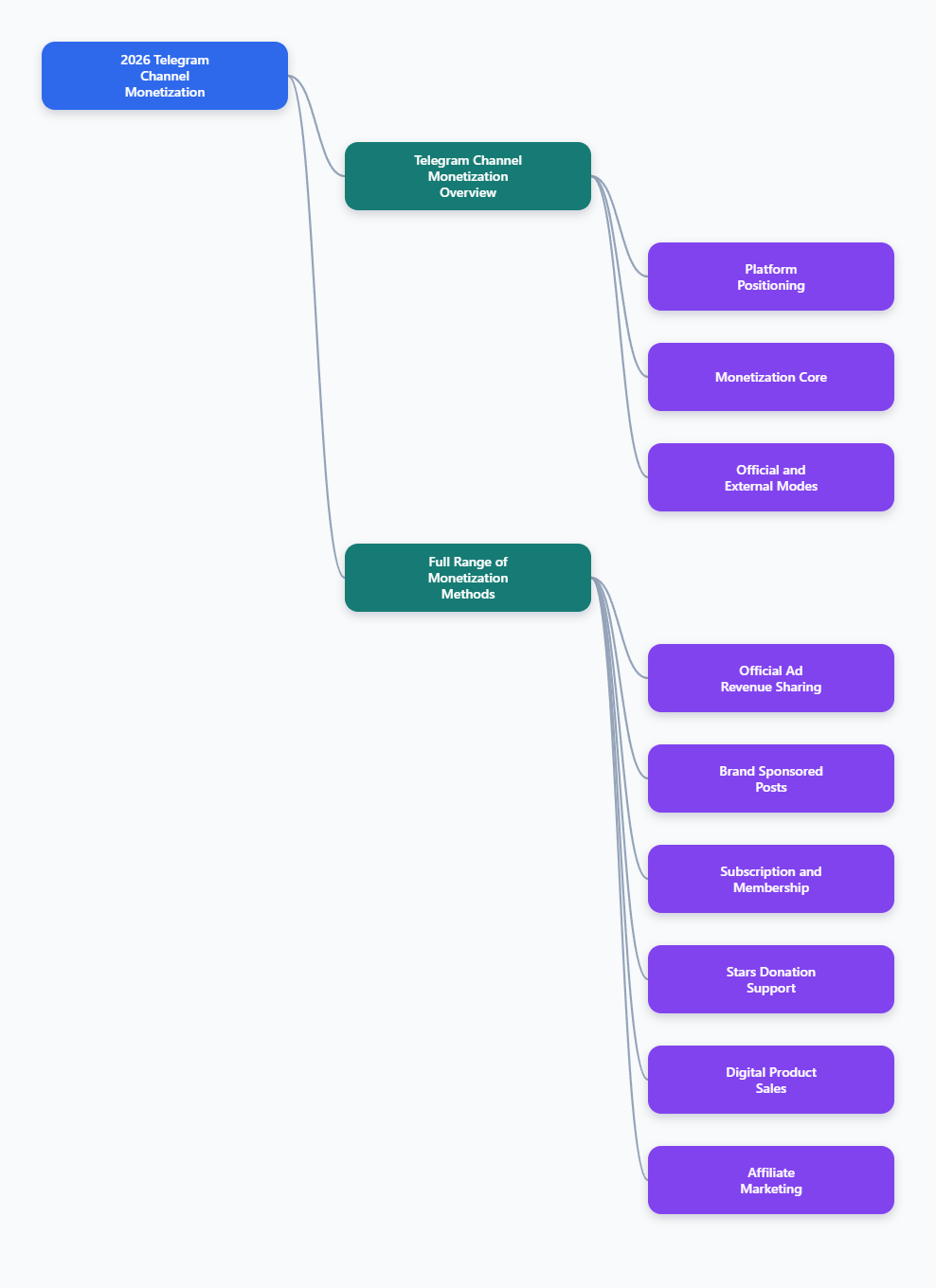
What monetization options does Telegram support?
Telegram now offers several native monetization features, while also allowing channel owners to earn through external business models.
- Official ad revenue sharing for eligible public channels
- Sponsored posts sold directly to advertisers
- Star Reactions and Star Subscriptions for creator support
- Digital sales through bots and Mini Apps using Telegram Stars
- Affiliate programs including Telegram’s affiliate tools for Mini Apps
- Paid communities, memberships, and premium content
That means Telegram can work both as a media channel and as a commerce layer.
Start with the channel type you run
Before choosing a monetization model, identify what kind of Telegram channel you actually have. This matters because not every method fits every audience.
Here is a simple breakdown:
- News or content channels: often monetize with ads, sponsorships, and affiliate links
- Niche expert channels: often do best with subscriptions, consulting, and digital products
- Deal or recommendation channels: naturally fit affiliate marketing
- Community-led channels: can monetize with paid memberships and supporter features
- Tool or utility ecosystems: often expand into bots and Mini Apps
If your audience follows you for updates, insight, or curation, monetization usually works best when the offer matches that expectation.
1. Earn from Telegram’s official ad revenue sharing
Telegram officially introduced monetization for public channels and shares 50% of the revenue from ads displayed in eligible channels. According to Telegram’s own announcement, public channels with at least 1,000 subscribers can qualify for this rewards system.
This is one of the easiest ways to begin because it does not require finding advertisers yourself.
How it works:
- Your channel must be public
- Your channel needs at least 1,000 subscribers
- Revenue comes from ads shown in the channel
- Telegram shares 50% of that revenue with channel owners
Best for:
- Large public broadcast channels
- Channels with consistent post views
- General interest or broad audience content
Limitations:
- Revenue depends on traffic and ad demand
- It is usually not the highest-earning option for niche creators
- Private channels do not benefit from this model in the same way
For many channel owners, ad revenue sharing is a baseline income stream, not the main business model.
2. Sell sponsored posts directly to brands
Sponsored posts remain one of the most common ways to monetize a Telegram channel. In this model, a company pays you to publish a promotional message in your channel.
Pricing is usually influenced by:
- Subscriber count
- Average views per post
- Audience geography
- Niche value
- Engagement quality
A smaller but highly targeted audience can often outperform a larger but passive one. For example, a focused finance, software, crypto, job, or B2B audience may attract more valuable sponsors than a general meme or quote channel.
Best practices for sponsored posts:
- Only accept offers relevant to your audience
- Keep the ad format close to your normal posting style
- Share audience metrics honestly
- Avoid posting too many promotions in a short period
What brands usually want:
- A short promotional post
- A link to a product, app, bot, or website
- Sometimes a fixed posting time and a minimum visibility period
If you already have strong engagement, this method can be more profitable than official ad sharing.
3. Offer paid subscriptions for premium content
Subscriptions are one of the strongest monetization models for expert-led channels. Telegram introduced Star Subscriptions and subscription-related support features for creators, making recurring revenue easier to build.
Paid access works best when you offer something users cannot easily get elsewhere.
Common examples:
- Trading research or market commentary
- Premium tutorials or lessons
- Private communities
- Exclusive job leads
- Member-only analysis, templates, or reports
- Early access content
Why subscriptions work well:
- Revenue is more predictable
- You are less dependent on advertisers
- A small loyal audience can be enough
What to include in a paid channel:
- A clear value promise
- A fixed publishing schedule
- Archived premium content
- Member support or Q&A if relevant
The key is specificity. “Exclusive content” is too vague. “Three detailed AI workflow breakdowns every week” is much more compelling.
4. Accept support through Telegram Stars
Telegram has expanded its creator economy through Stars. Channel owners can receive support through Star Reactions, while Telegram also allows monetization in bots and Mini Apps using Stars for digital goods and services.
Telegram’s published materials state that creators can receive Stars and convert them into rewards, including Toncoin in supported flows, or use them in certain Telegram ecosystem functions such as subsidized ads.
This works best for:
- Creators with loyal audiences
- Channels that publish high-value free content
- Communities where users want to support the creator voluntarily
Important note: support-based monetization is usually a supplement, not a complete business model, unless your audience is especially engaged.
5. Use affiliate marketing the right way
Affiliate marketing is one of the most accessible ways to monetize a Telegram channel, especially if your content already involves recommendations, reviews, deals, comparisons, or curated tools.
With affiliate marketing, you share a tracked link and earn a commission when users complete a purchase or action.
Strong use cases on Telegram:
- Software tool recommendations
- Hosting, SaaS, and creator tools
- Finance and investing products where compliant and appropriate
- E-commerce deals
- Courses, books, and productivity products
- Mini App referral ecosystems
Telegram also has an official affiliate framework for Mini Apps, allowing developers to open affiliate programs that users and creators can promote for commissions.
To make affiliate marketing work:
- Promote products that match your niche
- Explain why the tool or product matters
- Use real examples, not generic hype
- Be transparent that links may be affiliate links
Example: a productivity channel is more likely to convert on note-taking apps, automation software, or writing tools than on random physical products.
6. Sell your own digital products
If you already have a trusted audience, selling your own product is often more profitable than relying only on ads or affiliate commissions.
Telegram is especially well suited for digital goods because delivery can happen directly inside the app through channels, bots, or Mini Apps.
Telegram officially supports digital goods and services via Telegram Stars in bots and Mini Apps. Telegram also supports payments for physical goods and services through its bot payments infrastructure, while digital goods have dedicated Stars-based flows.
Products that fit well on Telegram:
- Ebooks
- Templates
- Research packs
- Premium signal feeds
- Checklists
- Courses
- Private resource libraries
- Downloadable assets
Why this model is strong:
- You control pricing
- You keep the customer relationship
- Margins are often higher than sponsorships
If your channel teaches, curates, or solves a specific problem, a paid digital product is often the natural next step.
7. Sell access to services or consulting
Not every channel should sell content. Some should sell expertise.
If your audience trusts your knowledge, Telegram can help you generate leads for services such as:
- Consulting
- Coaching
- Freelance work
- Audits
- Advisory calls
- Done-for-you implementation
This works especially well for channels in:
- Marketing
- Business operations
- Finance
- Crypto research
- Career coaching
- Education
- Technology
A niche expert with 2,000 highly engaged followers may earn more from a few qualified service clients than from a much larger channel running banner-style promotions.
8. Build a bot or Mini App around your channel
For creators who want to go beyond media monetization, Telegram’s bot and Mini App ecosystem creates additional revenue paths.
Telegram Mini Apps support:
- Payments via third-party payment providers
- Google Pay and Apple Pay through supported flows
- Telegram Stars for digital goods and subscriptions
- Push notifications and in-app engagement loops
Mini Apps can monetize through:
- In-app purchases
- Subscriptions
- Rewarded ads or ad partnerships
- Paid premium features
- Affiliate layers
Examples of channel-to-app expansion:
- A fitness channel launches a habit tracker bot
- A crypto channel launches a portfolio alert Mini App
- A language-learning channel launches quizzes and paid lessons
- A deals channel launches a coupon or price-tracking bot
This route is more technical, but it can create a stronger long-term business than content alone.
9. Use Telegram as the top of your sales funnel
Many successful channel owners do not monetize every post directly. Instead, they use Telegram as the attention layer that drives users into a paid ecosystem.
For example, your channel can lead users toward:
- A paid private group
- A premium newsletter
- A digital storefront
- A course
- A coaching program
- A bot-based product
This is often the most stable model because the channel keeps attracting and warming the audience, while purchases happen in a more structured offer environment.
How to choose the best monetization model
Here is a practical way to decide.
Choose ad revenue sharing if:
- Your channel is public
- You have at least 1,000 subscribers
- You want passive baseline income
Choose sponsored posts if:
- You have strong views and niche relevance
- Brands already fit your audience
- You can maintain trust while running promotions
Choose subscriptions if:
- Your content is specialized
- People follow you for insight, not entertainment alone
- You can publish consistently
Choose affiliate marketing if:
- You already recommend tools or products
- Your niche has strong commercial intent
- You want a low-overhead model
Choose products or services if:
- You have expertise people will pay for
- You want higher margins
- You prefer owning the offer
Choose bots or Mini Apps if:
- You want a scalable product inside Telegram
- You have technical resources
- You want multiple monetization layers
What makes a Telegram channel easier to monetize?
Revenue does not come from subscriber count alone. Monetization usually improves when these factors are strong:
- Clear niche: people know exactly why they follow you
- Consistent posting: the audience stays active
- High view-to-subscriber ratio: sponsors care about actual reach
- Audience trust: poor recommendations destroy monetization fast
- Specific offers: generic promotions convert poorly
In practical terms, a 5,000-member channel with a focused audience and useful content may monetize better than a 50,000-member channel with weak engagement.
Final thoughts
If you want to know how to monetize a Telegram channel in 2026, the answer is simple: use the monetization model that matches your audience’s intent.
Telegram now supports a real creator and publisher economy. Public channels can earn from ad revenue sharing. Experts can build recurring income through subscriptions. Curators can monetize with affiliate links. Brands and niche publishers can sell sponsored placements. Product builders can go further with bots and Mini Apps powered by Telegram Stars and in-app payments.