
Multi account telegram marketing bulk broadcasting is attractive in 2026 because Telegram combines channels, groups, bots, Business features, Mini Apps, and paid promotion in one ecosystem. The problem is that many teams still treat it like a volume game: create accounts, push links, repeat messages, and hope the audience converts. That approach now creates commercial risk, not scale.
Telegram’s public rules are clear on the core issue: users must not use the service to send spam or scam users. Its spam FAQ also xplains that when people report unwanted messages, accounts can lose the ability to contact non-contacts. For overseas sellers, affiliate teams, SaaS communities, and media buyers, the practical solution is not hidden tricks. It is a permission-based broadcast system with clean account roles, documented consent, compliant automation, and careful message design.
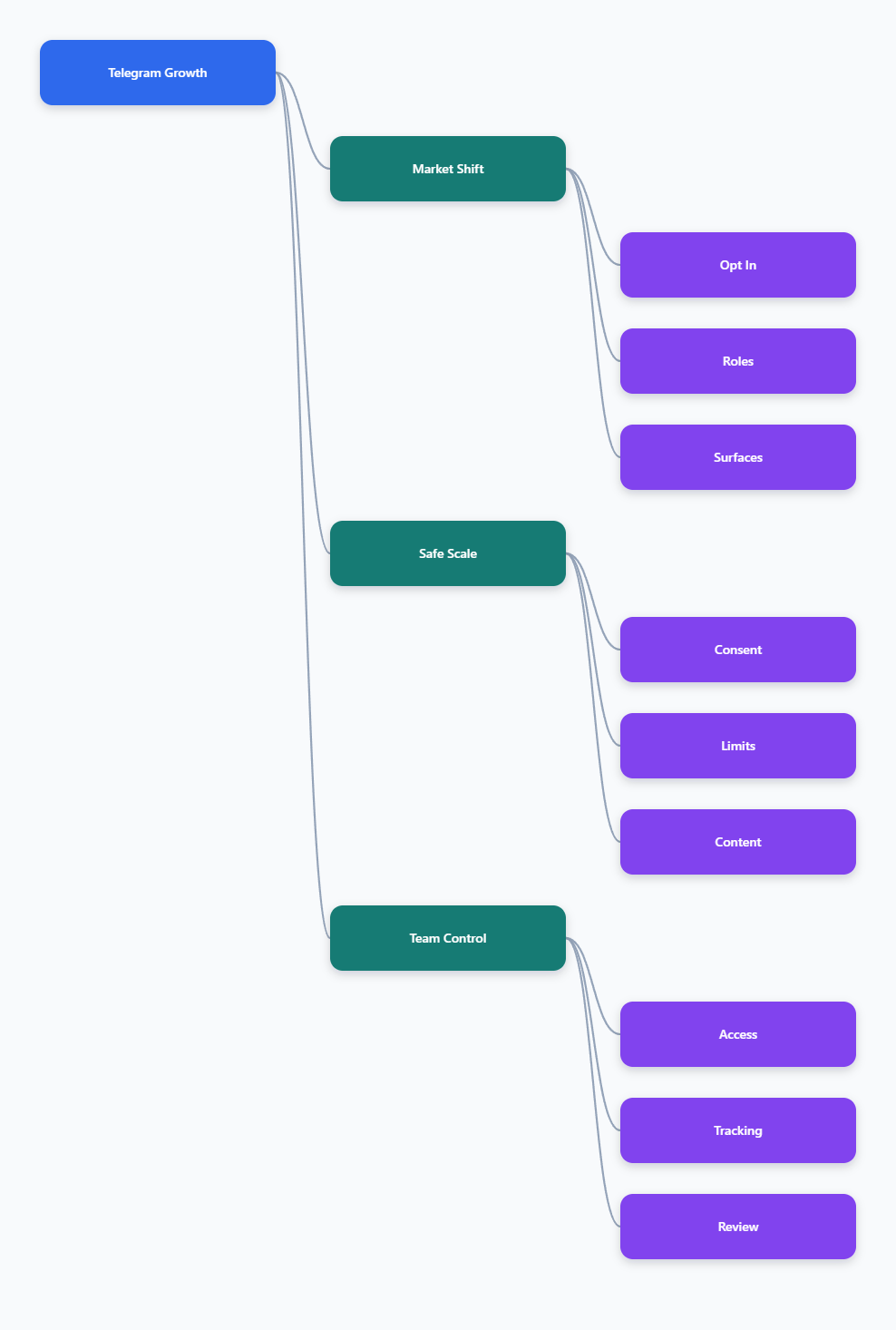
Why Multi Account Telegram Marketing Bulk Broadcasting Changed in 2026
Telegram is no longer just a chat app for informal communities. Businesses now use channels for announcements, groups for community support, bots for workflows, Business accounts for customer conversations, and Mini Apps for transactional journeys. This gives marketers more surface area, but it also makes messy operations easier to detect through user reports, duplicate behavior, and low-quality outreach.
The most important shift is that reliable Telegram growth is increasingly opt-in. A channel subscriber, bot user, customer support lead, paid member, or group participant has a different risk profile from a cold stranger who receives a promotional direct message. Telegram’s own FAQ says reported accounts may be limited to messaging only people who have their number saved as a contact. That matters for any team depending on outbound direct messages.
Multi-account operations still have legitimate uses. A brand may need separate accounts for regional support, creator partnerships, affiliate onboarding, customer success, moderation, and channel administration. The risk begins when those accounts are used to imitate organic users, evade previous restrictions, or blast identical messages to people who did not ask to hear from the business.
- Use channels for one-to-many publishing.
- Use groups for discussion, feedback, and moderation.
- Use bots for consent-based notifications and workflows.
- Use Business features for customer-facing account management.
- Use official ads or channel partnerships when you need paid reach.
A durable Telegram marketing system in 2026 is built around audience permission first, then segmentation, then broadcasting. Account quantity is only useful when each account has a clear business role and a clean operational boundary.
Build a Compliant Account Architecture Before Sending Volume
Before planning any bulk broadcasting, map why each account exists. A common mistake is creating many accounts with the same purpose, same content, same links, and same operators. That does not create resilience; it creates repeated signals and poor accountability.
A better structure separates business functions. One verified brand channel can publish official updates. A linked discussion group can collect community replies. A support account can handle customer questions. A bot can deliver notifications to users who started the bot or completed a clear opt-in step. Regional accounts can manage language and time-zone differences without pretending to be unrelated identities.
For affiliate marketing, the same logic applies. Do not let every affiliate account post every offer to every audience. Assign accounts by niche, funnel stage, geography, or partner type. A crypto education channel, a SaaS trial onboarding bot, and an e-commerce discount community should not share the same message sequence or audience assumptions.
- Define the account owner, business purpose, and permitted message types.
- Document the source of each audience: channel subscriber, bot opt-in, group member, customer, lead form, or partner list.
- Separate admin accounts from publishing accounts where possible.
- Limit link destinations to official domains, public channels, bots, posts, or approved landing pages.
- Keep logs of broadcast time, audience segment, offer, and complaint signals.
This architecture also helps with internal risk control. If one account receives complaints, the team can isolate the campaign cause instead of guessing across the whole operation. In serious operations, account management is less about “anti-ban” folklore and more about auditability.
Choose the Right Telegram Surface for Each Broadcast Goal
Telegram gives marketers several broadcast paths, and each one fits a different commercial job. Channels are best for scalable announcements because Telegram describes channels as a tool for broadcasting public messages to large audiences, with unlimited subscribers and admin-only posting. Groups are better for community interaction and can support very large communities, but they need moderation, rules, permissions, and slower conversational pacing.
Bots are useful for transactional or lifecycle messages, but they come with rate limits and user expectations. Telegram’s Bot FAQ states that bots are not able to broadcast more than about 30 messages per second unless paid broadcasts are enabled, and bots in a group cannot send more than 20 messages per minute. Those limits are not a marketing target; they are technical ceilings that still require consent and relevance.
Telegram Business features also matter in 2026. Telegram’s Business API materials describe features such as opening hours, location, quick replies, automated messages, custom start pages, business chat links, and chatbot support. These are useful for support-led commerce, demo booking, lead qualification, and repeat customer communication.
| Surface | Best Use | Broadcast Risk | Control |
|---|---|---|---|
| Channel | Announcements, launches, content distribution | Low if audience subscribed voluntarily | Editorial calendar and clear topic promise |
| Group | Community, support, partner discussion | Medium due to spam reports and noise | Rules, moderators, slow mode, topic control |
| Bot | Opt-in alerts, onboarding, workflows | Medium if frequency or consent is weak | Start consent, unsubscribe path, rate limiting |
| Business Account | Sales support and customer communication | Medium if used for cold promotion | Quick replies, business links, human review |
| Telegram Ads | Paid reach in public channels | Policy and creative compliance risk | Approved destination, compliant copy, budget caps |
The key decision is simple: match the surface to the relationship. Broadcast to subscribers, notify opt-in users, talk with customers, and advertise to cold audiences through official or clearly sponsored placements.
Design Permission-Based Bulk Broadcasting Workflows
Permission is the operational foundation of Telegram bulk broadcasting. A user who clicks “start” on a bot, joins a product updates channel, registers through a lead form, or enters a private customer group has created a stronger basis for communication than someone scraped from a public group. That does not mean every message is welcome, but it gives the team a legitimate reason to contact them.
Your workflow should capture the source and intent of the opt-in. For example, an independent store can invite buyers to a Telegram channel for shipping updates and private discounts. A SaaS company can use a bot for webinar reminders and onboarding tasks. An affiliate manager can maintain separate channels for compliance updates, offer launches, and payout notices.
Do not mix unrelated promises. If someone joined for software release notes, do not suddenly send casino offers. If a group was created for customer support, do not let affiliates turn it into a link board. Complaint risk rises when the message violates the user’s expectation, even if the account technically can send it.
- State the topic of the channel or bot before users join.
- Use separate lists for product updates, promotions, support, and partner notices.
- Send fewer, better messages with a clear business purpose.
- Include a visible way to leave, mute, unsubscribe, or change preference.
- Review complaint signals after every campaign, not only after restrictions happen.
This is also where multi-account telegram marketing bulk broadcasting becomes more manageable. Instead of pushing one campaign through every account, you can route content to the audience that requested that category. Segmentation protects revenue because it keeps high-value communities from being exhausted by irrelevant offers.
Manage Rate Limits, Timing, and Automation Safely
Telegram publishes some bot-related limits, but it does not publish every anti-spam threshold for user accounts. That means any article claiming universal safe daily limits for direct messages should be treated cautiously. The conservative approach is to follow official Bot API guidance where it applies, avoid unwanted direct outreach, and build throttling around audience experience rather than maximum throughput.
For bots, respect the known ceilings: around 30 messages per second globally for ordinary broadcasts, about 20 messages per minute to the same group, and roughly one message per second to an individual chat in common library guidance. Telegram also supports paid broadcasts for higher bot delivery throughput, but paying for speed does not remove the need for consent, relevance, and compliant content.
For human-operated business accounts, automation should support service quality rather than simulate human behavior. Quick replies, opening hours, start pages, business chat links, and connected bots can reduce response time. They should not be used to mass-message random users or hide the fact that a commercial system is operating.
- Queue broadcasts by segment instead of sending every list at once.
- Throttle bot messages according to Telegram Bot API limits and retry 429 errors responsibly.
- Pause campaigns when blocks, reports, or negative replies rise.
- Use unique campaign links only for measurement, not deceptive redirects.
- Keep manual review for sensitive offers, financial claims, and regulated niches.
High-quality timing is commercial, not just technical. A B2B software update may perform best during work hours in the target region. A creator subscription reminder may fit before a livestream. An affiliate flash offer may need a short window, but that does not justify blasting unrelated audiences.
Content Rules for Telegram Marketing Without Spam Signals
Telegram marketing content should look like a useful message that belongs in the channel where it appears. The fastest way to create reports is to send generic openers, repeated links, exaggerated claims, or unclear sender identity. In affiliate and cross-border commerce, the risk is even higher because users are already cautious about scams and fake communities.
Start with message intent. Is the broadcast announcing a product update, inviting feedback, reminding users about an event, delivering a coupon, or explaining a new partner offer? If the intent is not clear, the audience will interpret the message as noise. Strong Telegram copy is brief, specific, and matched to the relationship.
Avoid link behavior that reduces trust. Use the official brand domain, the public channel, a bot, a Mini App, or a recognizable campaign page. Shorteners, multi-hop redirects, mismatched display text, and tracking-heavy URLs can make legitimate campaigns look suspicious. This is especially damaging when many accounts post the same link at the same time.
- Use one primary call to action per message.
- Put the business value before the link.
- Localize language, time zone, and offer terms for each market.
- Avoid guarantees that cannot be substantiated.
- Do not reuse the same message across unrelated groups.
For multi account telegram marketing bulk broadcasting, build a content matrix. Each account should have approved topics, tone rules, forbidden claims, allowed links, and escalation steps. This makes creative variation legitimate because it reflects different audience needs, not an attempt to disguise spam.
Risk Controls for Teams, Proxies, and Browser Isolation
Many overseas marketing teams use isolated browser profiles, separate workspaces, and access controls to manage multiple social accounts. These tools can be legitimate when they prevent operator mistakes, separate client environments, and protect credentials. They become risky when positioned as a way to bypass platform enforcement or continue behavior that already generated restrictions.
For Telegram operations, the safer framing is governance. Each operator should know which accounts they may access, which markets they serve, and which campaigns are approved. Shared spreadsheets with phone numbers, passwords, and random proxy notes are not a serious system. Use password managers, role permissions, device security, and documented handover procedures.
Network consistency also matters from a security perspective. Sudden access from unusual regions can trigger account protection flows on many platforms, and Telegram users may become suspicious when a business identity behaves inconsistently. However, do not rely on infrastructure tricks to compensate for unsolicited messaging. User reports and content quality remain central risk factors.
- Separate client, brand, and region workspaces.
- Use least-privilege access for admins and contractors.
- Maintain a campaign approval log before broadcasting.
- Review link destinations and claims before launch.
- Remove inactive, blocked, or unsubscribed users from future campaigns.
The best risk control is a boring one: make every account explainable. If a platform review, client audit, or internal manager asks why an account exists and why it sent a message, the answer should be clear, documented, and tied to a legitimate business relationship.
Measure Revenue, Not Just Sends
Bulk broadcasting often tempts teams to measure output: messages sent, accounts active, groups joined, and links posted. Those numbers are easy to inflate and easy to misunderstand. A campaign that sends fewer messages to a cleaner opt-in audience can outperform a noisy campaign that produces complaints, blocks, and low-quality clicks.
Build reporting around the funnel. Track subscriber growth by source, channel post views, bot starts, message clicks, replies, conversions, unsubscribes, complaints, and support tickets. For affiliate teams, track offer approval status, payout quality, refund risk, and partner compliance. For e-commerce teams, track repeat purchases, coupon abuse, fulfillment questions, and post-purchase support load.
Telegram has different analytics surfaces depending on whether you use channels, bots, ads, or third-party systems. Use UTM parameters and clean landing pages where appropriate, but avoid deceptive redirects. A simple dashboard can still answer the commercial questions that matter.
- Which audience source produced the highest conversion rate?
- Which message created the most negative replies or exits?
- Which account role generated qualified conversations?
- Which offer caused support pressure or refund risk?
- Which market deserves a dedicated channel or bot flow?
The final goal is not to send more messages. The goal is to build a Telegram marketing system where account structure, audience consent, content quality, and commercial measurement work together. That is how bulk broadcasting becomes a channel asset instead of an operational liability.
FAQ: Multi Account Telegram Marketing Bulk Broadcasting
Is multi account Telegram marketing allowed in 2026?
Telegram does not publish a blanket rule that businesses can never operate multiple accounts. The risk depends on behavior. Legitimate role-based accounts for support, regions, communities, or partners are different from accounts used for spam, scams, impersonation, or ban evasion.
Can I send bulk messages to Telegram users who never opted in?
This is high risk and not recommended. Telegram’s terms prohibit spam, and its FAQ explains that reported unwanted messages can lead to messaging limits. Use channels, bots, groups, ads, or consent-based lead flows instead.
What are Telegram bot broadcast limits?
Telegram’s Bot FAQ states that bots can broadcast about 30 messages per second, while bots in a group cannot send more than 20 messages per minute. Paid broadcasts can raise bot throughput, but consent and content compliance still matter.
Are Telegram channels or groups better for affiliate marketing?
Channels are better for controlled announcements and offer drops. Groups are better for discussion, objections, feedback, and community trust. Many affiliate teams use both: a channel for official updates and a moderated group for qualified discussion.
Do proxies or browser isolation prevent Telegram bans?
No tool can guarantee protection from restrictions. Isolation tools can help teams manage credentials, clients, and workspaces, but they do not make spam acceptable. User reports, message relevance, and platform rules remain decisive.
How should a new Telegram marketing channel start?
Start with a clear topic promise, useful content, and a consent-based traffic source. Invite users from your website, email list, checkout flow, paid ads, or creator partnerships. Do not begin by scraping members from unrelated groups.
What is the safest way to scale Telegram bulk broadcasting?
Scale by segmenting opt-in audiences, using channels and bots for the right jobs, respecting Bot API limits, monitoring complaints, and documenting each account’s role. Add accounts only when a real business function requires them.
Conclusion
Multi account telegram marketing bulk broadcasting in 2026 works best when it is treated as a governed communication system, not a loophole. First, build accounts around real business roles. Second, broadcast only to audiences with clear consent and expectations. Third, measure revenue quality, complaints, and retention instead of raw sending volume.
Teams that follow this model can use Telegram for cross-border sales, affiliate programs, community growth, support, and paid acquisition without turning every campaign into a restriction risk. The practical advantage is not just fewer account problems. It is a cleaner, more trusted channel that can compound over time.