

When leads arrive through Telegram, knowing who contacted you is only part of the picture. Businesses also need to know where those users came from: a channel post, campaign, community, social media promotion, or another distribution source. Without source information, it becomes difficult to compare campaigns, understand which entry points attract the right audience, or decide where to focus future marketing effort.
To track the source of Telegram leads effectively, businesses need more than a list of new contacts. They need a repeatable workflow that connects each traffic source with a Telegram entry point, records the source when a user starts interacting, and uses the resulting data to improve future campaigns. Tools such as OnlyTG Echo can support this process through Tracking Links, bot automation, and analytics.
Why Does Tracking the Source of Telegram Leads Matter?
Telegram can play several different roles in a business workflow. A company may use a channel to distribute content, a group to build a community, and a bot to handle inbound conversations. At the same time, traffic may arrive from websites, social media, advertisements, newsletters, or partner promotions.
The problem begins when all of those users enter through the same generic path.
Suppose a business receives 500 new Telegram contacts in a month. The total number looks useful, but it does not answer several important questions:
- Which campaign generated the contacts?
- Which social platform sent the most users?
- Which source produced the most relevant conversations?
- Which promotion deserves more attention?
- Which traffic source should be changed or discontinued?
Source tracking adds this missing context.
Instead of viewing Telegram leads as one large group, businesses can organize them according to their acquisition source. That creates a more useful marketing feedback loop:
Traffic Source → Telegram Entry → Lead Interaction → Source Data → Campaign Optimization
The goal is not simply to collect more data. It is to make marketing decisions based on identifiable sources rather than assumptions.
What Happens Without Telegram Lead Source Tracking?
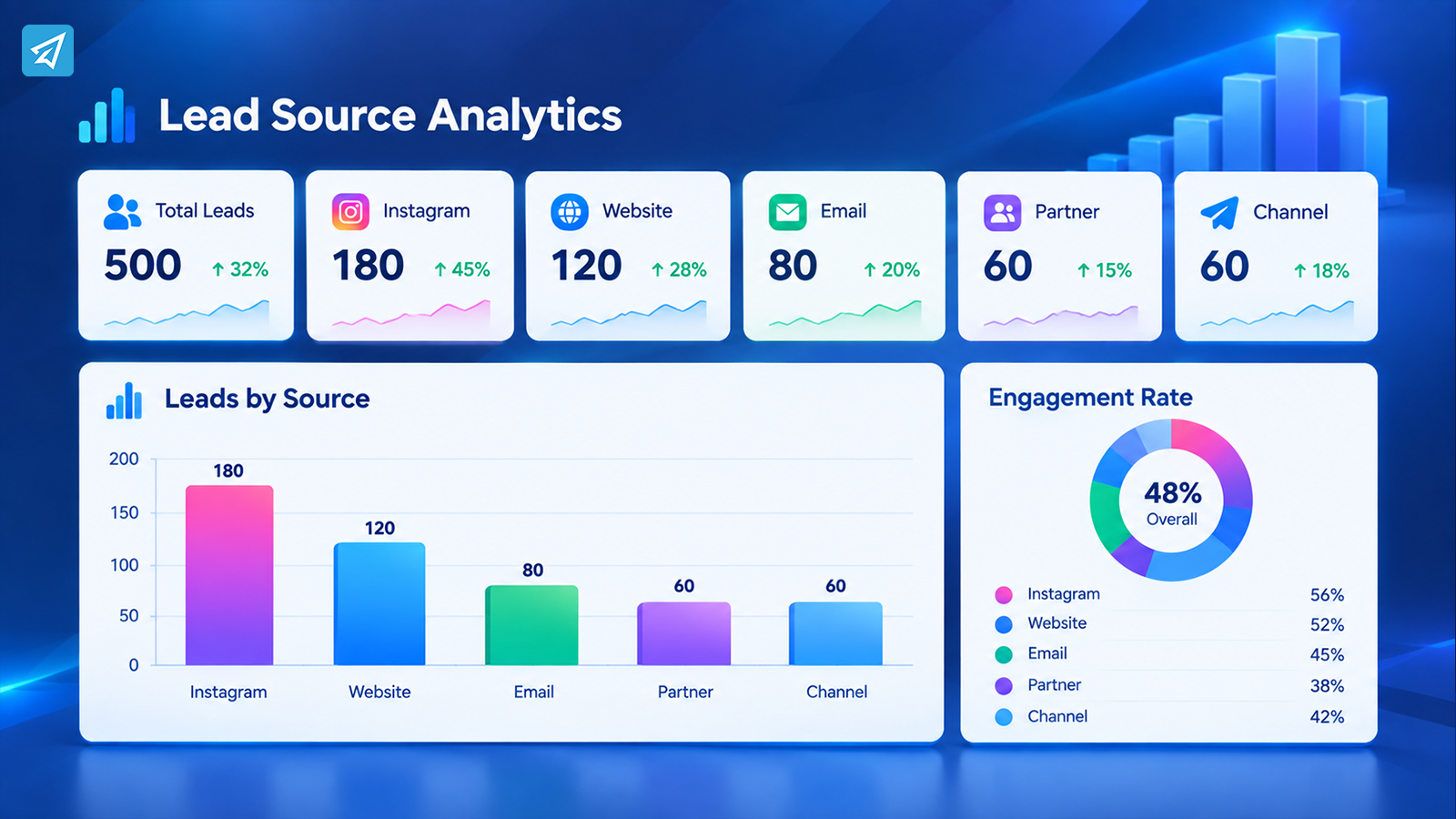
Every Lead Looks the Same
If users enter through one undifferentiated Telegram link, the business may know that people started the bot without knowing why they did so.
A user who discovered the bot through Instagram and another who found it through a partner campaign can appear identical after entering Telegram.
That makes source-level analysis difficult.
Campaign Performance Becomes Hard to Compare
A campaign can generate many clicks but relatively few meaningful interactions. Another can generate fewer visitors but a more relevant audience.
Without source information, those differences can be hidden inside overall Telegram numbers.
Marketing Decisions Become More Dependent on Guesswork
Teams may continue promoting a channel simply because it receives traffic, even when another source is producing more useful interactions.
Source tracking gives teams another layer of evidence for deciding where to spend time and effort.
Manual Attribution Creates Extra Work
When a team has to ask every new contact, “Where did you find us?”, attribution becomes dependent on users remembering and reporting the answer accurately.
That approach can work on a small scale, but it becomes increasingly inconvenient as inbound volume grows.
How Does Telegram Source Tracking Work?
A practical source-tracking system starts by giving different campaigns or distribution channels different Telegram entry links.
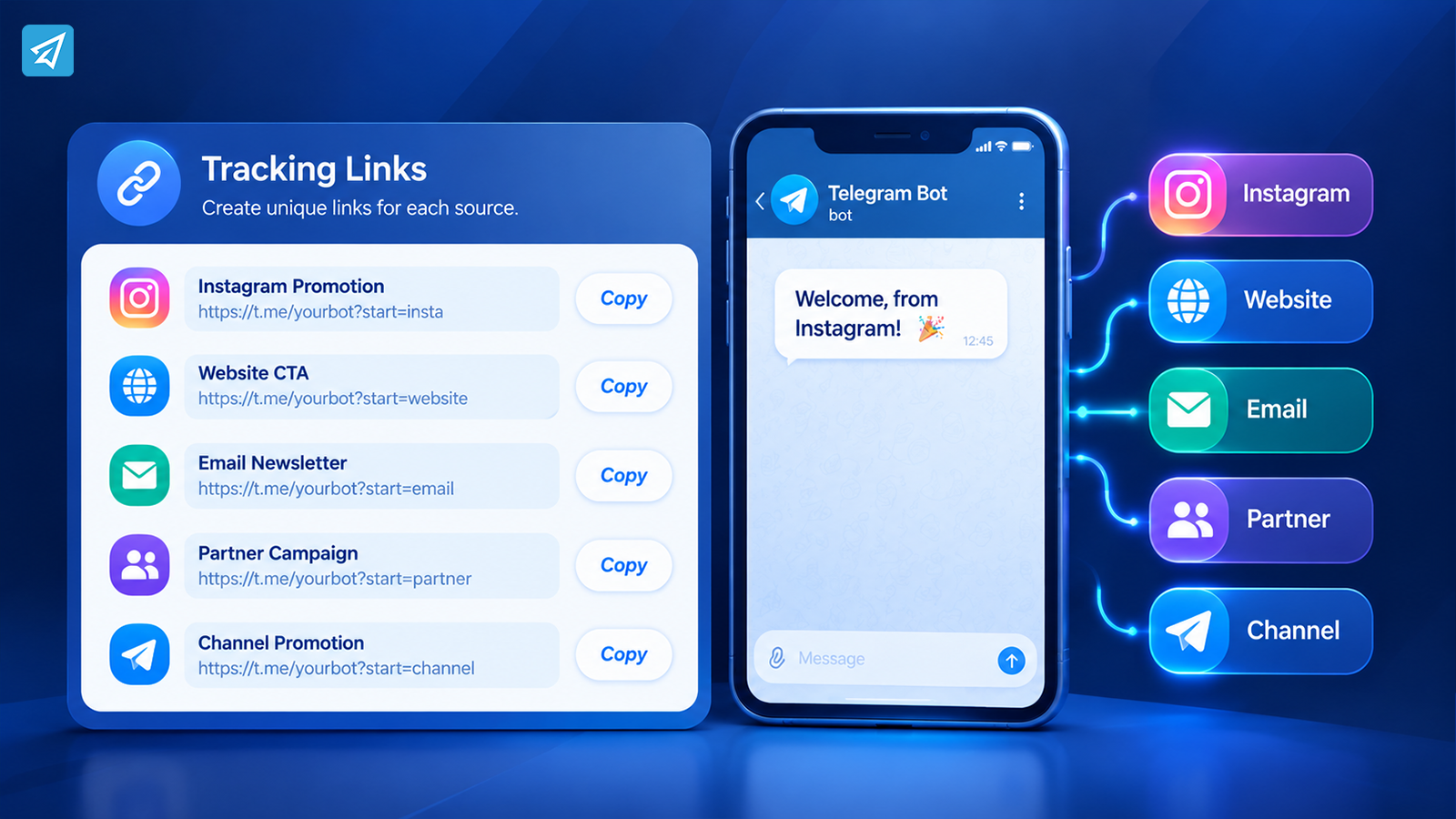
For example, a business might create separate tracking paths for:
- Instagram promotion
- Website CTA
- Email newsletter
- Partner campaign
- Telegram channel promotion
The important principle is simple: different sources should have distinguishable entry points.
When a user starts the Telegram bot through one of those links, the business can associate the interaction with the corresponding source.
This changes the workflow from:
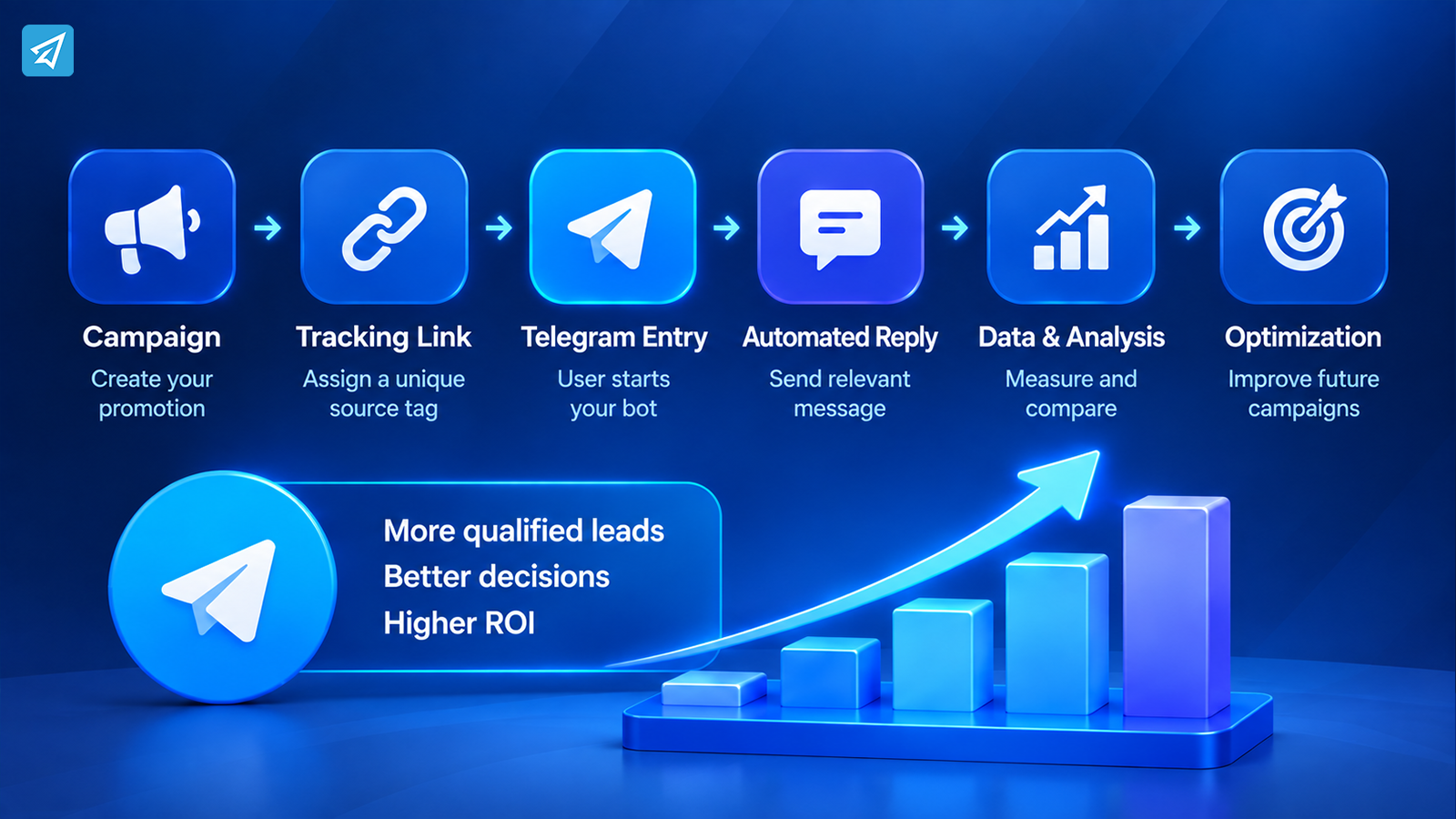
Source → Tracking Link → Telegram Bot → User Interaction → Source Data
The next step is connecting source tracking with the rest of the customer journey.
For example, a business might use a tracked link in an Instagram campaign. A user opens the link, starts the bot, receives a relevant Start Message, and continues interacting with the business.
Now the business has more context than simply “a new Telegram contact.”
It can ask a more useful question:
Which source brought this user into the Telegram workflow?
That distinction is important because attribution and conversion are not necessarily the same thing. A tracking link can identify an acquisition source, while later business systems or processes may be needed to determine whether a lead eventually purchases.
Key Business Use Cases for Telegram Lead Source Tracking
1. Compare Social Media Campaigns
A business promoting the same Telegram bot on Instagram, Facebook, TikTok, or another social platform can use different tracking links for each source.
Instead of combining all traffic into one number, the team can examine which source is bringing users into the Telegram workflow.
This is particularly useful when the same offer is promoted across multiple platforms.
2. Measure Partner or Influencer Traffic
Suppose a company works with several creators or partners to promote a Telegram bot.
Each partner can receive a distinct tracking link.
When users enter through those links, the business has a clearer way to distinguish the resulting sources.
This can make campaign reporting more structured than asking new contacts how they discovered the company.
3. Separate Different Marketing Campaigns
A single business may run several campaigns at the same time.
- Product launch
- Free guide
- Webinar registration
- Seasonal promotion
- Community invitation
Each campaign can have its own tracking path.
The result is a cleaner campaign structure where Telegram becomes one measurable entry point rather than an isolated communication channel.
4. Personalize the First Telegram Interaction
Source information becomes more useful when it connects with the user’s first interaction.
For example, someone entering through a product campaign may need a different introductory message from someone entering through a community promotion.
OnlyTG Echo supports Tracking Links and Dynamic Start Messages, allowing the start experience to vary according to different tracking links in supported configurations.
This creates a workflow such as:
Campaign → Tracking Link → Telegram Start → Relevant Introduction → Next Action
The benefit is not simply personalization. The business can make the first interaction more consistent with the reason the user clicked the original campaign.
5. Understand the Relationship Between Acquisition and Engagement
Source data becomes more valuable when combined with interaction data.
For example, a business might discover that one source generates many bot starts while another produces fewer starts but more meaningful conversations.
That does not automatically tell the business which source is more commercially valuable. However, it gives the team a stronger basis for further investigation.
OnlyTG Echo provides analytics for users interacting with bots, while its Telegram group and channel functions also provide analytics for relevant community activity.
What Are the Main Benefits of Tracking Telegram Lead Sources?
Better Campaign Visibility
Instead of seeing Telegram as one undifferentiated traffic pool, businesses can distinguish between acquisition sources.
More Structured Marketing Analysis
Source-level information makes it easier to organize campaign data and compare different distribution channels.
Better Use of Automation
Once a user enters through a defined tracking path, automation can handle predictable parts of the initial interaction.
A Start Message can introduce the bot, while keyword-based replies can handle recurring questions. OnlyTG Echo supports both Start Messages and keyword-based Auto-reply.
More Efficient Lead Management
Source information gives teams additional context before they begin a conversation.
Instead of treating every inbound contact as an isolated event, businesses can view the contact as part of a broader campaign or acquisition workflow.
A Stronger Optimization Loop
The most useful outcome is the ability to connect marketing activity with what happens after the click:
Campaign → Source → Telegram Entry → Interaction → Analysis → Optimization
That is more actionable than measuring clicks or contact volume alone.
How to Use OnlyTG Echo
A practical implementation can be kept relatively simple.
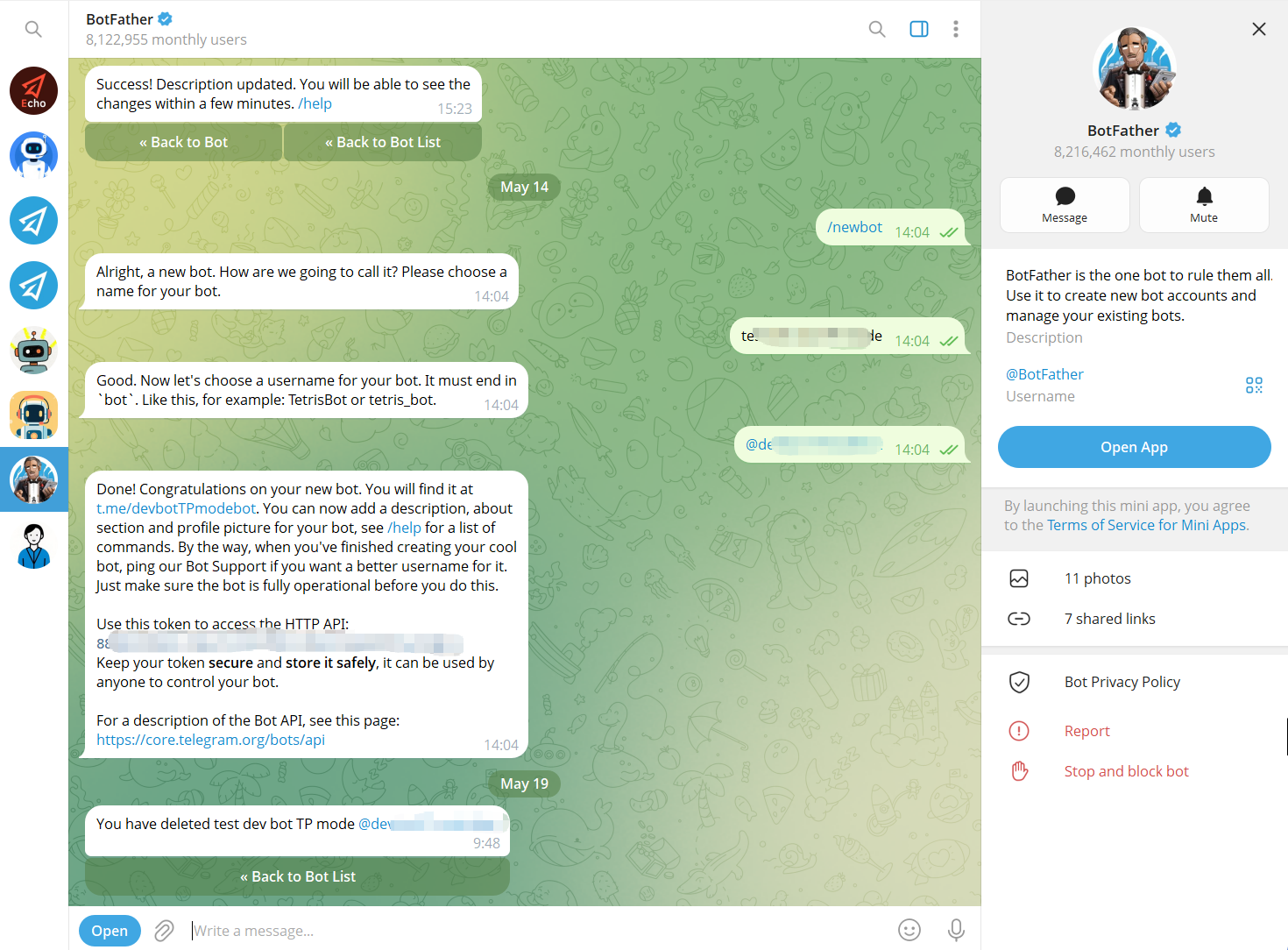
Step 1 — Create a Telegram Bot
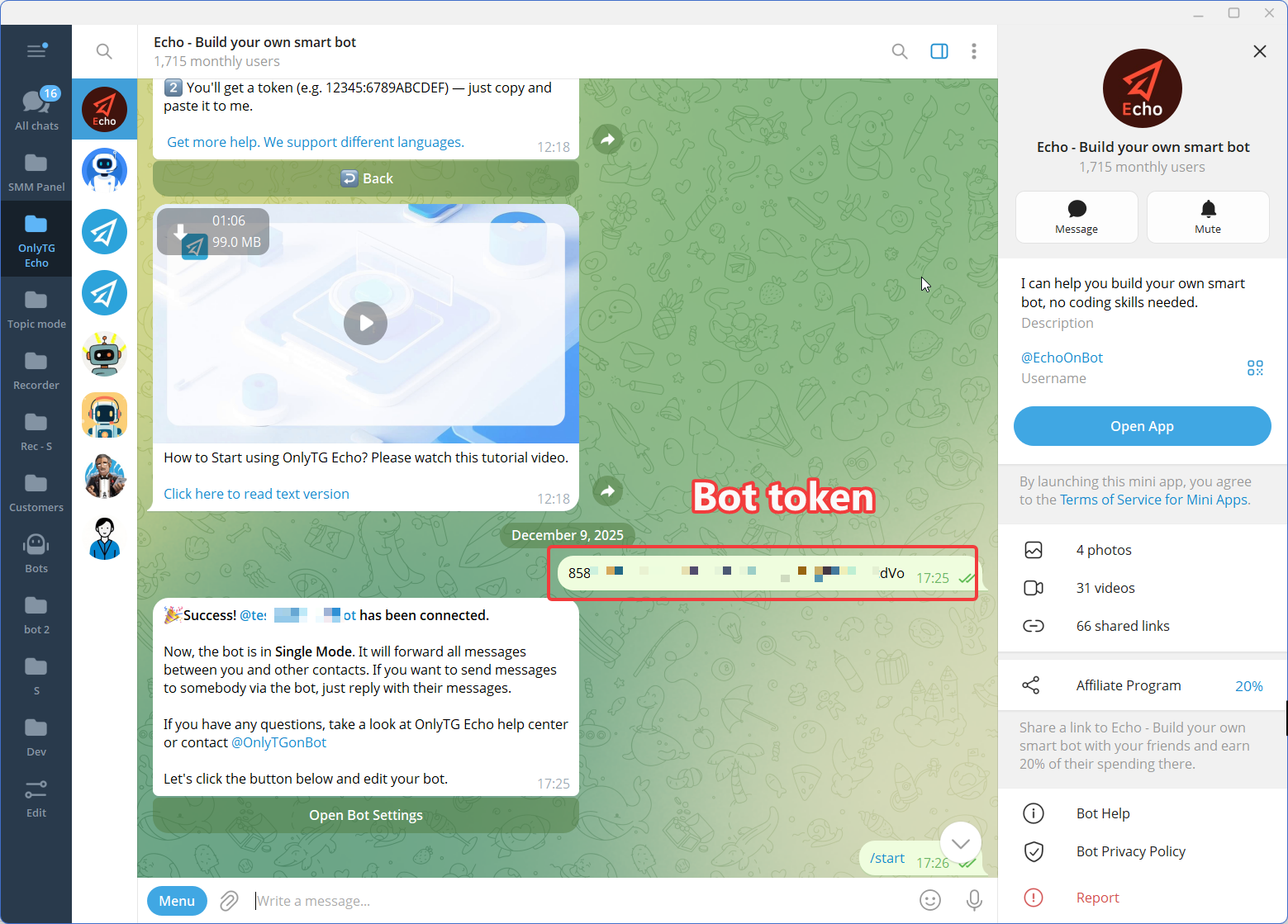
Use Telegram’s BotFather to create a bot and obtain its bot token. The bot becomes the communication interface that users interact with.
Step 2 — Connect the Bot to OnlyTG Echo
Connect the newly created Telegram bot to OnlyTG Echo using the bot token.
The purpose of this step is to give the business a no-code environment for configuring the bot’s communication behavior rather than requiring a custom automation workflow to be developed from scratch.
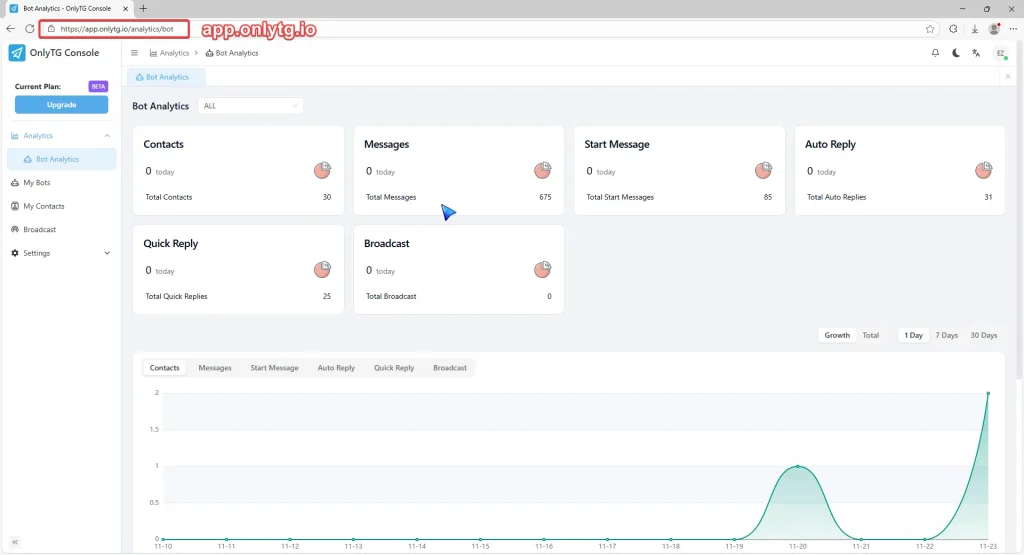
Step 3 — Go to OnlyTG Console
Manual Lead Attribution vs. Telegram Source Tracking
| Factor | Manual Attribution | Source Tracking Workflow |
|---|---|---|
| Source identification | Users or staff provide the source manually | Source is associated with a defined tracking entry point |
| Campaign comparison | Requires manual organization | Sources can be separated for analysis |
| First interaction | Usually the same general process | Can be connected to the campaign or source context |
| Scalability | More effort as lead volume increases | Tracking structure can be reused across campaigns |
| Data review | Often depends on spreadsheets or manual notes | Tracking and analytics provide additional operational data |
| Optimization | Based partly on reported information | Uses source information alongside interaction data |
The automated approach does not eliminate the need for human analysis. It provides better structured information for that analysis.
Businesses still need to decide which metrics matter, how leads should be qualified, and what actions should follow from the data.
Is Telegram Source Tracking Right for Your Business?
Source tracking becomes particularly useful when Telegram is part of a broader acquisition or marketing workflow.
It may be worth implementing when your business:
- Promotes the same Telegram destination across several channels
- Runs multiple campaigns at the same time
- Works with partners or creators
- Uses Telegram for inbound leads
- Wants to understand campaign sources
- Needs more structure around bot interactions
- Regularly reviews marketing performance
A small business with one traffic source and very few inbound users may not need a sophisticated attribution structure immediately.
The key question is not how much data you can collect. It is whether knowing the source helps you make a better operational or marketing decision.
For businesses already managing multiple Telegram entry points, source tracking can become a practical part of the lead workflow.
FAQ
How can I track the source of Telegram leads?
Use separate tracking links or entry points for the campaigns and channels you want to distinguish. When users enter your Telegram bot through those paths, the associated source can be used to organize and analyze the resulting interactions. OnlyTG Echo provides Tracking Links for source tagging in supported plans.
Can Telegram tracking links show where a lead came from?
Yes. Tracking links can be used to distinguish contacts entering through different links and associate them with different source tags. OnlyTG Echo specifically describes its Tracking Links as a way to give contacts different source tags for marketing purposes.
Can OnlyTG Echo help track Telegram lead sources?
Yes. OnlyTG Echo includes Tracking Links and analytics for bot interactions. Businesses can use tracking links to distinguish acquisition sources and analytics to examine activity after users enter the Telegram workflow.
Conclusion: Turn Telegram Traffic Into Measurable Lead Sources
Tracking the source of Telegram leads is ultimately about creating a clearer connection between marketing activity and user interaction.
Without source information, businesses can see that people are entering Telegram but may struggle to understand which campaigns or distribution channels generated those users.
A structured workflow solves this by separating acquisition sources, connecting them to Telegram entry points, automating predictable interactions, and reviewing the resulting activity.
OnlyTG Echo can support this process with Tracking Links, Start Messages, automation, and analytics.
If your business is using Telegram across multiple campaigns or acquisition channels, start by identifying the sources that matter most, create distinct tracking paths, and build your measurement process from there.
Explore OnlyTG Echo and build a more organized Telegram lead-tracking workflow.