
Every year I meet more e-commerce teams that open a Telegram channel, post discounts for two weeks, then wonder why sales stay flat. The problem is rarely Telegram itself. The problem is usually weak positioning, random posting, poor audience capture, and broadcast habits that feel closer to spam than service.
In this guide, I will break down how I approach e-commerce Telegram promotion broadcast planning in 2026. I will cover channel structure, content mix, safe automation, customer reply workflows, useful metrics, and a light way to use bots without turning your brand into a cold-message machine.
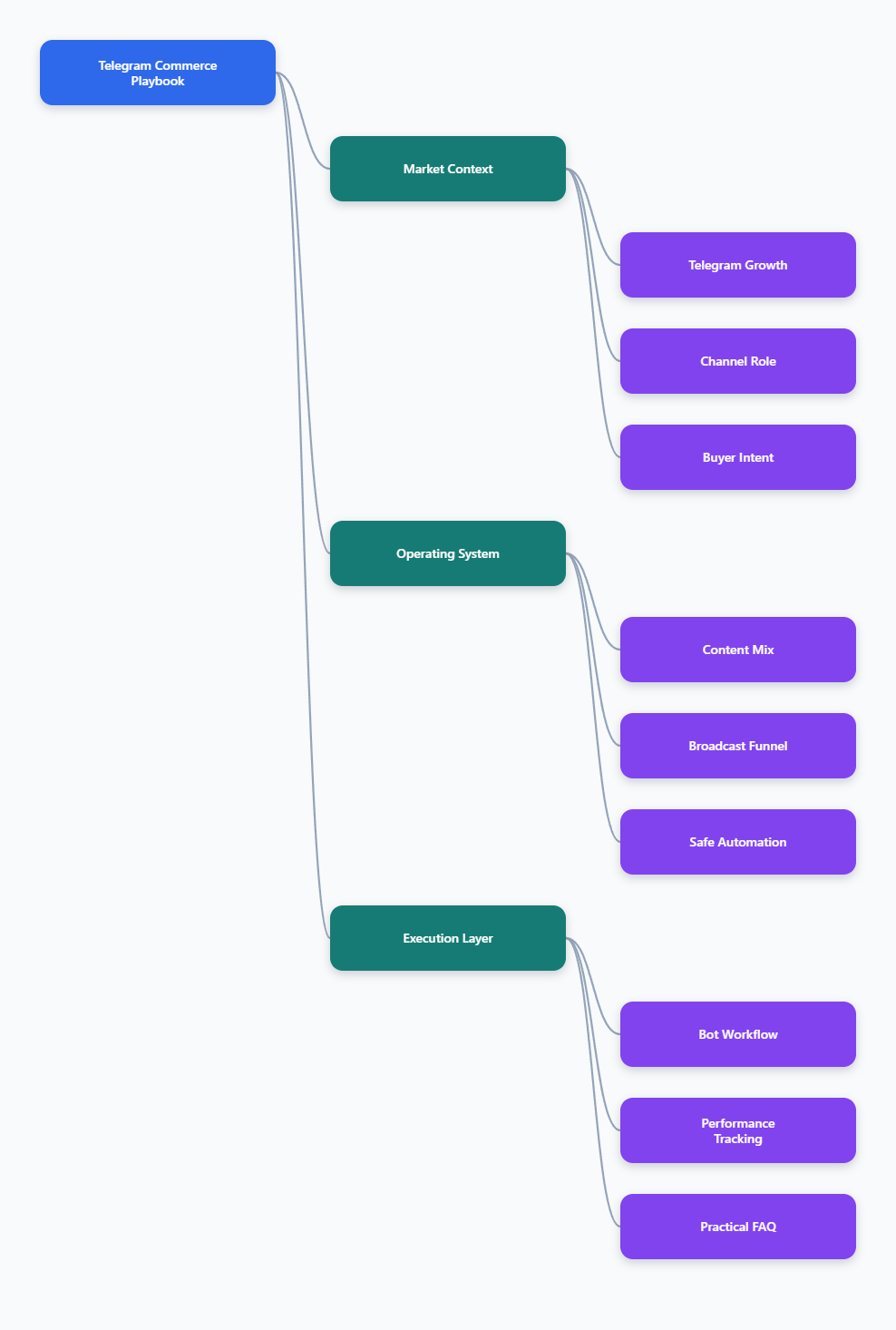
Why E-Commerce Telegram Promotion Broadcast Still Matters in 2026
Telegram has moved from a niche community app into a serious marketing channel. Public reports and platform coverage now place Telegram at around 1 billion monthly active users, with strong usage in India, Eastern Europe, MENA, Southeast Asia, and crypto-native markets.
That scale matters, but scale alone does not create revenue. Telegram works for e-commerce because it combines three things most social feeds struggle to keep together:
- Direct broadcast through channels
- Two-way discussion through groups and replies
- Automation through bots and mini app flows
- Fast delivery for time-sensitive offers
- Persistent message history for new subscribers
Telegram channels can have unlimited subscribers, and only admins can post. That makes them useful for drops, product education, restock alerts, event reminders, and VIP launches. New subscribers can also see earlier posts, so your channel history becomes part of your sales page.
I do not treat Telegram as a replacement for email, paid search, or SEO. I treat it as a high-intent layer. People join because they want updates, deals, community access, or faster support. That intent is the asset.
What Makes Telegram Different from Email, Instagram, and SMS?
The biggest difference is discovery. Telegram does not give most brands a powerful native recommendation feed. You cannot depend on an algorithm to push your channel to the right buyers. Growth usually comes from your existing traffic, partnerships, ads, creators, and clear reasons to join.
That forces better marketing discipline. A Telegram channel needs a reason to exist. “Join for updates” is weak. “Join for early restocks, size alerts, private bundles, and repair tips” is stronger.
Telegram also feels more personal than a feed post. A bad broadcast can annoy subscribers quickly. A useful broadcast can feel like a direct note from a smart store owner.
| Channel | Best Use | Main Strength | Main Risk | 2026 E-Commerce Fit |
|---|---|---|---|---|
| Telegram Channel | Broadcasts, drops, education, alerts | Direct delivery and message history | Low growth without promotion | Strong for owned-audience sales |
| Telegram Group | Community, feedback, support | Two-way conversation | Spam and moderation load | Strong for loyalty and trust |
| Lifecycle campaigns and receipts | Stable identity and segmentation | Inbox competition | Still essential for retention | |
| Discovery and visual proof | Creative reach and social proof | Algorithm dependency | Strong top-of-funnel support | |
| SMS | Urgent reminders | Fast attention | Cost and consent rules | Best for limited, high-value alerts |
The Real Pain Points Behind Weak Telegram Sales
When an e-commerce Telegram promotion broadcast campaign fails, I usually see one of five issues. None of them are glamorous. All of them are fixable.
1. The Channel Has No Clear Promise
A subscriber should know what they get within ten seconds. Your channel name, description, pinned post, and first few messages should explain the benefit clearly.
For example, a skincare store should not only post “new arrivals.” It can promise ingredient notes, routine examples, restock alerts, dermatologist Q&A recaps, and private bundles. That gives buyers a reason to stay after the first discount.
2. The Content Mix Is Too Promotional
Hard-selling every post trains subscribers to mute the channel. I prefer a practical content ratio. Roughly 70% useful content, 20% proof or community content, and 10% direct offers works better for many stores than daily coupon blasts.
Useful content can include:
- Size selection notes
- Comparison posts between products
- Restock explanations
- Care instructions
- Shipping cutoff reminders
- Customer questions answered publicly
That mix keeps the channel alive between sales pushes. It also makes your promotional broadcasts feel earned.
3. The Brand Sends Before Segmenting
Not every buyer wants every update. A sneaker buyer may want size 10 restocks. A skincare buyer may want sensitive-skin routines. A pet owner may care only about cat products.
Telegram does not magically solve segmentation. You still need topic-based opt-ins, clear links, tagged landing pages, or bot flows that help users choose what they want.
4. Customer Replies Fall Through the Cracks
Telegram often creates fast purchase questions. “Is size M available?” “Can you ship to Germany?” “Is this compatible with iPhone 15?” These questions are high intent.
If your team answers three hours later, the buyer may already be gone. In 2026, response speed is not a nice detail. It is part of the conversion path.
5. Automation Looks Like Spam
Telegram has strong anti-spam systems and user-report workflows. Telegram’s own spam FAQ makes the point plainly: people often report strangers who contact them unexpectedly. Accounts can face temporary limits when reported messages are confirmed as spam.
That means e-commerce automation should focus on opted-in, expected, relevant messages. I avoid cold DM blasts. I prefer channel broadcasts, user-triggered bot replies, support flows, and segmented alerts.
How Should You Structure an E-Commerce Telegram Promotion Broadcast Funnel?
A simple Telegram funnel has four parts: acquisition, welcome, broadcast, and reply. Most brands skip the welcome and reply stages. That is where money leaks out.
Step 1: Build a Useful Entry Point
Do not send users to an empty channel. Publish 5 to 10 strong posts first. Add a pinned post that explains the channel, links your store, and tells users what to expect.
A practical pinned post can include:
- What the channel helps buyers do
- What products or categories you cover
- How often you post
- Where to ask purchase questions
- One current offer or best starting point
Step 2: Drive Traffic from Existing Assets
Since Telegram has limited native discovery, your first growth loop should come from places where you already have attention. Add the channel link to your order confirmation page, email footer, Instagram bio, packaging insert, website banner, and post-purchase messages.
I like giving people a specific reason to join. For example:
- “Get restock alerts before the public drop.”
- “Join for weekly fit notes and private bundles.”
- “Get shipping cutoff alerts during sale week.”
Step 3: Plan Broadcasts Around Buyer Intent
Every broadcast should match a buyer moment. A discount without context often underperforms. A timely message tied to intent works better.
Strong broadcast moments include:
- New product drop
- Back-in-stock alert
- Limited size availability
- Holiday shipping deadline
- Price change reminder
- Bundle ending soon
- Post-purchase care guide
For e-commerce Telegram promotion broadcast planning, I map these moments before writing copy. That keeps the channel from becoming a random announcement board.
Step 4: Connect Broadcasts to Fast Replies
A broadcast creates questions. Your team needs a reply path. You can use a linked discussion group, direct messages to the channel if enabled, or a bot-based contact flow.
The goal is simple: do not make buyers hunt for help. Put the reply path near the buying moment.
What Should You Broadcast Without Annoying Subscribers?
I use a simple test before sending any Telegram message: would a busy buyer thank me for this? If the answer is no, I rewrite it or skip it.
Here are broadcast formats that usually perform better than generic sale posts:
- “Three ways to choose the right size” with product links
- “Restock list by size” with clear availability
- “What changed in the new version” for repeat buyers
- “Last shipping day before the holiday” with cutoff times
- “Customer question of the week” with a practical answer
- “Bundle comparison” for good, better, best choices
Short messages often win. Telegram users scan quickly. Put the main value in the first line, then add the link, image, or button.
I also avoid sending too many near-identical messages. Repetition can trigger user fatigue. It also makes your brand feel careless.
Safe Automation Rules for Telegram in 2026
Telegram does not publish every behavioral threshold behind restrictions. Public guidance and industry documentation agree on the core principle: unsolicited, unwanted, or deceptive messaging creates risk.
My working rules are conservative:
- Get clear opt-in before sending direct messages
- Use channels for broad announcements
- Use bots for user-triggered replies
- Segment restock and promo alerts by interest
- Increase sending volume gradually
- Avoid scraping usernames for cold outreach
- Make unsubscribe or exit paths obvious
- Monitor blocks, reports, replies, and muted behavior
For broadcast frequency, I start with one to four strong channel posts per week for most stores. During launch week, I may increase that, but only when every message serves a clear moment.
Where Does OnlyTG Echo@EchoOnBot Fit in This Workflow?
When the pain point is slow replies, scattered buyer questions, or basic bot setup, I look for a lightweight tool before building custom code. OnlyTG Echo@EchoOnBot is one option for creating a Telegram bot workflow without coding.
Based on OnlyTG Echo documentation, the basic setup is straightforward:
- Create a bot through Telegram’s @BotFather with the /newbot command.
- Choose the bot display name and a unique username ending in “bot.”
- Copy the API token from @BotFather.
- Send or bind that token inside OnlyTG Echo@EchoOnBot.
- Use the connected bot to receive messages and reply to contacts.
- Configure Start Message, Auto-reply, Quick Reply, Broadcast, Bot Menu, or tracking links as needed.
I would not use this to blast strangers. I would use it to handle opted-in users, store visitors, and customers who choose to interact with the bot.
Scenario 1: Restock Questions After a Channel Broadcast
A fashion store posts a Telegram channel broadcast about a jacket restock. Buyers ask about size, color, and shipping. With OnlyTG Echo@EchoOnBot, the store can route incoming bot messages into a manageable reply flow and use Quick Reply for repeated answers.
The practical value is speed. A support person can answer “size M ships Friday” without typing the same sentence all afternoon.
Scenario 2: Keyword Replies for Product Fit
A skincare brand can set keyword-based auto-replies for terms like “sensitive,” “routine,” or “shipping.” According to the OnlyTG Echo auto-reply documentation, replies can trigger when a user message contains configured keywords.
This fits high-volume questions. The buyer gets an instant first answer, and the team can still step in when the question needs human judgment.
Scenario 3: Start Message for New Buyers
When users open the bot or send /start, OnlyTG Echo@EchoOnBot can send preset Start Messages with text, media, and buttons. A store can use this to show store links, support hours, best sellers, and a “choose your product type” button path.
Other useful features include multi-form messages with media and buttons, broadcast task creation, tracking links, bot menu setup, contact bans, and recall messages. I would add only the features that match a real workflow.
How I Measure Telegram Broadcast Performance
Follower count is the easiest number to show and the easiest number to misunderstand. I care more about behavior.
For e-commerce Telegram promotion broadcast campaigns, I track:
- Post views by topic
- Link clicks by message
- Replies after each broadcast
- Orders from tagged Telegram links
- Revenue per broadcast
- Unsubscribes or negative replies
- Repeat purchase rate from Telegram users
Use UTM links or store-specific tracking links. Keep the naming simple. A link like utm_source=telegram and utm_campaign=restock_march is enough for many teams.
I also compare Telegram against email and paid social by contribution, not vanity metrics. A smaller Telegram channel can beat a larger Instagram account when subscribers have higher intent.
My 2026 Telegram Content Calendar Framework
I plan Telegram content in weekly blocks. This keeps broadcasts consistent but not robotic.
A balanced week can look like this:
- Monday: buyer education or product comparison
- Tuesday: customer question with a direct answer
- Wednesday: restock, drop, or inventory alert
- Friday: offer, bundle, or limited-time reminder
- Sunday: care guide, review recap, or next-week preview
For smaller teams, two posts per week may be enough. Quality matters more than volume. I would rather send two useful broadcasts than seven forgettable ones.
Practical Tips for Better E-Commerce Telegram Promotion Broadcast Results
- Write the first line like a subject line.
- Use one clear call to action per message.
- Pin a strong welcome post before buying ads.
- Post product images that help people decide.
- Segment alerts by category when possible.
- Answer purchase questions within minutes during launches.
- Keep discount posts tied to real deadlines.
- Use groups only if you can moderate them.
- Track orders with tagged links.
- Review muted, left, and complaint signals after campaigns.
The biggest operational win is simple: build a repeatable workflow. Decide who writes, who approves, who posts, who answers, and who checks results. Telegram rewards speed, but speed without ownership becomes chaos.
FAQ: E-Commerce Telegram Promotion Broadcast in 2026
Is Telegram good for e-commerce promotion in 2026?
Yes, when you use it as an owned-audience channel. It works best for product drops, restock alerts, private offers, customer education, and fast support. It works poorly when brands treat it as a cold spam channel.
How often should an e-commerce store broadcast on Telegram?
Most stores can start with one to four posts per week. During launch or sale periods, you can post more often if every message has a clear purpose and subscribers expect the updates.
What is the best content for a Telegram channel?
The best content helps buyers make decisions. Use product comparisons, sizing notes, care tips, restock alerts, customer questions, shipping reminders, and limited offers. Avoid posting only discounts.
Can I send bulk Telegram messages to strangers?
I would avoid it. Telegram’s spam guidance warns that people report unexpected messages from strangers. Confirmed spam reports can lead to account limits. Build opt-in flows instead.
Do I need a Telegram bot for e-commerce?
You do not always need one. A channel may be enough at the start. A bot becomes useful when you need start messages, keyword replies, quick replies, customer routing, or simple automated support.
How can OnlyTG Echo@EchoOnBot help with Telegram marketing?
OnlyTG Echo@EchoOnBot can help create a no-code Telegram bot workflow for receiving messages, replying to contacts, setting Start Messages, configuring keyword auto-replies, using Quick Reply, and creating broadcast tasks for opted-in audiences.
What metrics should I track for Telegram sales?
Track post views, link clicks, replies, tagged orders, revenue per broadcast, unsubscribe signals, and repeat purchases. Subscriber count alone does not show commercial impact.
Final Thoughts
E-commerce Telegram promotion broadcast strategy in 2026 is less about loud promotion and more about useful timing. The brands that win will send fewer empty messages, answer faster, segment better, and make each broadcast feel expected.
If you already have a Telegram channel, audit your last ten posts. Ask whether each one helped a buyer decide, act, or trust you more. If not, rebuild the content promise first. Then add automation carefully, with tools like OnlyTG Echo@EchoOnBot only where they support a real customer workflow.