
Telegram has become more than a messaging app. For creators, it is now a direct distribution channel, a community hub, and a monetization environment with native features such as channel subscriptions, paid media, Telegram Stars, affiliate tools for mini apps, and ad revenue sharing for eligible channels.
What makes Telegram especially useful for creators is structure. You can run a public channel for reach, a linked group for discussion, a bot for automation, and a mini app for digital products or member experiences. In 2026, that combination gives creators a practical way to own audience relationships without relying on algorithm-heavy feeds.
This guide explains how Telegram creator marketing works today, which features matter most, and how to build a creator setup that is specific, realistic, and based on Telegram’s current capabilities.
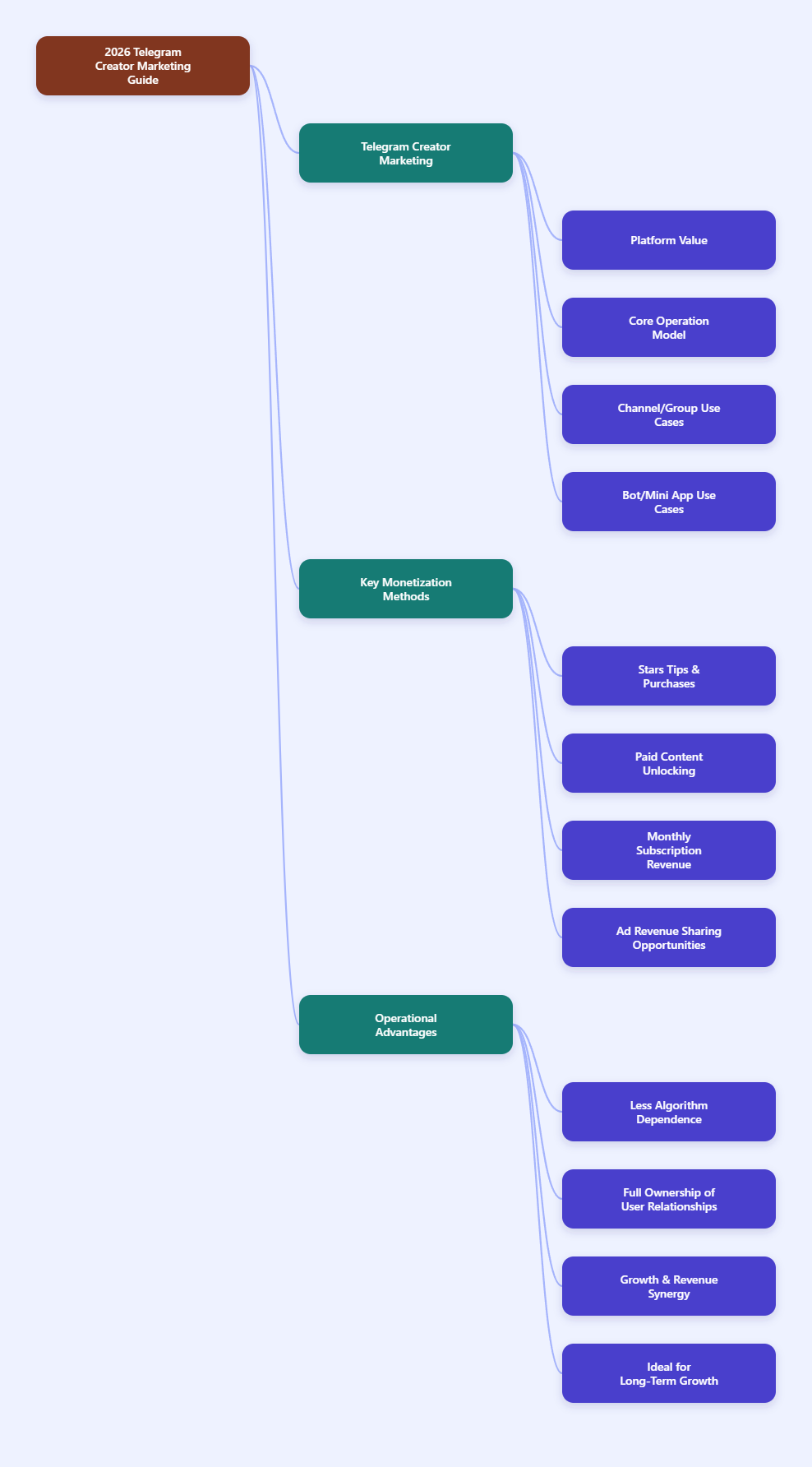
Why Telegram matters for creators in 2026
Telegram’s creator appeal comes from a few concrete advantages.
- Direct delivery: channel posts are delivered into subscribers’ chat lists instead of competing in a social feed.
- Flexible formats: creators can publish text, images, video, audio, files, polls, and links.
- Multiple surfaces: channels, groups, bots, business accounts, and mini apps can work together.
- Native monetization: Telegram supports Stars, paid posts, subscriptions, and ad revenue sharing for eligible public channels.
- Built-in commerce paths: bots and mini apps can sell digital goods and services using Telegram Stars.
Telegram has also publicly stated major scale figures that matter to creators. In 2024, the company said channel posts generate over 1 trillion views monthly. It also said over 400 million users interact with bots and mini apps every month, and later noted that more than 500 million users interact with mini apps monthly. Those numbers help explain why Telegram is no longer a niche side channel for many creator businesses.
The core Telegram creator marketing model
The most effective Telegram setups usually do not rely on a single feature. They combine distribution, conversation, conversion, and retention.
A practical model looks like this:
- Public channel: your main publishing feed
- Linked group: community discussion and feedback
- Bot: onboarding, FAQs, delivery, and automation
- Private channel or paid access: premium content for paying members
- Mini app: advanced product, service, or membership flow if needed
This structure aligns with how Telegram itself positions its product ecosystem. Channels are built for one-to-many publishing. Groups support many-to-many discussion. Bots handle workflows and services. Mini apps create more flexible app-like experiences inside Telegram.
Choose the right foundation: channel, group, bot, or mini app
1. Channels for publishing
A Telegram channel is the default starting point for most creators. It is best for:
- newsletters in chat form
- daily content drops
- market commentary
- education series
- product updates
- broadcast announcements
Channels work well because the creator controls posting, which keeps the content feed clean and focused.
2. Groups for discussion
Groups are better when community interaction is part of the product. They are useful for:
- course communities
- member Q&A
- mastermind groups
- feedback loops
- fan communities
For many creators, a group alone becomes noisy. A hybrid structure often works better: publish in a channel and move discussion into a linked group.
3. Bots for automation
Telegram bots can reduce manual work. Common creator uses include:
- welcoming new members
- answering common questions
- sending links or files
- gating access after payment
- running simple quizzes or lead capture
- supporting business account workflows
Telegram’s bot platform also supports paid subscriptions for bots and can participate in revenue sharing from ads shown in chats with the bot, according to Telegram’s bot features documentation.
4. Mini apps for richer experiences
Mini apps are useful when a creator needs something beyond normal chat interactions. They can support:
- digital product catalogs
- member dashboards
- course navigation
- booking flows
- interactive tools
- games or gamified engagement
Telegram describes mini apps as flexible interfaces launched inside Telegram, with support for authorization, notifications, and payment flows. For creators with technical resources, this can replace a separate lightweight website or member portal in some use cases.
Telegram monetization options creators can actually use
Creator marketing on Telegram becomes much stronger when audience growth and monetization are connected. In 2026, the main monetization paths are these.
Telegram Stars
Telegram Stars are the platform’s virtual item for digital purchases and creator support. Stars can be used in bots and mini apps for digital goods and services, and they also support creator monetization features in channels.
For creators, Stars matter because they enable low-friction payments inside Telegram.
Use cases include:
- tips and support from followers
- unlocking paid posts
- monthly subscriptions
- buying digital content in bots or mini apps
Telegram has official documentation for Stars, dedicated terms, and a payment flow for bots selling digital goods and services using the XTR currency tag.
Paid media in channels
Telegram introduced paid media for channels in 2024. This lets creators publish paid photos or videos that users unlock by paying in Stars.
This format is useful for:
- premium tutorials
- exclusive clips
- templates and visual resources
- behind-the-scenes content
- single-post monetization without requiring a full subscription
It works particularly well when you want casual followers to make small purchases without committing to recurring membership.
Star subscriptions
Telegram added channel subscriptions that allow special invite links requiring monthly payment in Stars. This creates a native recurring revenue option inside Telegram.
Best use cases include:
- private research channels
- paid newsletters in Telegram format
- member-only updates
- premium education communities
For many creators, subscriptions work best when paired with a free public channel that continuously proves value.
Star reactions and donations
Telegram introduced Star reactions so users can directly support channels and creators. This is not a full business model on its own for most creators, but it is useful as:
- a lightweight donation feature
- a signal of which content resonates
- an entry-level monetization option before launching subscriptions
Ad revenue sharing for eligible channels
Telegram launched channel monetization with 50% revenue sharing from ads displayed in eligible public channels. According to Telegram’s official announcement, public channels with at least 1,000 subscribers can qualify.
This can add a passive revenue stream, but creators should be realistic. Ad revenue is usually not the strongest monetization path unless a channel has meaningful scale and consistent view volume.
Affiliate programs for mini apps
Telegram introduced affiliate programs for mini apps in late 2024. Developers can create referral programs that allow channels, creators, and users to promote the mini app and earn commissions on purchases made by referred users.
This matters to creators in two ways:
- you can promote relevant mini apps and earn commissions
- if you run your own mini app, you can recruit affiliates to grow it
It is a strong fit for creators with tool-based, educational, or service-driven offers.
How to build a Telegram creator funnel
Telegram works best when each asset has a clear role.
Top of funnel: public discovery
Your public channel should attract and educate. Keep it open and easy to join.
Content that tends to work well:
- short insights
- timely commentary
- checklists
- carousel-style text breakdowns
- clips and screenshots
- polls and audience questions
At this stage, the goal is not to sell constantly. It is to establish relevance and trust.
Middle of funnel: engagement and qualification
Once people subscribe, move them toward stronger engagement.
You can do this by:
- linking a discussion group
- using a bot to onboard new users
- offering a free resource through a bot or mini app
- running limited paid unlocks with Stars
This stage helps you learn what your audience actually wants before creating a paid offer.
Bottom of funnel: paid conversion
When followers already understand your value, Telegram gives you several direct conversion paths:
- paid media posts for one-off purchases
- private channel subscriptions for recurring revenue
- bot-based digital product sales
- mini app offers for more advanced products or services
The right choice depends on product complexity. Simpler offers usually convert better with paid posts or private channels. More complex offers may need a bot or mini app.
Retention: keep paying members active
Retention is where many creator Telegram setups fail. A private channel is not enough by itself.
To improve retention:
- set a consistent posting rhythm
- give members a clear reason to stay each month
- add a linked group or periodic Q&A
- use a bot for reminders and support
- organize content so new members can catch up fast
Content formats that fit Telegram well
Not every content type performs equally well in Telegram.
Formats that usually fit the platform best include:
- Short text posts: fast to consume and easy to forward
- Bullet summaries: ideal for education, commentary, and updates
- Voice notes: more personal and efficient than long video in some niches
- Native video clips: strong for premium teasers and quick demos
- Files and documents: helpful for templates, reports, and guides
- Polls: simple audience research and engagement
If you already create long-form content elsewhere, Telegram usually works better as the direct-access layer around it, not as a full copy of another platform.
Using Telegram Business and automation as a creator
Telegram Business introduced features such as opening hours, location, quick replies, automated messages, custom start pages, and chatbot support. While these tools are often discussed for brands, they are also useful for solo creators and small teams.
Practical examples:
- quick replies for sponsorship inquiries
- automated greetings for leads or customers
- bot handoff for FAQs
- business profile details for service-based creators
If you sell consulting, coaching, paid communities, or digital services, these features can make Telegram more operationally useful.
How to measure Telegram creator marketing performance
Telegram growth should not be judged only by subscriber count.
Track these indicators instead:
- subscriber growth trend
- post views over time
- view-to-subscriber ratio
- reaction volume, including Star reactions if used
- comment activity in linked groups
- paid media unlocks
- subscription conversions and churn
- bot starts or mini app launches
Telegram’s native analytics can help, but many creators also use external analytics platforms for public channel benchmarking and historical tracking. Independent tools such as TGStat are frequently cited for public channel research, while Combot is often mentioned for group-focused analytics and moderation.
Use metrics to answer practical questions:
- Which posts drive joins?
- Which posts drive payments?
- Does engagement happen in the channel or in the group?
- Are paid members staying long enough for the model to work?
Final thoughts
Telegram creator marketing in 2026 is not just about broadcasting messages. It is about building a direct audience system inside one platform.
For most creators, the winning approach is straightforward:
- use a public channel for reach
- add a group for community when needed
- use bots for automation
- monetize with Stars, paid media, and subscriptions
- expand into mini apps only when your offer justifies it
Telegram now offers real native infrastructure for creator businesses. The best results usually come from keeping the model simple, using the platform’s built-in payment and access tools, and growing from free value into paid experiences step by step.