
If you run Telegram marketing, you already know the headache: one useful announcement can look like spam when it hits the wrong people, too fast, with the wrong wording. In this guide, I will show how I avoid spam Telegram message broadcast mistakes in 2026 without killing reach.
I am not here to sell a magic hack. Telegram is strict for good reasons. Users report annoying messages, bots hit rate limits, and low-quality outreach damages trust fast.
Instead, I will walk through the operating system I use: channel-first publishing, consent-based bot flows, safer scheduling, segmentation, message design, and a light automation setup for teams that need cleaner replies.
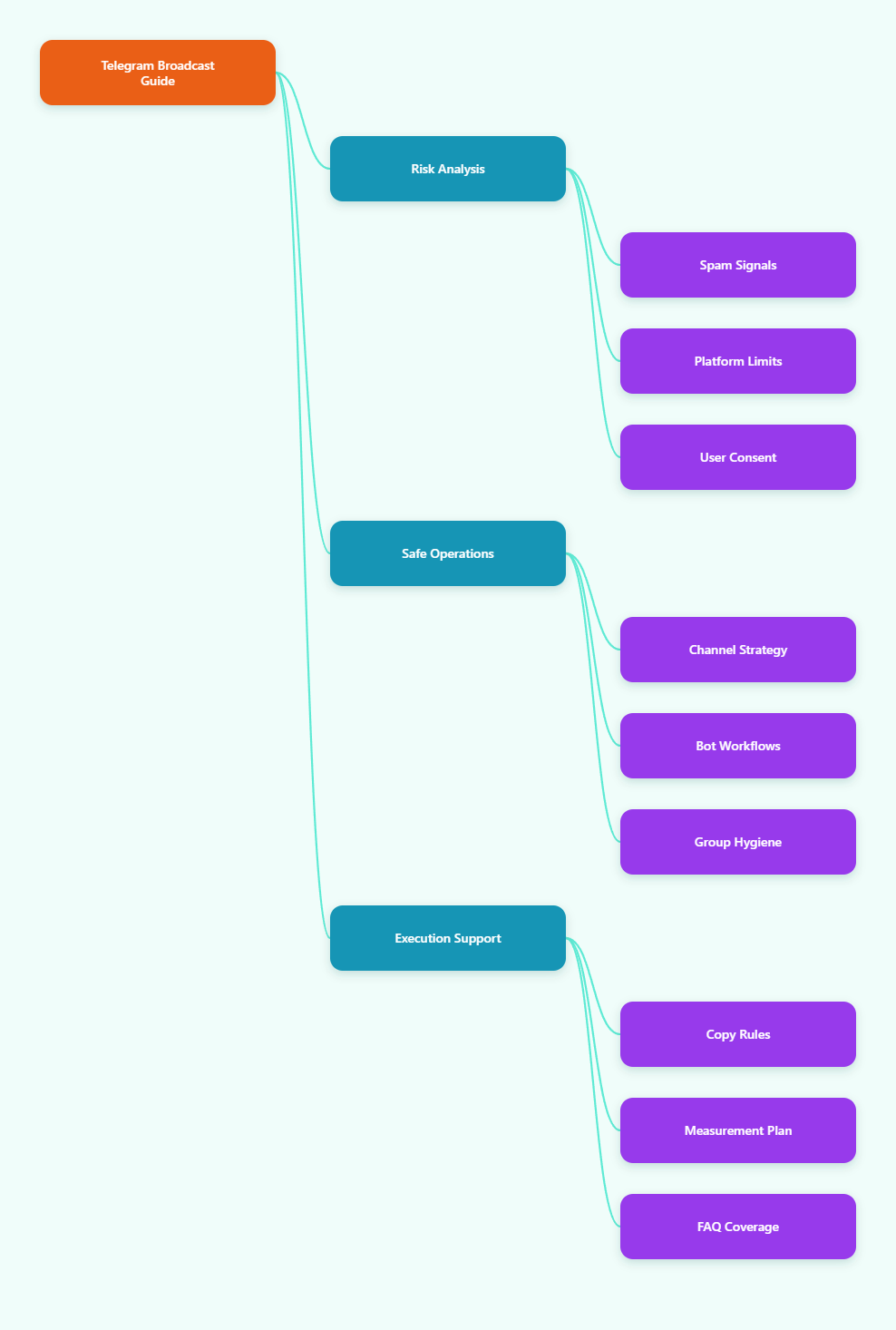
Why Telegram Broadcasts Feel Riskier in 2026
Telegram remains attractive because channels can broadcast to unlimited subscribers. Groups can support up to 200,000 members. Bots can help with replies, menus, and notifications.
That scale also creates a trap. A broadcast feels simple, but the platform treats unsolicited, repeated, or unwanted contact very seriously.
Telegram’s Terms of Service clearly prohibit spam and scams. Its Spam FAQ also warns against contacting strangers who do not expect your message. That rule matters more than any growth trick.
In my audits, most broadcast problems come from three boring causes:
- Cold DMs sent to people who never opted in.
- Repeated templates with little personalization.
- Fast volume spikes from new or inactive accounts.
- Links to unclear offers, redirects, or risky landing pages.
- Groups used as dumping grounds for promotions.
The safer path is not hiding from detection. The safer path is sending messages people actually asked to receive.
What Does It Mean to Avoid Spam Telegram Message Broadcast Behavior?
To avoid spam Telegram message broadcast behavior, start with intent. A message becomes risky when the receiver does not expect it, does not value it, or cannot easily stop it.
I use a simple test before every campaign:
- Did this person subscribe, start the bot, join the group, or request updates?
- Does the message match the reason they joined?
- Can they identify the sender in two seconds?
- Is the call to action clear and honest?
- Would I send this exact message to a customer by email?
If the answer is weak, I do not broadcast. I rewrite, segment, or move the content into a public channel post.
Telegram is not email with blue bubbles. It feels private and immediate. That intimacy raises the bar for relevance.
Channel, Group, or Bot: Which Broadcast Path Is Safer?
I see many teams choose the wrong surface. They use group chats for announcements, bots for cold pushes, or personal accounts for mass outreach.
Each Telegram surface has a different job. Picking the right one lowers spam complaints and improves engagement.
| Telegram Surface | Best Use | Known Limit or Rule | Spam Risk |
|---|---|---|---|
| Channel | One-to-many announcements | Unlimited subscribers, according to Telegram FAQ | Low, if users joined voluntarily |
| Group | Community discussion | Up to 200,000 members, according to Telegram FAQ | Medium, if promotions interrupt chat |
| Bot | Opt-in service flows and replies | Telegram advises avoiding more than one message per second in one chat | Medium to high, if used for cold pushing |
| Personal Account | Human relationship building | Restrictions may follow spam reports | High for mass outreach |
My default stack is simple. Use a channel for broadcast. Use a linked group for discussion. Use a bot for support and user-requested notifications.
Build Consent Before You Broadcast
Consent sounds legalistic, but it is practical. It protects your deliverability, brand, and support team.
I like to capture consent in visible moments. Do not bury it in a vague welcome message.
Good opt-in moments
- A channel subscriber clicks a bot button for price alerts.
- A webinar attendee asks for session reminders.
- A paid member requests renewal notifications.
- A support user chooses product update alerts.
- A community member joins a public group after reading rules.
Each opt-in should define the content type. “Get weekly product updates” is better than “Start.”
I also avoid forced subscriptions. If a user only wants support, I do not push marketing broadcasts into that conversation.
Write Telegram Broadcasts People Do Not Report
Most spam reports start with a feeling: “Why am I getting this?” Your copy must answer that before selling anything.
I use this five-part format for safer broadcast writing:
- Context: remind users why they receive the message.
- Value: state the benefit in plain words.
- Specifics: include dates, rules, prices, or steps.
- Choice: give a soft next action.
- Exit: explain how to mute or manage updates when possible.
Here is a weak version:
“Big promo today. Click now. Limited seats. Join fast.”
Here is a better version:
“You asked for launch alerts from our AI tools channel. The April workshop opens today. I added the agenda, replay rules, and seat count here. Join if the topic fits your workflow.”
The second message feels expected. It also gives users enough detail to decide.
How Fast Should You Send Telegram Broadcasts?
Telegram does not publish every dynamic limit for every situation. Still, its Bot FAQ gives useful guidance.
For bots, Telegram says to avoid sending more than one message per second in a single chat. It also says bots cannot send more than 20 messages per minute in a group.
Many developers also reference an approximate global ceiling near 30 messages per second for bot messaging. I treat that as a ceiling, not a target.
My safer operating rules are stricter:
- Schedule channel posts instead of blasting DMs.
- Send bot notices only to users who requested them.
- Throttle campaigns with pauses between batches.
- Avoid sending the same message repeatedly to one group.
- Do not test high volume on a brand-new bot.
If I receive 429 or flood-wait errors during testing, I slow down immediately. I never try to “push through.”
Segmentation Is the Real Anti-Spam Strategy
Segmentation beats clever wording. A basic message to the right list outperforms a polished message to strangers.
I segment Telegram audiences by behavior, not vanity labels.
Segments I actually use
- New subscribers: joined in the last seven days.
- Active readers: react, comment, or click often.
- Support users: contacted the bot for help.
- Buyers: completed a purchase or subscription.
- Dormant users: no clear interaction for months.
Dormant users need extra care. I usually send a re-permission message before any promotional update.
For example, I might write: “You have not heard from us for a while. Reply with updates if you still want launch notices.”
That one step reduces annoyed replies. It also cleans the audience naturally.
Operational Checklist to Avoid Spam Telegram Message Broadcast Problems
Before I send anything important, I run a checklist. It takes ten minutes and catches most mistakes.
- Confirm the audience opted into this content type.
- Remove users who asked for support-only contact.
- Check every link on mobile.
- Remove URL shorteners if trust matters.
- Use one clear call to action.
- Preview media, buttons, and formatting.
- Schedule outside sleeping hours for the main audience.
- Monitor replies for the first hour.
- Pause if complaints or negative replies rise.
I also keep a plain-text version ready. Rich media can fail, crop badly, or hide the main message.
A Practical Automation Workflow for Cleaner Replies
Once a channel grows, broadcasts create replies. People ask for pricing, access, refunds, rules, and links. If your team replies slowly, users may repeat messages or leave.
This is where I sometimes use a bot layer. Not for cold spam. For cleaner handling after users start a conversation.
One no-code option is OnlyTG Echo@EchoOnBot. Based on its official docs, the basic setup is simple: create a bot with BotFather, copy the token, send it to OnlyTG Echo@EchoOnBot, then configure the bot workflow.
For the pain points above, I would use it like this:
- Create a Telegram bot with BotFather using the /newbot command.
- Bind the bot token inside OnlyTG Echo@EchoOnBot.
- Set a start message that explains what the bot can help with.
- Add keyword auto-replies for pricing, rules, refund, and support.
- Use quick replies for repeated human support answers.
- Send broadcasts only to appropriate bot contacts or managed spaces.
Realistic use cases
- Paid research channel: a subscriber taps the bot for renewal rules. The start message explains billing, support hours, and content access before any promotion appears.
- SaaS launch list: users type “pricing” after a channel post. A keyword reply returns the current pricing page and trial notes, while the team handles edge cases manually.
- Course community: members ask for replay links after live sessions. Quick replies help admins answer consistently without pasting the same text all night.
OnlyTG Echo@EchoOnBot also lists functions such as multi-form messages with text, media, and buttons, message relaying, topic mode, channel management, group management, and bot information editing. I would treat these as support features, not permission to over-message users.
Group Safety: Stop Your Community From Becoming a Spam Magnet
Broadcast strategy also depends on group hygiene. A spam-filled group makes every official message look less trustworthy.
Telegram supports native anti-spam for eligible supergroups through its official anti-spam system. Admins should also use permissions and clear rules.
My baseline group setup looks like this:
- Pin a rule post with allowed topics.
- List official admins and support accounts.
- Disable unnecessary link posting for new members.
- Use slow mode during heated launches.
- Remove fake support accounts quickly.
- Tell members that admins never DM first.
That last line matters. Telegram scams often imitate admins. A clear warning protects users and reduces support chaos.
Measure Broadcast Quality Without Chasing Vanity Metrics
View counts look nice, but they do not prove trust. I care more about reply quality and complaint signals.
For Telegram broadcasts, I track:
- Views during the first 24 hours.
- Reaction rate on channel posts.
- Comment quality in linked discussions.
- Bot reply intent after the message.
- Unsubscribes, mutes, or negative replies.
- Support tickets caused by unclear wording.
If a message drives many confused replies, the broadcast failed. Even if views looked strong.
My rule is simple. A good broadcast reduces uncertainty. A bad broadcast creates more work than revenue.
Common Mistakes I Still See in 2026
Some mistakes refuse to die. They appear in crypto groups, creator channels, SaaS communities, and paid signal rooms.
- Adding strangers to groups without permission.
- Using personal accounts for bulk cold outreach.
- Sending identical DMs from several accounts.
- Posting promotional links in unrelated groups.
- Launching a bot broadcast before testing commands.
- Ignoring support replies after a campaign.
- Hiding the sender identity behind vague branding.
These tactics may create short bursts. They also create reports, restrictions, and brand damage.
Quick Summary: My 2026 Broadcast Rules
- Use channels for broad announcements.
- Use groups for community conversation.
- Use bots for opt-in service flows.
- Never cold-message strangers at scale.
- Throttle bot messages below risky limits.
- Segment by behavior and user intent.
- Write context before the call to action.
- Monitor replies after every broadcast.
- Pause campaigns when users seem confused.
FAQ: Avoid Spam Telegram Message Broadcast Questions
1. What is the safest way to avoid spam Telegram message broadcast issues?
Use a Telegram channel for public announcements and send bot messages only to users who started or requested that flow. Avoid cold DMs, repeated templates, and irrelevant group posts.
2. Can I broadcast to unlimited Telegram channel subscribers?
Telegram channels can have unlimited subscribers, according to Telegram’s channel FAQ. That does not mean every post is safe. Your content still needs relevance, trust, and clear sender identity.
3. Are Telegram bot broadcasts allowed?
Bot broadcasts can work when users opted in or started the bot. Telegram’s Bot FAQ warns about sending too fast, especially within one chat or group.
4. How many messages per second can a Telegram bot send?
Telegram advises avoiding more than one message per second in a single chat. It also states that bots cannot send more than 20 messages per minute in a group. Global limits can be dynamic.
5. Why do Telegram accounts get limited after outreach?
Telegram may restrict accounts after users report unwanted messages. Its Spam FAQ says people usually dislike messages from strangers, especially unsolicited promotions or group additions.
6. Should I use a group or channel for marketing broadcasts?
Use a channel when people mainly need updates. Use a group when people need discussion. Many communities use both: a channel for posts and a linked group for comments.
7. How often should I broadcast on Telegram?
There is no universal schedule. I prefer consistency over volume. Send when you have clear value, and watch reactions, comments, mutes, and support replies after each post.
Final Thoughts
To avoid spam Telegram message broadcast problems in 2026, think less like a growth hacker and more like a trusted publisher. Permission, timing, segmentation, and clarity do most of the work.
If your team struggles with repeated replies after legitimate opt-ins, a lightweight bot workflow can help. Tools like OnlyTG Echo@EchoOnBot fit best when they support consent-based conversations, not when they replace good judgment.