
Telegram advertising has become a serious option for brands, publishers, app developers, and community-led businesses that want access to highly engaged audiences. In 2026, Telegram offers more than one path to paid promotion. There is the official Telegram Ads platform for Sponsored Messages in public channels, and there are also third-party placements across Telegram channels, bots, and Mini Apps.
This guide explains what Telegram advertising is, how the official platform works, what it costs, what formats are available, what rules matter most, and how to choose the right approach for your goals.
What is Telegram advertising?
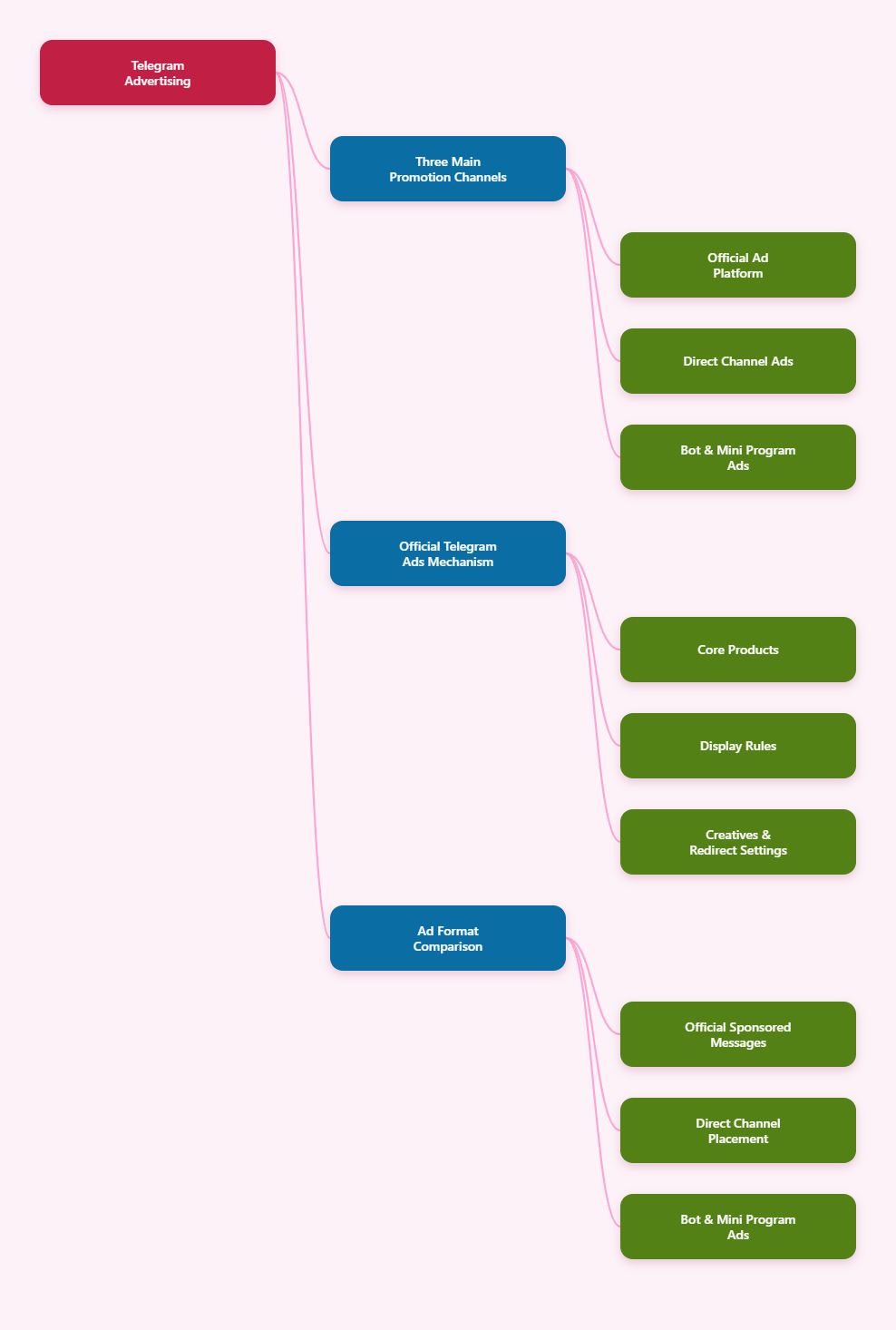
Telegram advertising refers to paid promotion delivered inside Telegram’s ecosystem. In practice, this usually includes three main approaches:
- Official Telegram Ads: Sponsored Messages shown in eligible public one-to-many channels.
- Direct channel placements: paid posts purchased directly from channel owners or through marketplaces and agencies.
- Ads in bots and Mini Apps: placements offered by third-party networks serving Telegram-based apps and bot environments.
The official Telegram Ads platform is the most structured option. According to Telegram’s own materials, it allows advertisers to create ads, choose placements, manage budgets, and track statistics. These ads appear in public channels with at least 1,000 subscribers.
Telegram also states that its advertising business operates at massive scale. On the official Telegram Ads site, the platform says that its 1 billion monthly users generate 1 trillion views in public broadcast channels every month. That scale is one reason Telegram advertising is drawing more attention in 2026.
How official Telegram Ads work in 2026
The official system is built around Sponsored Messages. These are short ads placed inside public channels. Telegram’s public documentation describes them as simple text-based messages with a strict length limit and Telegram-native destinations.
Key facts consistently supported by official and industry references include:
- Ads appear in public channels, not in private chats.
- Eligible channels generally need 1,000+ subscribers.
- The ad format is a Sponsored Message.
- Creative text is limited to up to 160 characters.
- The ad must link to a Telegram destination, such as a bot, a public channel, or a public post.
- Buying is based on CPM, which means cost per 1,000 impressions.
Telegram’s API and platform documentation also indicate that sponsored messages are displayed below posts in the feed experience. In other words, this is not a typical social feed ad unit with large visuals and multiple interactive cards. It is a compact format designed to fit Telegram’s interface.
Telegram advertising formats to know
When people talk about Telegram advertising, they often mix together very different media types. It helps to separate them clearly.
1. Sponsored Messages on the official Telegram Ads platform
This is Telegram’s native ad product. It is the most standardized option and the most closely controlled by Telegram’s moderation and policy system.
Best for:
- Promoting a Telegram channel
- Driving traffic to a Telegram bot
- Increasing visibility for a public post
- Reaching users in topic-specific public channels
Main constraints:
- Very short copy
- No traditional landing-page-first flow in the basic native format described by Telegram references
- Strict policy review
2. Direct placements in Telegram channels
This model is older than the official ad system and is still widely used. Instead of buying impressions through Telegram’s ad auction, advertisers pay channel owners to publish promotional posts.
Best for:
- Native-looking promotions
- Longer-form ad copy
- Niche community targeting
- Influencer-style or editorial-style placements
Main risks:
- Quality varies by channel
- Reporting may be inconsistent
- Fraud screening and audience validation require extra care
3. Bot and Mini App advertising
Third-party networks now offer inventory inside Telegram Mini Apps and bot environments. Several 2026 industry references note that these placements are separate from the official Sponsored Messages ecosystem and may support more flexible creative and campaign options.
Best for:
- Performance campaigns
- App or game promotion
- Broader creative testing
- Advertisers who need lower entry barriers than official agency-led buying
Main trade-off:
- This is not the same as buying official Telegram Sponsored Messages, so inventory, rules, and targeting differ by network.
How much does Telegram advertising cost in 2026?
Cost is one of the most confusing parts of Telegram advertising because pricing depends heavily on which route you use.
Official Telegram Ads pricing
Telegram’s own terms define the model as CPM-based. Multiple references from 2025 and 2026 indicate that the system has used TON-denominated bidding for some account types, with a commonly cited minimum CPM of 0.1 TON per 1,000 impressions. Industry sources also mention euro-based account structures and reseller or agency access models.
At the same time, there is variation across sources on account setup and minimums. Reliable references suggest the following conservative picture:
- The official platform uses CPM pricing.
- A commonly cited minimum CPM bid is 0.1 TON in TON-based flows.
- Some guides report euro-based cabinets and CPMs starting from low euro levels, depending on account type and market.
- Entry barriers may still be significant for some advertisers when buying through agencies or resellers, with published examples often in the €3,000 to €5,000 range.
- Some references indicate standard cabinet minimums can differ by region and access route.
Because public third-party articles do not fully align on every pricing detail, the safest conclusion is this: Telegram advertising in the official ecosystem remains CPM-based, and actual setup cost depends on account type, geography, and whether you buy directly or through an authorized intermediary.
Direct channel placement costs
There is no fixed platform price here. Channel owners usually set rates based on audience size, niche, geography, engagement, and posting format.
Pricing is often influenced by:
- Subscriber count
- Topic quality and niche demand
- Audience geography
- Average views per post
- Posting duration and pinning options
- Exclusivity or bundled placements
Because there is no centralized auction, advertisers should compare channels using view quality and audience fit, not just subscriber numbers.
Mini App and bot ad network costs
Third-party sources from 2026 describe lower minimum deposits for some Mini App networks, sometimes around $150. These are not official Telegram Ads pricing rules, but they show that Telegram-related ad inventory is becoming more accessible outside the official Sponsored Messages system.
Targeting options in Telegram advertising
Targeting is another area where official ads and third-party Telegram media differ sharply.
Official Telegram Ads targeting
Telegram and related 2026 platform explainers indicate that targeting can include options such as:
- Target Channels
- Target Users
- Target Bots
- Target Search
- Geo targeting in supported account configurations
One important point from 2026 references is that targeting capabilities may depend on the type of account or cabinet being used. Some articles note differences between basic and advanced account structures.
Another consistent theme is that Telegram positions its ad system around contextual and placement-based relevance rather than invasive use of private chat data.
Channel placement targeting
With direct buys, targeting is manual. You choose the exact communities where your message appears.
This can work very well when:
- You know your niche precisely
- Audience trust matters more than raw scale
- You want ad copy that feels native to the channel’s content style
It works less well when you need standardized reporting, broad volume, or quick scaling across many segments.
Common mistakes in Telegram advertising
Many weak campaigns fail for avoidable reasons. Here are the most common ones.
- Using vague copy: with short Telegram ad formats, every word matters.
- Promoting the wrong destination: if the channel, bot, or post is unprepared, traffic will not convert.
- Ignoring moderation rules: aggressive claims and weak destinations often lead to rejection.
- Targeting too broadly: Telegram often rewards contextual precision more than mass reach.
- Judging channels by subscribers alone: views, relevance, and engagement quality matter more.
- Skipping tracking discipline: even if Telegram-native flows are simple, measurement still matters.
How to prepare before launching a Telegram advertising campaign
Before you spend budget, make sure the destination is ready.
If you are promoting a Telegram channel
- Set a clear channel name and description
- Use recognizable branding
- Pin a welcome or orientation post
- Make sure recent posts show value immediately
- Post consistently before buying traffic
If you are promoting a bot
- Reduce onboarding friction
- Test the bot flow end to end
- Make the first interaction obvious
- Check that all commands and buttons work properly
If you are promoting a Mini App
- Optimize load speed
- Explain the value in the first screen
- Verify mobile usability carefully
- Prepare analytics before scaling spend
Official Telegram Ads vs direct channel buys
Both methods can work, but they serve different purposes.
Choose official Telegram Ads if you want:
- Standardized platform buying
- CPM-based campaign control
- Access to Sponsored Messages at scale
- A more structured moderation and reporting environment
Choose direct channel buys if you want:
- Longer and more native ad copy
- Highly curated niche exposure
- Influencer-style trust transfer
- Flexible creative presentation
In many cases, the strongest strategy is not choosing one over the other. It is using both at different stages:
- Use direct placements to test messaging and community fit.
- Use official Telegram Ads to scale proven offers more systematically.
Final thoughts
Telegram advertising in 2026 is no longer a niche experiment. It is now a real media channel with multiple buying models, from official Sponsored Messages to channel placements and Mini App inventory.
The best approach depends on your goal:
- Want scalable Telegram-native reach? Look at official Telegram Ads.
- Want trust-driven native exposure? Use curated channel placements.
- Want flexible performance traffic in Telegram environments? Explore bot and Mini App networks carefully.
The key is to stay precise. Choose the right destination, write concise copy, respect platform rules, and match your offer to the communities you target. That is what gives Telegram advertising its real advantage in 2026.