
Telegram is no longer just a messaging app; it is a distribution layer, a paywall, and a customer-retention channel in one place. For brands, creators, agencies, and performance marketers, that matters because Telegram combines large-scale reach with unusually low checkout friction.
This guide focuses on the business side of Telegram: how channels, bots, subscriptions, sponsored posts, paid media, and Telegram Stars fit together in a monetization stack. If you came here looking for ways to buy Telegram Stars or gift Stars to creators, that topic is included, but only as part of the broader revenue strategy. The goal is to help you build a Telegram operation that acquires traffic, converts attention into revenue, and keeps the economics healthy in 2026.
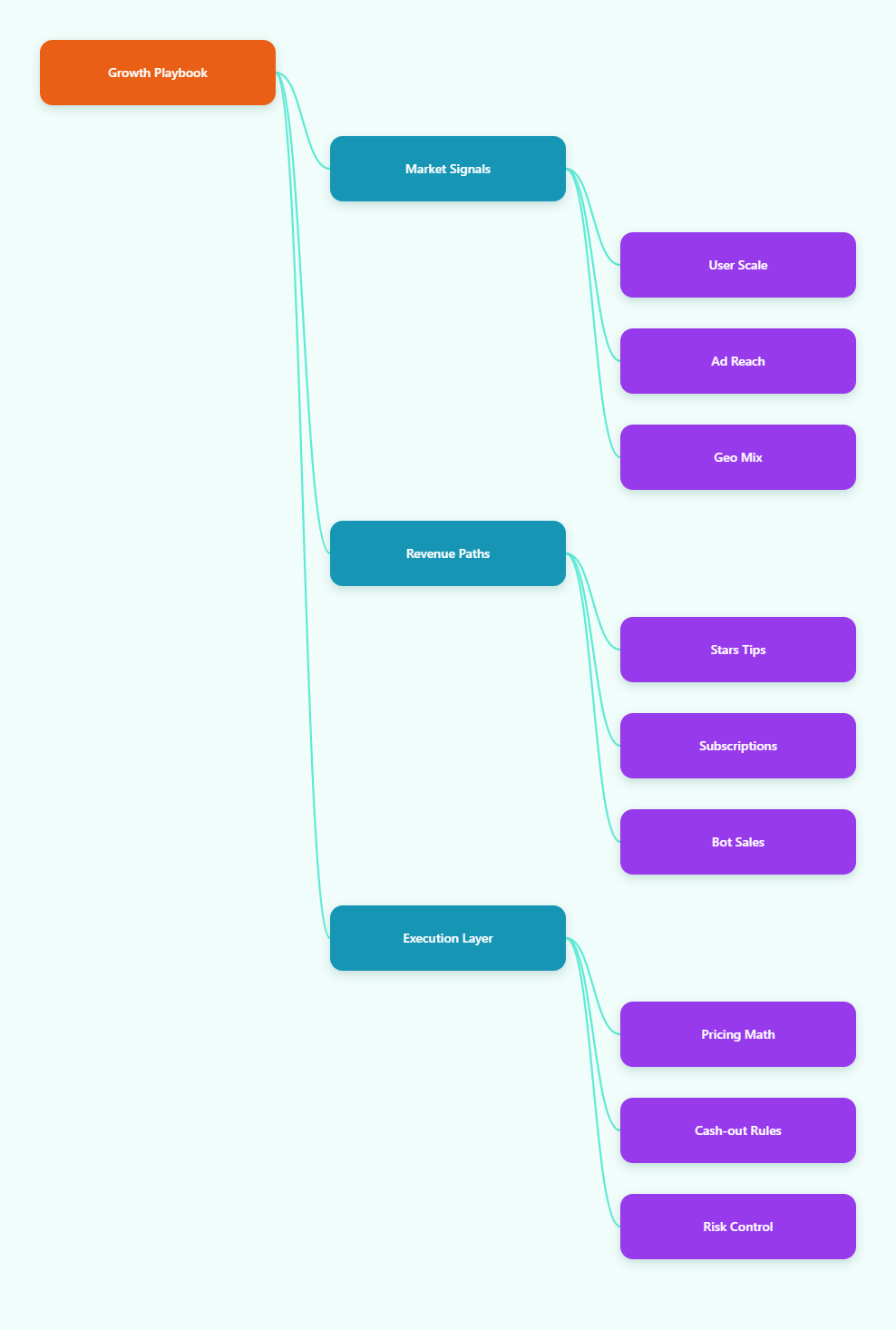
1. Why Telegram Converts So Well in 2026
Scale without social noise
Telegram performs well for commercial use because it sits between social media and private messaging. Users are not scrolling an algorithmic feed for entertainment alone; they are often inside channels, groups, and bots with a clear intent. That changes the economics. A warm subscriber can click a post, open a payment surface, and complete a purchase in a few taps.
Public creator and channel economics also matter. Telegram’s creator terms say eligible channel owners may receive rewards from sponsored message revenue and donations of Stars. That means the platform is no longer just a traffic source. It is a revenue surface.
The market signal marketers should care about
- Audience scale: Telegram’s reported user base now gives brands a global inventory of attention.
- High intent: Subscribers choose channels, so the audience is often self-selected.
- Native commerce: Stars, subscriptions, and bot payments reduce payment friction.
- Retention loop: Messages, paid media, and groups can keep buyers inside one ecosystem.
| Telegram Metric | 2026 Reference | Business Meaning |
|---|---|---|
| Monthly active users | 1B+ | Large enough for global niche monetization |
| Daily active users | 500M approx. | Daily reach for promos, drops, and retention |
| Premium subscribers | 15M+ | Signals willingness to pay inside the app |
| Creator revenue surfaces | Ads, Stars, subscriptions, bots | Multiple ways to monetize the same audience |
2. The Revenue Models That Actually Matter
1. Channel subscriptions and locked content
Telegram now supports subscription-style monetization through Stars. Channel administrators can create invite links that require a monthly payment in Stars, which makes Telegram a real alternative to lightweight membership platforms for certain niches. This works best for paid news, crypto alerts, trading communities, education, premium communities, and creator fan clubs.
The important point is not just that people can pay. It is that the customer already lives inside Telegram, so the path from post to payment is short. That reduces drop-off.
2. Stars for tips, gifts, and paid media
Stars can be used to unlock paid media, support creators, and power bot-driven digital products. That includes paid photos, videos, previews, private drops, and small-ticket offers. For many operators, the most useful pattern is not one big subscription. It is a series of micro-purchases that convert casual fans into repeat spenders.
This is where users asking to buy Telegram Stars and gift them to creators fit into the commercial stack. A gift is not just a gesture. It can be the first paid action that moves a follower from passive viewing to active buying.
3. Ads, sponsored posts, and affiliate traffic
Telegram’s creator terms also support revenue from sponsored posts, and Telegram has continued to add monetization features for channels and bots. For larger operators, ads become useful when they are attached to a funnel: content attracts users, Stars or subscriptions monetize warm users, and affiliates or sponsored placements add incremental revenue.
- Best for discovery: Sponsored posts and channel promotions.
- Best for conversion: Stars, subscriptions, and paid media.
- Best for scale: Bots and mini apps selling digital goods.
| Monetization Lever | Best Use Case | Operational Advantage | Main Constraint |
|---|---|---|---|
| Stars tips/gifts | Warm followers and fan support | Fast, low-friction purchase | Needs recurring engagement |
| Star subscriptions | Premium content and private groups | Recurring revenue inside Telegram | Churn if content is weak |
| Sponsored posts | Large channels and media brands | Direct traffic monetization | Requires scale and trust |
| Bots and mini apps | Digital goods, SaaS-lite offers | Automated delivery and checkout | Needs build and maintenance |
3. Where Telegram Stars Fit in the Funnel
Stars are a conversion tool, not the whole business
Stars are the easiest way to convert attention into money inside Telegram, but they work best when they sit inside a broader funnel. A good funnel can look like this:
- Acquire a subscriber through content, search, or paid traffic.
- Warm them with value posts, proof, and repetition.
- Offer a small paid action through Stars.
- Move high-intent users into a subscription, upsell, or bot purchase.
- Retain buyers with new drops, offers, and private access.
That structure matters because Telegram is strongest when the first payment is small. Once the user has bought once, the next step is usually easier.
Why micro-payments work
Micro-payments reduce buyer hesitation. If a user is unsure about a creator, a niche, or a tool, a small Star purchase feels safer than a monthly commitment. That is especially useful for creators selling private posts, exclusive commentary, templates, or premium access.
Telegram’s own product direction reinforces this behavior. Paid media, Star subscriptions, and creator support all point toward a more native in-app commerce layer.
What to measure first
- Star conversion rate: how many viewers send a tip or unlock content.
- Upgrade rate: how many Star buyers become subscribers.
- Retention: how many users return for a second payment.
- Average order value: whether you are selling tiny tips or meaningful bundles.
4. Pricing, Fees, and Payout Math You Need
The buyer price and creator payout are not the same
In 2026, published comparisons show that the buyer side can vary depending on the purchase path. For example, one widely cited comparison puts 1,000 Stars at $19.99 in the U.S. iPhone flow, while Fragment-based pricing can be closer to $15. Telegram’s official docs also make clear that creators need to respect the withdrawal minimum and waiting period: 1,000 Stars minimum and a 21-day hold before withdrawal.
The commercial implication is simple. Your pricing should be based on your cash-out path, not on the sticker price the user sees when they buy Stars.
Practical fee logic
- Mobile purchases: app store fees can raise the buyer price.
- Desktop or web flows: may be cheaper than mobile in practice.
- Withdrawal rules: Telegram’s docs require patience and scale.
- Liquidity planning: you should not rely on instant cash-out.
| Metric | What the Public Docs/Comparisons Show | Why It Matters |
|---|---|---|
| Stars purchase price | Varies by route; published 2026 examples show higher in-app pricing | Impacts buyer conversion and bundle design |
| Withdrawal minimum | 1,000 Stars | Small creators need volume before cash-out |
| Waiting period | 21 days after receipt | Cash flow is delayed, so keep reserves |
| Paid message share | 85% of Stars paid to the sender/receiver flow | Useful when pricing direct access or DM fees |
A simple commercial example
If you sell a low-ticket locked post, you want the ticket size to feel impulsive enough for a warm user, but meaningful enough to justify the 21-day delay and operational overhead. If you sell a subscription, you need enough monthly value to offset churn and app-store friction. If you sell a bot product, the product itself must justify the purchase without extra explanation.
That is why the best Telegram monetizers usually test bundles, not single prices. A good bundle architecture can outperform one price point by giving users a reason to spend more once they have already committed.
5. The Operating Playbook for Brands and Agencies
Build the channel like a product
Successful Telegram businesses do not treat the channel as a feed. They treat it as a product with entry points, offers, and retention loops. That means your content should support one of three jobs: acquisition, conversion, or reactivation.
- Acquisition posts: prove expertise and attract new subscribers.
- Conversion posts: push Stars, subscriptions, or bot offers.
- Reactivation posts: bring old users back with a fresh angle.
What agencies should sell
For agencies, the strongest offer is usually not “Telegram management.” It is a measurable business outcome. That can be audience growth, lower CAC, premium community setup, funnel automation, or creator monetization packaging. Telegram works well when the agency can connect content, traffic, and payment into one system.
If you serve creators, adding Stars gifting and paid media into the strategy can lift conversion because it creates a low-pressure first transaction. If you serve brands, use Telegram as a retention channel where offers can be repeated without paying for every impression.
Weekly execution checklist
- Publish one authority post and one conversion post.
- Track which topics drive Stars and replies.
- Test one bundle, one subscription, and one CTA.
- Review cash-flow timing against the 21-day hold.
- Refresh offers when engagement slows.
6. Risks, Compliance, and What to Avoid
Don’t build on assumptions
Telegram’s monetization rules are powerful, but they still change. The platform has updated Stars, paid media, creator rewards, and gifting features repeatedly. If your business depends on Telegram revenue, keep a habit of checking the current product and terms pages before you launch a new flow.
Common mistakes
- Ignoring cash-flow delay: the 21-day hold can break small operators.
- Pricing too low: low ticket items may not survive fees and churn.
- Over-relying on one channel: one offer should not be the whole business.
- Forgetting localization: Telegram is global, so language and pricing matter.
What to optimize instead
Focus on repeatable mechanics: a strong niche, a clear CTA, a simple payment path, and a reason for users to come back. Telegram rewards businesses that reduce friction and keep the audience close to the offer.
FAQ
Can I make money on Telegram without a website?
Yes. Telegram supports channels, bots, subscriptions, paid media, and Stars-based purchases, so many offers can run entirely inside the app.
Are Telegram Stars only for tipping creators?
No. Stars can also unlock paid media, support subscriptions, and pay for bot or mini-app digital goods. Tips are only one use case.
How does a creator cash out Stars?
Official docs say Stars can be withdrawn after they age for 21 days and once the balance reaches 1,000 Stars. The withdrawal path is not direct to a bank account; it depends on Telegram’s supported withdrawal flow.
Is it smart to buy Telegram Stars to gift to creators?
Yes, if the goal is engagement or conversion. Gifting Stars can be a low-friction way to support a creator, unlock content, or start a paid relationship. For businesses, it is most useful when it is part of a larger conversion funnel.
Which Telegram monetization model is best for beginners?
For most beginners, paid content or Star tips are easier than building a bot or subscription stack. Start with one clear offer, then expand once you understand audience behavior.
Conclusion
Telegram in 2026 is a commercial platform, not just a messaging app. The winners are the operators who combine audience building with clear monetization mechanics: Stars for micro-conversion, subscriptions for recurring revenue, bots for automation, and sponsored posts for scale. The platform’s strength is not one feature; it is the way those features connect.