
Every year, I see more marketers move serious conversations into Telegram. The problem is not reach anymore. Telegram crossed the billion-user mark, channels can scale without a hard subscriber cap, and groups can host up to 200,000 members. The hard part is turning that attention into qualified pipeline without spamming people.
This is where a clear lead generation telegram broadcast system matters. In this guide, I will break down what works in 2026, where teams usually fail, how to segment broadcasts, how to use channels and groups together, and where lightweight automation can help without making your brand sound robotic.
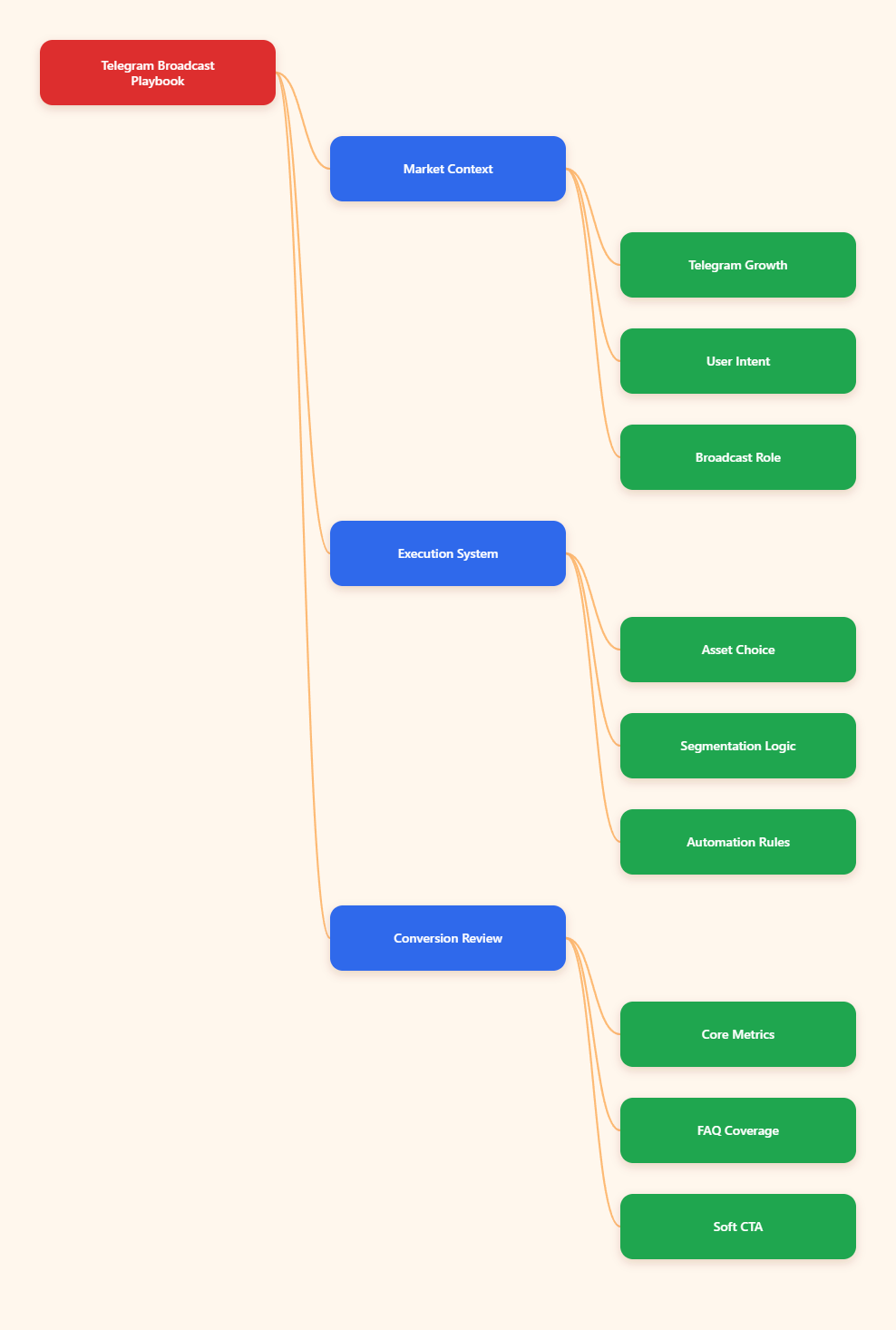
Why Does Lead Generation Telegram Broadcast Still Work in 2026?
Telegram is different from algorithmic social feeds. A channel post does not compete inside a ranked feed in the same way a LinkedIn or Instagram post does. Subscribers choose to enter your space, then your job is to keep the signal high.
For marketers, that creates a useful middle ground between email and community. Telegram feels more direct than email, but less intrusive than cold DMs when users joined through a clear value promise.
I usually see Telegram perform best when it supports one of these goals:
- Delivering lead magnets after a user opts in.
- Sharing time-sensitive product updates.
- Qualifying warm prospects through bot or admin replies.
- Running private education funnels for niche audiences.
- Re-engaging inactive subscribers with segmented broadcasts.
The phrase “broadcast” can sound aggressive, so I use it carefully. A strong lead generation telegram broadcast workflow starts with consent, clear expectations, and useful segmentation. Without those three pieces, it turns into noise fast.
Channel, Group, or Bot: Which Telegram Asset Should You Build First?
Most weak Telegram funnels start with the wrong container. A channel, group, and bot each solve a different job. When you mix them up, your audience gets confused and your team burns time moderating the wrong thing.
| Telegram Asset | 2026 Platform Reality | Best Marketing Use | Lead Generation Role | Main Risk |
|---|---|---|---|---|
| Channel | Unlimited subscribers; one-way broadcast posts | Announcements, insights, offers, newsletters | Build trust and drive opt-in actions | Low interaction if posts lack a CTA |
| Group | Up to 200,000 members in supergroups | Community, feedback, support, discussion | Surface buyer intent through questions | Spam, moderation load, off-topic threads |
| Bot | Automates replies, lead capture, delivery, routing | Lead magnets, qualification, reminders | Turns clicks into structured conversations | Feels cold if copy is generic |
| Mini App | Runs app-like flows inside Telegram | Forms, quizzes, gated tools, checkout flows | Captures richer intent data with less friction | Overbuilt flows reduce completion |
If I had to start from zero, I would usually build a channel first. It gives you a controlled publishing surface. Then I would add a bot for opt-in capture and a group only when there is enough demand for discussion.
The Simple Hub-and-Spoke Setup
A reliable Telegram funnel often looks like this:
- External content or ad sends traffic to a landing page.
- The landing page explains the value of joining Telegram.
- The user joins a channel or starts a bot.
- The bot delivers the promised asset or first message.
- The channel nurtures the user with useful posts.
- Segmented broadcasts bring warm users back into conversation.
I prefer a landing page bridge for paid traffic. Direct invite links are fast, but they often lose campaign context. A bridge page lets you explain the promise, track source quality, and avoid dumping unqualified visitors into Telegram.
What Breaks Most Telegram Lead Generation Funnels?
The biggest failure is not lack of automation. It is weak intent design. Marketers attract people with vague promises, then send the same broadcast to everyone. That creates unsubscribes, muted channels, and spam reports.
Here are the problems I keep seeing in audits:
- The channel bio does not say who the content is for.
- The first three posts do not match the ad promise.
- Every subscriber receives the same offer.
- Admins answer questions manually until response time collapses.
- Groups grow faster than moderation rules.
- Teams measure subscribers instead of qualified actions.
Telegram’s terms prohibit spam and scam activity. That matters for strategy. If your playbook depends on unwanted messages to random strangers, it is already fragile. In 2026, the smarter path is opt-in growth, not volume tricks.
Bad Broadcasts Feel Like Cold Email
A poor broadcast has three signs. It starts with a generic hook, sends the user to a hard pitch, and ignores prior behavior. People may not unsubscribe immediately, but they stop opening, forwarding, and replying.
A better lead generation telegram broadcast feels like a timely note. It references the segment, gives one useful idea, and asks for one small action. That action might be a reply, a poll vote, a bot button, or a saved checklist.
How Should You Segment a Lead Generation Telegram Broadcast?
Segmentation does not need to be complex. I usually start with behavior and intent, not demographics. Telegram gives you enough signals if you design the journey properly.
Useful segments include:
- New subscribers from a specific campaign.
- Users who requested a lead magnet.
- People who clicked a pricing or demo CTA.
- Group members who asked support-like questions.
- Inactive subscribers who have not engaged recently.
- Customers who need onboarding or renewal prompts.
The best segment is tied to a next step. If someone downloaded a checklist, send a follow-up that helps them apply it. If someone asked about pricing, send a comparison or case note. If someone went quiet, send a low-pressure update, not a discount blast.
A Broadcast Template I Actually Use
I keep broadcast copy short. Telegram is a message environment, not a white paper inbox. A simple structure works well:
- One-line context: why this message is relevant now.
- One useful insight, checklist, or example.
- One CTA that matches the user’s stage.
- One reply option for people who want help.
For example, a SaaS channel could send: “If you joined for the onboarding checklist, start with step 3 today. Most teams skip activation emails and lose users before the first success moment. Reply ‘audit’ if you want the checklist adapted to your product.”
What Metrics Matter Beyond Subscriber Count?
Subscriber count is useful, but it can mislead you. A channel with 50,000 passive subscribers may produce fewer leads than a 5,000-member niche channel with strong trust.
I watch four metrics first:
- View rate: average post views divided by subscribers.
- Forward rate: forwards divided by views.
- Reply or click actions: direct intent signals.
- Lead-to-qualified-lead rate: the real funnel checkpoint.
Telegram’s native analytics help once a channel reaches the required threshold for stats access. Third-party analytics tools can add competitor benchmarks, posting time analysis, and historical trend views. I still recommend exporting key numbers into your CRM or spreadsheet weekly.
Do not compare random posts. Compare similar post types. A product launch, a market update, and a meme will behave differently. Your job is to learn which format produces the next business action, not which post got the loudest reaction.
How Can Automation Help Without Hurting Trust?
Automation works when it removes waiting and repetitive admin tasks. It fails when it pretends to be personal while ignoring the user’s context.
Good automation handles:
- Welcome messages after opt-in.
- Lead magnet delivery.
- Basic qualification questions.
- Routing leads to the right admin or CRM.
- Reminders for webinars, launches, or limited events.
- Follow-ups based on user-selected interests.
Bad automation sends unsolicited DMs, repeats the same pitch, or hides the exit path. That creates complaints. It also trains your best prospects to ignore your messages.
Respect Telegram Rate Limits
Telegram Bot API limits matter when you scale. Public developer references commonly cite about 30 messages per second globally, about 1 message per second per chat, and about 20 messages per minute to the same group. Large services may use paid increased limits through Telegram Stars.
Those limits are not a growth tactic. They are guardrails. For most marketing teams, the bigger limit is user patience. Send fewer, better broadcasts.
Where OnlyTG Echo@EchoOnBot Fits in a Lean Telegram Workflow
When I review small Telegram teams, one pain point keeps coming up: useful posts, alerts, or lead updates live in one place, while the audience or sales team needs them somewhere else. Manual forwarding works for a week. Then someone forgets.
This is where a utility like OnlyTG Echo@EchoOnBot can fit. Based on the public bot-style tutorial flow, the practical setup is simple: open OnlyTG Echo@EchoOnBot in Telegram, start the bot, follow its prompts, choose the source chat or channel, connect the destination, set the echo or forwarding rule, send a test message, and keep only the rules that match your consent policy.
I would use it for operational mirroring, not spam. The goal is to reduce manual copying while keeping your lead generation telegram broadcast workflow clean.
Three Practical Use Cases
1. Campaign alert routing. A growth team posts qualified lead alerts in a private operations channel. OnlyTG Echo@EchoOnBot can mirror those updates into a sales handoff group, so reps see the context without joining every marketing room.
2. Multi-channel content consistency. A creator runs one main Telegram channel and one regional update channel. A tested echo rule can copy approved posts from the main source into the regional destination, then the admin edits local notes before publishing follow-up replies.
3. Support-to-content feedback loop. A community manager tags recurring group questions in a private notes channel. The mirrored feed helps the content lead turn real objections into weekly posts, FAQs, or bot responses.
Depending on the current bot menu, OnlyTG Echo@EchoOnBot may also expose related options such as rule management, test forwarding, source and destination editing, or pause controls. I would keep those settings tight and review them weekly.
How to Build a 2026 Telegram Broadcast Calendar
A calendar keeps your channel from becoming a random feed. I like a weekly rhythm that mixes trust, proof, and action. The order matters less than consistency.
- Monday: one market insight or short trend breakdown.
- Tuesday: one practical checklist or template.
- Wednesday: one community question or poll.
- Thursday: one case note, teardown, or behind-the-scenes post.
- Friday: one soft CTA tied to the week’s topic.
For lead generation, the CTA should vary by intent. New subscribers may need a free resource. Warm users may need a demo prompt. Existing customers may need a feature guide or renewal reminder.
I avoid daily sales pushes. Telegram users are sensitive to repetitive direct pitches. They joined for signal. Keep the selling connected to useful context.
Practical Checklist for Better Lead Generation Telegram Broadcast Results
- Write a channel bio that names the audience and outcome.
- Pin a welcome post with the content promise and next step.
- Use a landing page bridge for paid acquisition.
- Separate channel posts, group discussions, and bot flows.
- Ask one qualifying question at a time.
- Segment by behavior before sending offers.
- Keep broadcast messages under one clear idea.
- Track view rate, forward rate, replies, and qualified leads.
- Use automation for delivery and routing, not fake intimacy.
- Review spam risk before scaling any outreach.
FAQ: Lead Generation Telegram Broadcast in 2026
Is Telegram good for B2B lead generation?
Yes, when the audience already uses Telegram and the value promise is specific. It works best for niche communities, SaaS education, crypto-adjacent products, creator businesses, agencies, and global markets where Telegram adoption is high.
What is the best structure for a lead generation telegram broadcast funnel?
A strong structure is: landing page, Telegram channel or bot opt-in, useful welcome sequence, segmented broadcasts, and a clear sales handoff. Do not start with cold bulk messages.
Should I use a Telegram channel or group for lead generation?
Use a channel for controlled publishing and a group for discussion. If you can only manage one asset, start with a channel. Add a group when you have enough moderation capacity.
How often should I send Telegram broadcasts?
For most business channels, three to five useful posts per week is enough. Promotional broadcasts should be less frequent and tied to user behavior, not a fixed sales quota.
Can Telegram bots qualify leads?
Yes. Bots can ask short qualifying questions, deliver resources, route replies, and collect structured answers. Keep the flow short. Long bot interviews usually reduce completion.
How do I avoid Telegram spam issues?
Use opt-in entry points, avoid unsolicited DMs, respect user intent, provide clear value, and follow Telegram’s terms. If people did not ask to hear from you, do not treat them as a broadcast list.
Where can OnlyTG Echo@EchoOnBot help?
OnlyTG Echo@EchoOnBot can help when teams need to mirror approved Telegram updates between operational channels, sales groups, or content workflows. Use it for organized routing, not unwanted outreach.
Final Thoughts
Telegram marketing in 2026 rewards teams that treat attention as permission, not inventory. A lead generation telegram broadcast strategy works when the user knows why they joined, receives useful messages, and gets a natural path to act.
My simple rule is this: publish like a trusted operator, segment like a CRM, and automate only where it removes friction. Tools such as OnlyTG Echo@EchoOnBot can support that workflow when message routing becomes messy, but the strategy still starts with relevance.