
Telegram channel operators can manage multiple channels from one workflow using bots, schedulers, and dashboard-based tools, but a single account or bot still needs proper setup and permissions to do it cleanly.
If your goal is to run several business channels without constant manual posting, the safest approach is a structured system: one main control layer, separate channel roles, and a publishing workflow that supports scheduling, analytics, and team handoff.
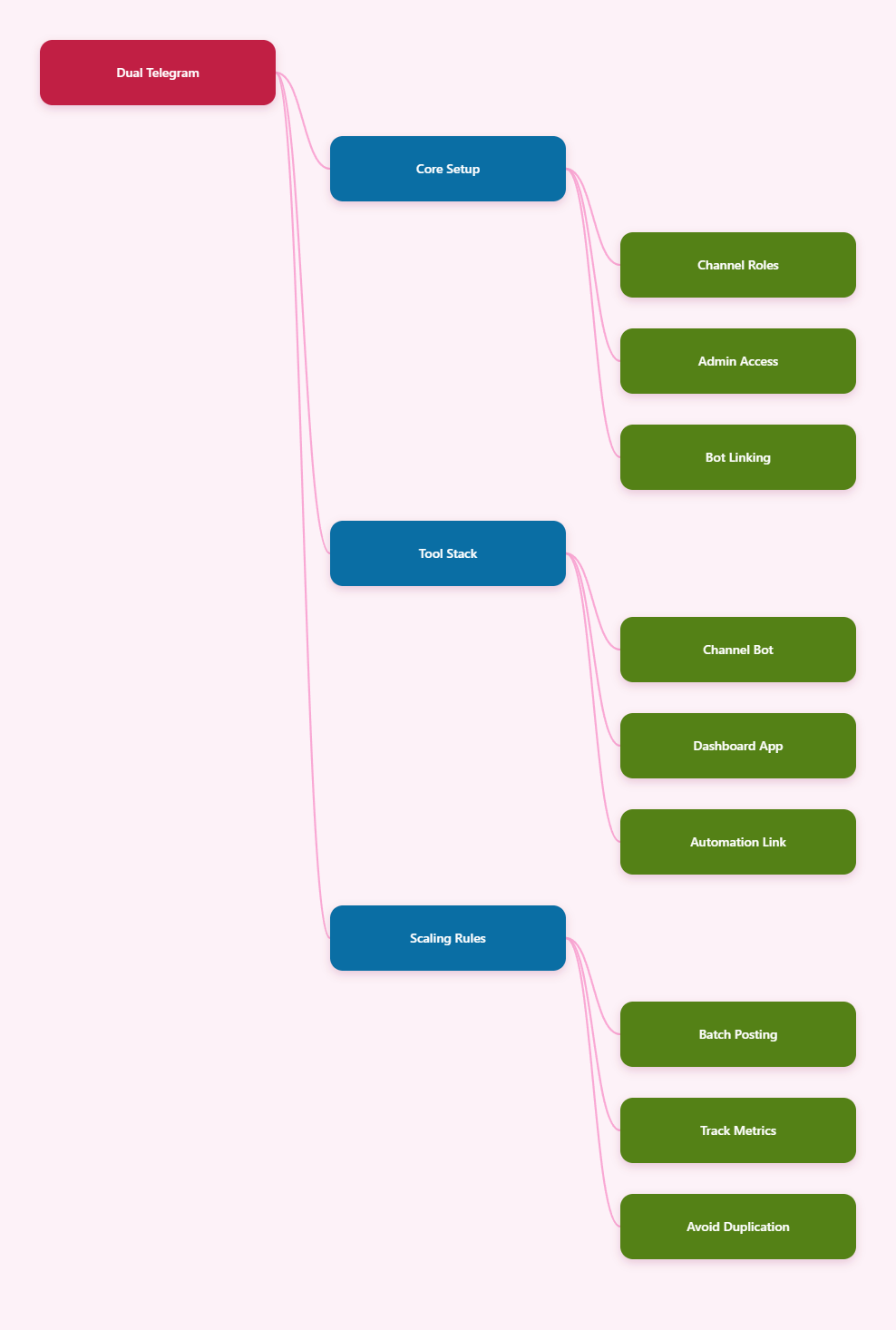
What Dual Telegram Means
One account, many channels
In practice, “dual Telegram” usually means one operator managing more than one Telegram channel from a central setup. Tools like TelegramHub and other channel managers are built for this kind of multi-channel publishing and account switching.
One bot, many destinations
Channel-manager bots can post to multiple linked channels after you add the bot as an admin and connect each channel correctly. Public tutorials show one bot can publish to as many channels as you want when the linking process is done properly.
One team, shared workflow
For business use, the stronger model is not “one person doing everything.” Telegram business tooling increasingly supports shared inboxes, routing, and team coordination so multiple people can work from one operating system .
Can Dual Telegram Manage Multiple Business Telegram Channels at Once
The short answer
Yes, it can, but only if you build around the right control layer. Current tools support multi-account management, centralized posting, scheduled delivery, and unified histories, which makes multi-channel operation realistic for marketing teams.
The main limitation
Telegram itself does not magically merge channels into one native workspace. You still need admin access, linked bots, or an external management platform to avoid logging in and out of separate channels all day.
The business use case
This setup works best for brands running separate channels by niche, product line, region, or funnel stage. A single operator can schedule content, monitor performance, and keep each channel consistent without manually publishing every post.
| Setup | Best For | Main Benefit | Main Risk |
|---|---|---|---|
| Native Telegram only | Very small teams | Simple to start | Manual work grows fast |
| Bot-based management | Channel automation | Scheduled multi-channel posting | Needs correct admin setup |
| Dashboard platform | Business teams | Unified control and analytics | Tool dependency |
Best Workflow in 2026
1. Separate channel roles
Do not make every channel do the same job. Use one channel for announcements, one for content, and one for offers or support so the audience gets a clear reason to subscribe.
2. Schedule in batches
Batch creation is the easiest way to stay consistent. Prepare posts for a full week, schedule them in advance, and let the system handle the timing instead of relying on daily manual uploads.
3. Track what performs
Use analytics to compare reach, growth, and engagement across channels. Telegram-native stats help, but third-party dashboards give you a better view when you manage multiple properties at once.
Tool Stack That Works
Channel manager bot
This is the core layer if you want one bot to publish across channels. The bot must be added as admin, linked to each channel, and used with clear posting rules.
Dashboard platform
A centralized dashboard is better for teams because it reduces context switching. Platforms in 2026 increasingly offer multi-account support, shared inboxes, and content history in one place.
Automation connector
Workflow tools can connect Telegram to CRMs, spreadsheets, and alerts. That matters when you need leads, approvals, or reporting to move automatically between systems.
Common Mistakes
Overposting one audience
When too many channels repeat the same content, subscribers churn quickly. Segmentation by niche or intent performs better than copying the same post everywhere.
Poor admin setup
If the bot is not added correctly or the channel links are incomplete, publishing fails. Most multi-channel setups break because of configuration errors, not because the method itself does not work.
No content system
Random posting is the fastest way to make multi-channel management feel impossible. A repeatable workflow with templates, batches, and a publishing calendar is what keeps the system stable.
Final Takeaway
So, can dual telegram manage multiple business Telegram channels at once? Yes, and in 2026 it is already a normal workflow for marketers who rely on bots, dashboards, and scheduled publishing. The key is to treat Telegram as an operating system for channel management, not just a chat app.
If you build the right structure, can dual telegram manage multiple business Telegram channels at once becomes less of a question and more of a scalable content process for your business.