
Telegram is no longer just a messaging app. In 2026, it has become a serious platform for creators, community owners, developers, and businesses that want to turn attention into revenue.
If you are researching Telegram earning money, the main thing to understand is this: Telegram does not pay people simply for having subscribers. Revenue comes from specific monetization tools and business models.
This guide covers the most practical ways to make money on Telegram in 2026, what each method requires, and when each one makes sense.
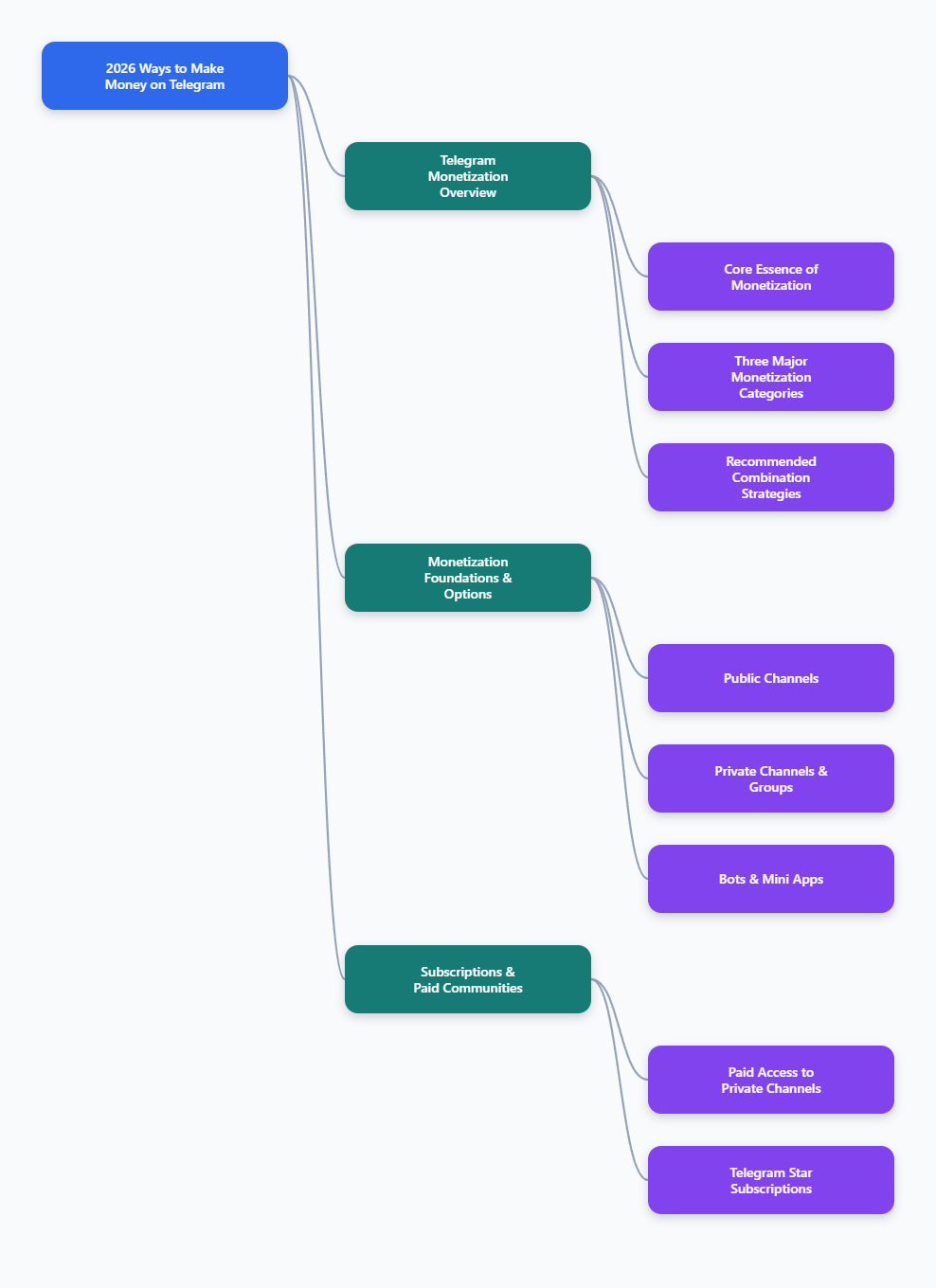
How Telegram monetization works in 2026
Telegram monetization now falls into a few clear categories.
- Official platform monetization: ad revenue sharing, Stars, subscriptions, and some native creator tools.
- Commerce inside Telegram: selling digital goods, services, memberships, or physical products through bots, mini apps, channels, and groups.
- Third-party monetization: sponsorships, affiliate marketing, and external product sales promoted through Telegram.
The right model depends on what you already have:
- A public channel is best for reach, sponsorships, affiliate traffic, and ad revenue.
- A private channel or group is better for subscriptions and paid access.
- A bot or mini app is best if you want automated checkout, delivery, support, or scalable product sales.
For most creators, the strongest setup is not one method alone. It is a combination:
- free public content for reach,
- paid access or products for conversion,
- and automation through bots or mini apps for delivery and retention.
1. Earn from Telegram channel ad revenue
One of the most direct official options is Telegram’s ad revenue sharing for channels.
According to Telegram’s official monetization announcement, owners of public channels with at least 1,000 subscribers can receive 50% of the revenue from ads displayed in their channels.
This model is simple in theory:
- You build a public broadcast channel.
- Telegram shows Sponsored Messages in eligible channels.
- You receive a share of the ad revenue.
Best for
- news channels,
- large topical channels,
- media channels with frequent posting,
- and communities with broad public reach.
What to know
- You need a public channel, not a private one.
- The official threshold is 1,000+ subscribers.
- Revenue depends on audience quality, geography, advertiser demand, and overall channel activity.
This is a good foundational income stream, but it is usually not the most profitable model for smaller channels. If your audience is niche and trusts you, direct monetization methods often outperform ad sharing.
2. Charge for private channels and subscriptions
Paid access is one of the most durable Telegram business models in 2026.
Telegram introduced Star Subscriptions and paid invite options that allow creators to charge recurring fees for access to exclusive content. This works especially well when your value is ongoing rather than one-time.
Examples of paid Telegram communities
- market research or deal alerts,
- premium education and tutorials,
- industry briefings,
- member-only chat groups,
- trading or analytics communities,
- language learning clubs,
- and coaching communities.
Why this model works
- Revenue is recurring.
- You are monetizing trust, not just traffic.
- You can keep delivery fully inside Telegram.
- It scales better than one-to-one selling.
A common structure is:
- Free public channel: publish useful content consistently.
- Private paid channel or group: give deeper, more actionable, or more time-sensitive material.
This approach is supported by several 2026 operator guides in the reference set and aligns with Telegram’s native subscription tools.
Important detail
If you use Telegram-native tools for digital access inside the app, payments typically flow through Telegram Stars. That is especially relevant for digital goods and services sold through bots and mini apps.
3. Receive Telegram Stars from your audience
Telegram Stars are now central to in-app monetization.
Telegram describes Stars as a virtual item used to buy digital goods and services from bots and mini apps, support creators, and more. Telegram has also added monetization features such as Star Reactions, Star Subscriptions, and Star Messages.
How creators make money with Stars
- Users send Stars through reactions and support features.
- Creators can charge Stars for subscriptions or gated access.
- Public figures can use paid incoming messages to filter DMs and monetize attention.
Telegram’s official update on subscriptions states that channel owners receive 100% of the Stars and can convert them into Toncoin rewards or use them for subsidized ads, subject to Telegram’s rules and withdrawal systems.
Best for
- creators with loyal audiences,
- educators,
- analysts,
- artists,
- and admins who already get a lot of inbound attention.
Stars are especially useful because they reduce friction. Users can support or pay without leaving Telegram.
4. Sell digital goods through bots and mini apps
If you want the most scalable version of Telegram earning money, this is one of the strongest options.
Telegram officially supports selling digital goods and services through bots and mini apps. According to the Bot Payments documentation for digital goods, these transactions must be carried out in Telegram Stars using the currency tag XTR.
What you can sell
- eBooks and PDFs,
- templates,
- premium files,
- courses and video access,
- AI credits or tool usage,
- downloads,
- memberships,
- and digital services delivered automatically.
Why bots and mini apps are powerful
- Checkout happens inside Telegram.
- Delivery can be instant and automated.
- You can run the business 24/7.
- You reduce manual support and access management.
Telegram mini apps are essentially web applications that run inside Telegram. Telegram requires these apps to use a valid HTTPS URL, and they support payments and deeper user flows than a simple channel post.
When to use a bot vs a mini app
- Use a bot if your flow is simple: payment, confirmation, and file or access delivery.
- Use a mini app if you need a storefront, account logic, dashboards, subscriptions, or interactive product use.
This model is ideal for developers, creators with repeatable digital products, and businesses that want to sell inside Telegram without forcing users through a separate website.
5. Sell physical products or real-world services
Telegram also supports payments for physical goods and services through bots.
This is different from digital-goods payments. Telegram’s Bot Payments documentation explains that the classic payments system is designed for physical goods and services, using payment providers rather than Stars.
Examples
- merchandise,
- event tickets,
- consulting calls,
- local services,
- custom orders,
- and appointment-based businesses.
Why it works
- You can accept orders directly in Telegram.
- Bots can collect details, addresses, and preferences.
- Groups and channels can drive qualified traffic into the checkout flow.
If your business already sells outside Telegram, adding a Telegram sales flow can improve conversion for users who prefer messaging over traditional websites.
6. Make money with affiliate marketing
Affiliate marketing remains one of the easiest ways to start making money on Telegram, especially if you do not have your own product yet.
The model is simple:
- choose a focused niche,
- build a channel around useful content,
- recommend relevant products or services,
- and earn commissions when followers convert.
This approach appears throughout the 2025 and 2026 reference set, and it works best when recommendations match a clear audience need.
Strong Telegram affiliate niches
- software and SaaS tools,
- consumer tech,
- personal finance resources,
- education products,
- beauty and wellness,
- deal channels,
- and hobby-specific products.
What makes affiliate marketing work on Telegram
- fast distribution,
- high visibility in channels,
- direct calls to action,
- and the ability to build trust over time.
Telegram has also launched official affiliate programs connected to Star balances. Telegram’s affiliate documentation says users can browse active affiliate programs and generate unique links tied to a Star balance. That creates a more native version of referral monetization inside the ecosystem.
Best practice
Do not turn your channel into a nonstop ad feed. A better formula is:
- educational or useful content first,
- selective recommendations second,
- clear disclosure and relevance always.
7. Sell sponsorships and paid promotions
Once a channel has a real audience, brands may pay for exposure.
This can take several forms:
- sponsored posts,
- product mentions,
- review placements,
- cross-promotions,
- and campaign-based partnerships.
Telegram has also introduced suggested posts for channels, which opens a more structured way to organize partnerships and promotions.
Best for
- niche channels with engaged audiences,
- regional channels,
- topic experts,
- and creators with trusted editorial voice.
Sponsorships usually work better than generic ad revenue when your audience is specialized. A small but highly targeted channel can be more commercially valuable than a large, broad one.
8. Earn from bot or mini app ad revenue
This is more advanced, but it is worth knowing.
Telegram’s API revenue documentation states that channel and bot owners can receive 50% of the revenue from ads displayed in their channels and bots. If you operate a bot with enough usage, ad monetization can become an additional revenue layer.
This should not be your first monetization model, but it can make sense when you already have:
- high bot usage,
- repeat sessions,
- or a mini app with frequent engagement.
What is the best Telegram money-making model?
There is no universal answer. The best model depends on your asset.
If you are a creator
- Start with a public channel.
- Use Stars, subscriptions, and private paid access.
- Add sponsorships once your niche is clear.
If you are a developer
- Build a bot or mini app.
- Sell digital goods or usage credits through Stars.
- Add subscriptions or in-app upsells.
If you are a business
- Use Telegram as a sales and retention channel.
- Sell physical goods through bot payments.
- Use groups, channels, and automation to reduce support friction.
If you are a beginner with no product
- Start with affiliate marketing.
- Grow a niche channel.
- Later add your own paid community or digital product.
A practical Telegram monetization setup for 2026
If you want a realistic path instead of theory, this is a strong starting structure:
- Create a focused public channel.
Pick one topic with clear audience intent. - Post useful content consistently.
Use short posts, media, summaries, and recurring formats. - Add one monetization layer first.
Choose ads, affiliate offers, paid access, or product sales. - Build a private offer.
Create a premium channel, member group, or digital product. - Automate delivery.
Use a bot or mini app if you plan to scale. - Measure engagement.
Watch which content drives joins, clicks, replies, or purchases.
This staged approach is usually safer than trying to monetize everything at once.
Common mistakes that reduce Telegram income
- Choosing a vague niche.
General channels are harder to monetize than focused ones. - Depending only on subscriber count.
Engagement and intent matter more than raw size. - Posting too many promotions too early.
Trust drops fast if every post is a pitch. - Ignoring Telegram-native tools.
Stars, subscriptions, and bots reduce friction significantly. - Using the wrong payment model.
Digital goods in bots and mini apps must use Stars; physical goods use payment providers. - Doing everything manually.
Manual access control and delivery limit growth.
Final thoughts
Telegram earning money in 2026 is very real, but the platform rewards clear models more than vanity metrics.
The strongest options today are:
- channel ad revenue for public channels with scale,
- paid subscriptions for premium communities,
- Telegram Stars for native support and digital payments,
- bots and mini apps for automated product sales,
- affiliate marketing for low-barrier monetization,
- and sponsorships for targeted niche audiences.
If you are starting from scratch, build a focused channel first. If you already have an audience, move quickly toward paid access, digital products, or Telegram-native payments. And if you are building for scale, bots and mini apps offer the most control over conversion, delivery, and long-term revenue.
In short, the money on Telegram in 2026 comes from owning a useful audience, offering clear value, and using the platform’s native monetization tools the right way.