
If you want to learn how to advertise on Telegram in 2026, the biggest challenge is not reach, it is choosing the right format, audience, and budget without wasting spend. Telegram now offers a mature ad ecosystem with sponsored messages in public channels, channel-based targeting, and stricter moderation, while third-party platforms and direct channel buys remain viable alternatives for many businesses.
In this guide, you will learn the most reliable ways to advertise on Telegram, how to launch campaigns step by step, how to compare methods, and how to avoid common policy and performance mistakes.
Telegram Advertising in 2026: What You Need to Know First
Telegram continues to be one of the most distinctive advertising environments in 2026. The official Telegram Ads platform serves sponsored messages in public one-to-many channels with 1,000+ subscribers, and Telegram’s own materials describe the network as reaching about 1 billion users and generating massive public-channel views. Unlike many other ad systems, Telegram focuses heavily on channel context rather than personal profiling. That makes it privacy-conscious, but it also means your success depends on selecting the right channels, language, and topic clusters.
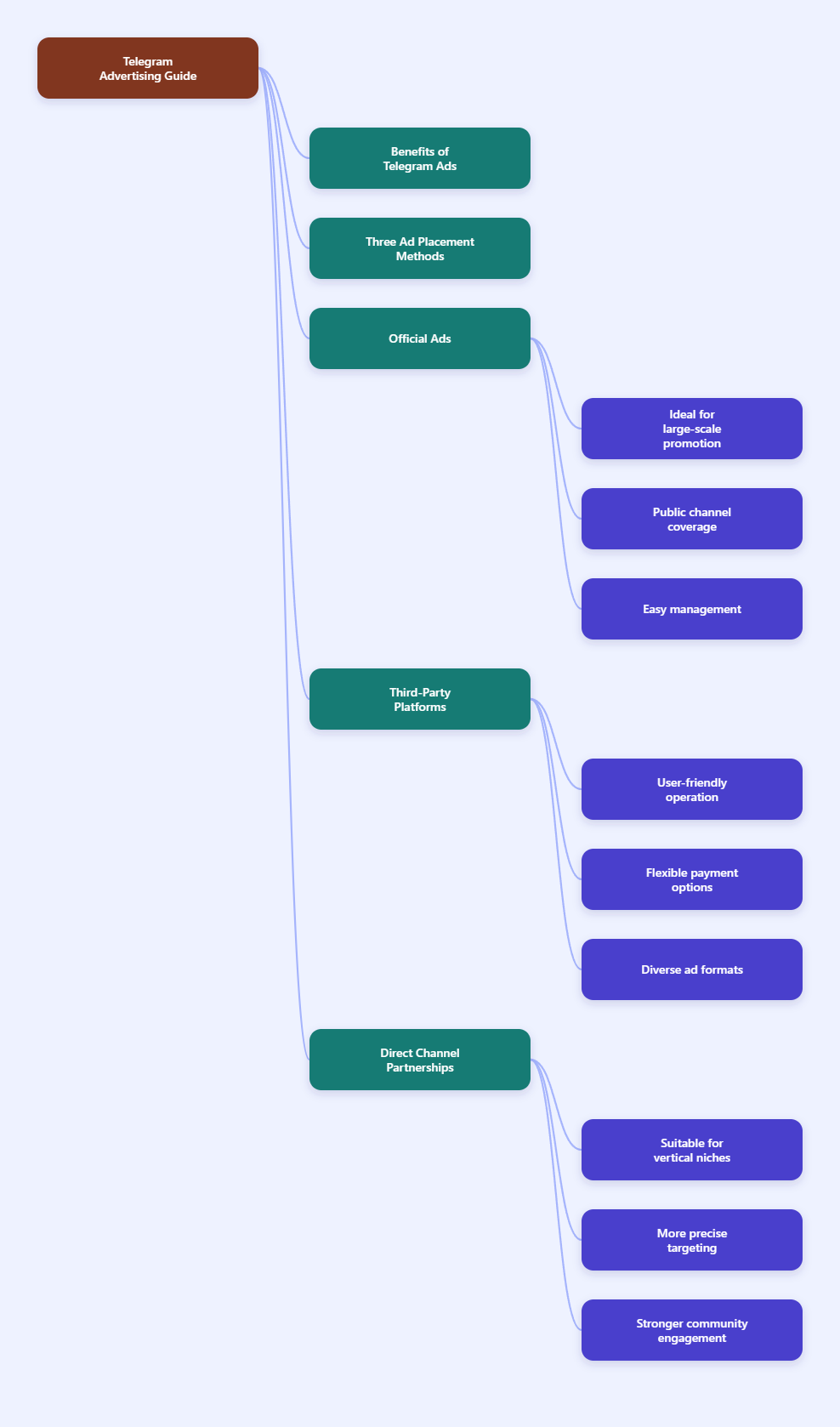
For most advertisers, the smartest approach is to combine three layers:
- Official Telegram Ads for broad, scalable reach in public channels.
- Third-party Telegram ad platforms or agencies for easier access, alternative payment models, and additional formats.
- Direct outreach or sponsorships with individual channel owners when you want highly specific placement and stronger niche alignment.
Because Telegram’s policy and product rules matter a lot, the campaign that works best is usually the one that matches your offer to the right placement, follows moderation standards, and uses a short, clear message with a strong call to action.
How to Advertise on Telegram: A Step-by-Step Guide
- Define your campaign goal
Before you spend anything, decide what you want: channel growth, website traffic, bot activations, app installs, lead generation, or sales. Telegram campaigns work best when the objective is specific. A broad “get more visibility” goal usually leads to weaker creatives and poor tracking. - Choose the right advertising route
In 2026, you generally have three routes:- Official Telegram Ads for sponsored messages in public channels.
- Ad networks or agencies that package Telegram inventory with easier onboarding or additional placements.
- Direct deals with channel admins for native posts or sponsored promotions in niche communities.
Choose the route that fits your budget, compliance needs, and targeting requirements.
- Set up access and funding
Telegram’s official platform is designed for managing ads, budgets, and placements in one place. Depending on your account route, onboarding and deposit requirements can differ. Always confirm current minimums and payment rules before you launch, since platform requirements can change. If you use an agency, ask about fees, account type, and whether they support TON-based or fiat workflows. - Select targeting carefully
Telegram Ads are known for channel-based targeting. You can choose public channels, topics, or language-based placements instead of user-level demographic targeting. The practical implication is simple: the better your channel selection, the better your results. For example, a B2B SaaS product should not run in entertainment channels just because the audience is large. Pick channels where the conversation matches your offer. - Write a concise ad message
Telegram sponsored messages are short by design. Keep your copy direct, relevant, and specific. Best practice is to:- Lead with the benefit.
- Use one clear CTA.
- Avoid hype or vague claims.
- Match the tone to the channel context.
A message that looks native tends to perform better than one that reads like generic display advertising.
- Build a compliant destination
Your ad destination matters as much as the ad itself. Whether you send users to a website, channel, bot, or mini app, make sure it loads quickly, is transparent about the offer, and does not misrepresent what the user will get. Telegram’s guidelines prohibit deceptive practices such as cloaking or spoofing. If your destination is weak, moderation and conversion performance both suffer. - Launch a small test first
Do not start with your full budget. Test several placements or creatives first, then compare click-through rate, conversion quality, and cost per result. If one message clearly outperforms the others, scale it. If performance is poor, refine the channel list, message, or landing page before increasing spend. - Track results beyond clicks
Clicks alone are not enough. Track the full funnel: impressions, CTR, session quality, sign-ups, purchases, bot starts, or channel joins. If you are driving traffic to a bot or mini app, use event tracking and conversion analytics. A campaign with cheap clicks but weak conversions is not profitable. - Optimize weekly
Review your placements, copy, and destinations regularly. Pause underperforming channels, duplicate winning ads, and test new creatives. Telegram advertising tends to reward disciplined iteration rather than large one-time budgets.
Best Ways to Advertise on Telegram: Comparison Table
| Method | Best For | Pros | Cons |
|---|---|---|---|
| Official Telegram Ads | Brand awareness, scalable reach, channel growth | Native placement, privacy-conscious targeting, broad public-channel inventory | Short ad format, limited user-level targeting, strict moderation |
| Third-party Telegram ad platforms | Performance marketing, simpler access, alternative ad formats | Faster onboarding, sometimes lower entry barriers, extra formats such as mini app placements | Platform quality varies, fees differ, inventory and reporting may be less standardized |
| Direct channel sponsorships | Niche audiences, influencer-style promotion, local communities | High relevance, native feel, strong trust if the channel is credible | Manual negotiation, inconsistent pricing, harder to scale and measure |
Best Practices for Telegram Ads in 2026
- Match the channel to the offer rather than chasing the largest audience.
- Keep copy short and specific; Telegram users respond well to clarity.
- Test multiple creatives so you can identify what actually converts.
- Use compliant destinations that accurately describe the product or service.
- Respect regional and category restrictions; some verticals face tighter review.
- Monitor conversion quality, not just low-cost clicks.
Common Mistakes to Avoid
- Targeting too broadly and hoping the algorithm will fix it.
- Using misleading claims or exaggerated promises in the ad copy.
- Sending traffic to a slow or unclear landing page.
- Ignoring moderation requirements before launch.
- Scaling too fast without validating conversion performance.
FAQ: How to Advertise on Telegram
What is the main way to advertise on Telegram in 2026?
The main official method is Telegram Ads, which places sponsored messages in public channels with 1,000+ subscribers. Many advertisers also use agencies, ad networks, or direct sponsorships for more flexible access.
Can I target users by age or gender on Telegram Ads?
No, Telegram advertising is primarily channel-based rather than user-profile-based. You choose channels, topics, or languages, which means contextual relevance is key.
How much budget do I need to start?
The amount depends on the route you choose. Official access and agency access can have very different entry requirements, so you should confirm current minimums before launching. For testing, start small and validate results first.
What kinds of ads work best on Telegram?
Short, direct ads with one clear benefit and one clear call to action usually perform best. Campaigns that closely match the channel’s topic and audience tend to convert better.
Why do Telegram ads get rejected?
Common reasons include prohibited content, misleading claims, weak destination pages, cloaking, or non-compliant products and services. Reviewing the ad and destination together usually helps prevent rejection.
Conclusion
Learning how to advertise on Telegram in 2026 comes down to three things: choose the right placement, write a clear message, and send users to a compliant destination. Telegram’s ecosystem rewards relevance and precision more than broad targeting. Start with a small test, measure real conversions, and scale only what proves effective. If you stay focused on audience fit and policy compliance, Telegram can become a strong, privacy-conscious acquisition channel for your brand.