
Telegram is no longer just a chat app for private conversations. In 2026, it is one of the most flexible places to build owned audience assets, launch paid communities, support customers, and convert traffic into revenue.
This guide is built for overseas sellers, social media teams, agency operators, and cross-border founders who need a business-first Telegram playbook. You will learn how to create a Telegram group the right way, when to use a channel instead, how to organize topics, how to manage permissions, and how to monetize a community with realistic, scalable models.
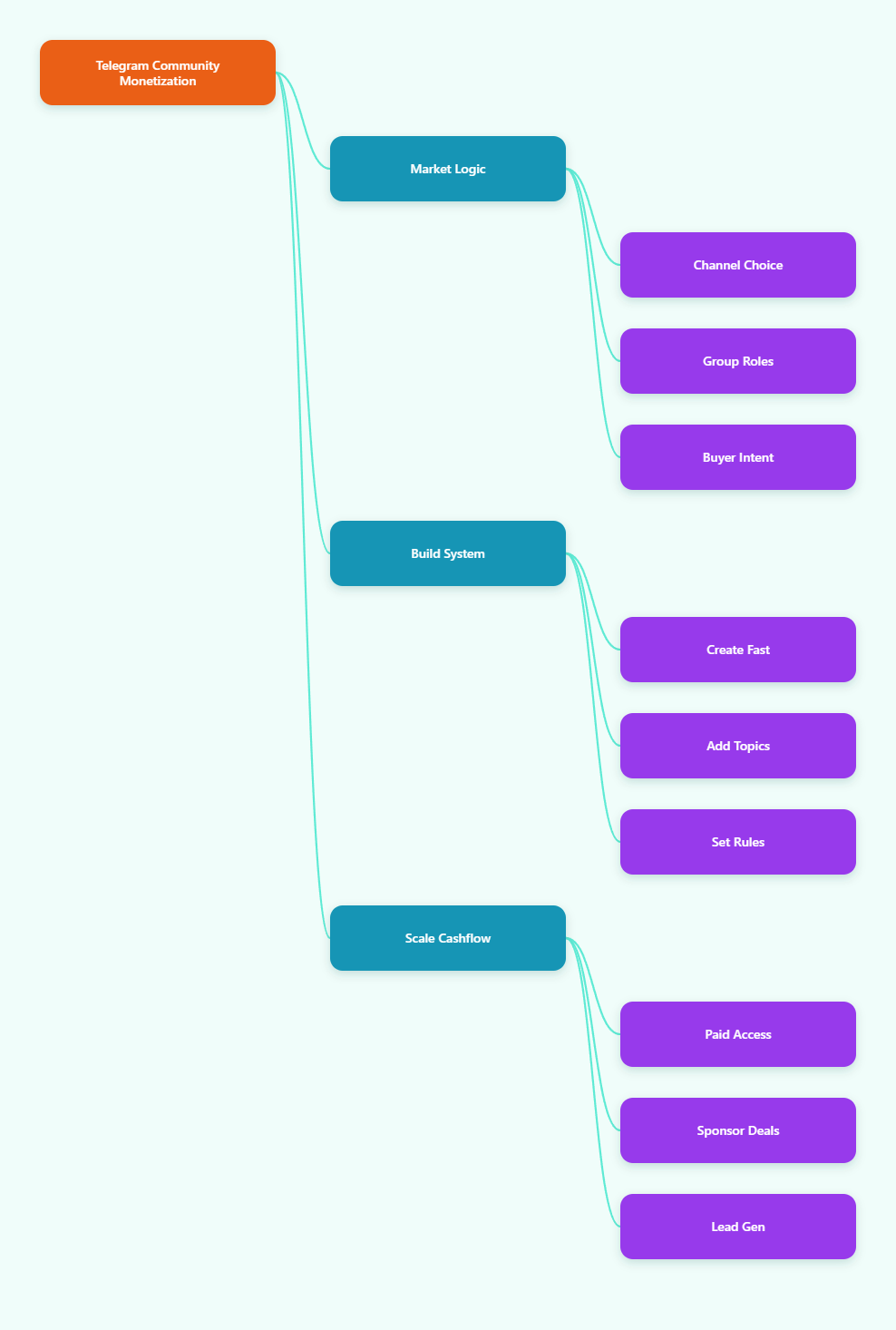
1. Why Telegram converts in 2026
Groups, channels, and direct intent
Telegram’s biggest business advantage is control. Unlike algorithm-heavy social feeds, a Telegram audience is closer to an owned list than rented reach. Telegram channels can broadcast to unlimited subscribers, while groups support two-way interaction and can scale up to 200,000 members according to Telegram’s official documentation. That makes Telegram useful for both top-of-funnel reach and bottom-of-funnel conversion.
For most businesses, the best model is not “group or channel.” It is a combination:
- Channel for announcements, offers, and launches
- Group for discussion, support, objections, and community trust
- Linked discussion when you want readers to comment on broadcasts
The buying behavior is simple. People who join Telegram usually expect faster updates, clearer access, and less friction than email or public social platforms. That is why Telegram works well for digital products, paid communities, crypto and trading education, ecommerce drops, local services, and B2B lead nurturing.
What a business community actually sells
A Telegram community rarely makes money from one post. It makes money from a system:
- Attention from invite links, search, ads, or referrals
- Trust through useful content, fast responses, and proof
- Conversion through offers, upsells, or paid access
- Retention through moderation, structure, and updates
That is why the setup matters so much. If you create a Telegram group without a business purpose, it becomes noise. If you create it with a conversion goal, it becomes a revenue layer.
| Format | Best Use | Key Strength | Business Risk |
|---|---|---|---|
| Group | Discussion, support, community | Two-way engagement | Spam and moderation load |
| Channel | Broadcasts, launches, news | Unlimited subscribers | Lower direct interaction |
| Linked pair | Brand + conversation | Scale plus feedback | Needs more management |
2. Build the right Telegram stack
How to create a Telegram group for business
The basic creation flow is consistent across devices. On mobile or desktop, you open Telegram, tap New Group, add at least one contact, name the group, and create it. That is the technical part. The business part is deciding what the group will do.
Before you create anything, answer these questions:
- Will the group sell, support, teach, or retain customers?
- Will it be public or invite-only?
- Should people reply freely, or should topics organize the conversation?
- Who will manage moderation and admin permissions?
For a commercial community, start with a private group if you want tighter control, or a public group if discoverability matters more. Telegram’s official docs also distinguish basic groups, which have a limit of 200 members, from supergroups, which can scale to 200,000.
Public vs. private vs. topic-based
Telegram’s structure is not just a technical choice. It changes how people behave.
- Public groups are easier to find and share
- Private groups are better for paid access and sensitive discussions
- Topic groups help large communities stay readable
Telegram introduced topics for large groups so conversations could be split into distinct threads. That matters for businesses because a messy group kills retention. If every question, complaint, and promotion lands in one feed, valuable members leave. Topics keep support, onboarding, offers, and general chat separated.
Recommended business setup
- Create a channel for official announcements.
- Create a group for replies, support, and community interaction.
- Link the group to the channel if you want post discussion.
- Turn on Topics when the room gets busy.
- Assign admins with only the permissions they need.
| Setup Choice | When to Use | Operational Advantage | Best For |
|---|---|---|---|
| Private group | Paid or controlled access | Higher trust, less noise | Membership businesses |
| Public group | Discovery and community reach | More organic entry points | Lead generation |
| Topics enabled | Large active communities | Better organization | Support, education, trading |
3. Growth systems that bring buyers
Traffic sources that actually fit Telegram
Telegram growth is strongest when it starts outside Telegram and finishes inside Telegram. That means you should use the platform as the conversion layer, not the only acquisition channel.
Practical traffic sources include:
- Short-form content on TikTok, Reels, and YouTube Shorts
- X threads and niche commentary
- Email lists and existing customers
- SEO landing pages with Telegram invite links
- Partnership swaps with adjacent communities
The best-performing invitation is specific. Do not say “join our group.” Say what the member gets in the first 7 days: daily signals, supplier updates, launch alerts, job leads, deal alerts, or customer support.
Referral loops and lead magnets
Telegram invite links are lightweight, which makes referral loops easy to build. A simple structure looks like this:
- Publish a useful asset outside Telegram.
- Gate deeper access or live discussion inside the group.
- Reward members who bring in the right people.
- Use pinned onboarding messages to explain the next step.
This works because the member journey is short. A good Telegram landing page or bio should tell people exactly why they should join now, not later.
What to measure
For a commercial community, track these numbers every week:
- New joins
- Active posters
- Offer clicks
- Conversion to paid product or lead form
- Churn after onboarding
If you do not measure those five points, you are only counting vanity membership.
4. Monetization models that work
Paid access and premium communities
The simplest monetization model is to sell access. Telegram is a strong fit for paid communities because the value is often about proximity, timely updates, and exclusive discussion rather than a static product file.
Common paid setups include:
- Monthly membership
- One-time lifetime access
- Tiered access by expertise or support level
- Channel plus private group bundle
Use paid access only when the group has a clear ongoing promise. If members do not receive repeat value, retention falls quickly.
Lead generation for services and products
Not every Telegram group should charge membership. For agencies, consultants, ecommerce brands, and software sellers, Telegram can be a lead engine. The group builds trust, and the trust turns into consultations, demos, purchases, or repeat orders.
Good lead-gen content includes:
- Case breakdowns
- Before-and-after results
- Product updates
- Customer questions and answers
- Limited-time offers
That is why community content should always move toward a business action.
Sponsors, affiliates, and partnerships
Once a group has stable attention, you can monetize it with sponsorships or affiliate offers. This works best when the audience is niche and the offer is aligned. For example, a crypto education group can partner with analytics tools, while a creator business group can promote CRM, design, or automation tools.
The key rule is relevance. If the sponsor does not solve a member problem, the relationship damages trust.
Monetization comparison
| Model | Primary Income | Pros | Watchout |
|---|---|---|---|
| Paid community | Membership fees | Predictable recurring revenue | Requires strong retention |
| Lead generation | Sales pipeline | High upside on closed deals | Needs consistent trust |
| Affiliate/sponsor | Commissions and placements | Fast to launch | Must stay relevant |
5. Moderation, automation, and retention
Why admin permissions matter
Telegram gives granular admin controls, which is useful for business operations. You do not need every moderator to have full power. In serious communities, that is a mistake. Use permissions to separate roles like welcome moderation, content approval, spam removal, pinned messages, and topic management.
Telegram’s official docs make it clear that communities can support multiple admins with specific rights. That matters because a sales community is part content engine, part support desk, and part risk control system.
Bots and automation
Bots can reduce labor by handling repetitive tasks:
- Welcome messages
- Rule reminders
- Spam filtering
- Keyword moderation
- Member onboarding flows
Automation is useful, but it should not make the community feel robotic. The goal is to remove friction, not people.
Retention system
Retention in Telegram comes from structure and utility. Members stay when they can quickly find value.
- Pin the most important message.
- Use topics for support and discussion.
- Post on a predictable schedule.
- Highlight wins, proof, and answers.
- Remove spam fast.
When moderation is weak, high-value members stop posting. When moderation is strong but cold, members stop engaging. The best communities feel organized, responsive, and human.
6. Common mistakes that kill revenue
Do not start with traffic before strategy
Many operators rush to invite people before they define the offer. That creates a crowded room with no business purpose. A better approach is to define the revenue path first, then build the group around that path.
Avoid one-room chaos
If every message goes into one feed, your high-intent members will leave. Separate onboarding, support, and discussion. Use topics or split communities if necessary.
Do not over-automate trust
Bots can assist moderation, but they cannot replace positioning, proof, or live expertise. Telegram monetization depends on credibility. If the group looks automated and empty, it will not convert.
7. FAQ
How do I create a Telegram group for business?
Open Telegram, tap New Group, add at least one contact, name the group, and create it. Then decide whether it should be public or private, add a clear description, and set permissions before inviting your audience.
Should I use a Telegram group or channel?
Use a channel for announcements and broadcasts. Use a group for discussion, support, and community interaction. For most businesses, the strongest setup is both.
How many members can a Telegram group have?
Telegram’s official documentation says groups can scale to 200,000 members. Basic groups have fewer features and a smaller ceiling, while supergroups are the scalable format for larger communities.
Can I make a Telegram group private?
Yes. Private groups are better for paid access, exclusive support, and controlled onboarding. Public groups are better when discoverability matters more than privacy.
Are Telegram Topics useful for business?
Yes. Topics help large communities stay organized by splitting conversation into separate threads. They are especially useful for support, education, trading, and membership businesses.
How do Telegram groups make money?
They make money through paid membership, lead generation, affiliate offers, sponsorships, and product launches. The best model depends on whether your group is solving a premium problem or generating demand for another offer.