
Telegram channels remain one of the most direct ways to publish content to an audience in 2026. Unlike social feeds that rely heavily on recommendation systems, channels let you reach subscribers with a clear broadcast-style format. That makes Telegram Channel Management an important skill for creators, brands, communities, and businesses that want consistent communication.
Good management is not only about posting often. It also includes planning content, keeping subscribers engaged, moderating discussion where needed, reviewing performance, and using the right tools to save time. A well-run channel feels organized, reliable, and worth subscribing to.
In this guide, you will learn the core practices that help a Telegram channel stay active and useful in 2026. The focus is on real, practical steps that can support growth while keeping the channel easy to manage.
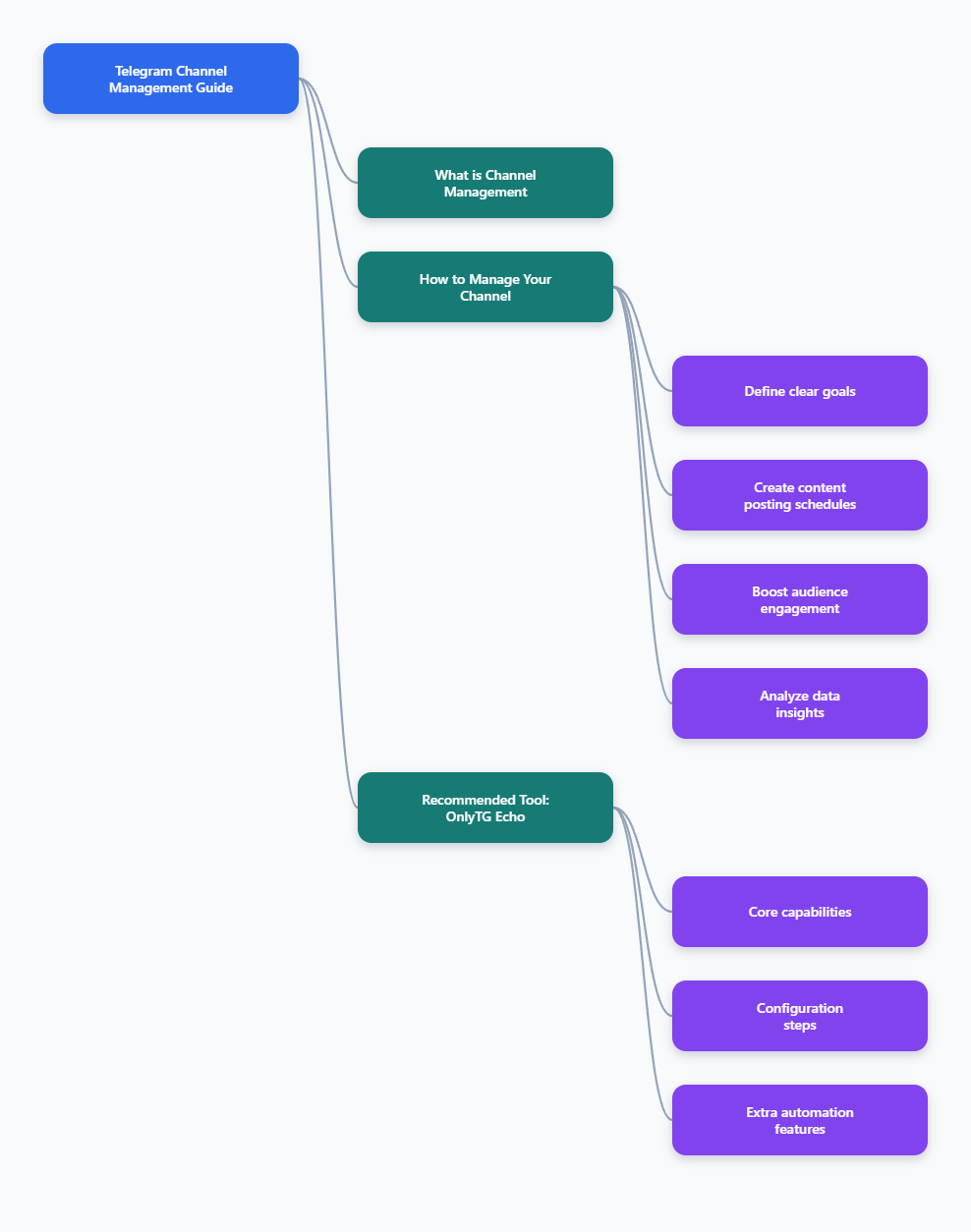
What Telegram Channel Management means in 2026
Telegram channels are built for one-to-many communication. A channel owner or admin publishes messages, and subscribers receive them in a feed. In practice, channel management means handling the full workflow behind that publishing process.
That workflow usually includes:
- Setting up the channel clearly from the start
- Choosing a content direction that fits the audience
- Publishing regularly without overwhelming subscribers
- Using media, buttons, and links in a useful way
- Reviewing performance data to understand what works
- Managing admins, permissions, and workflow safely
Some channels also connect a discussion group to let subscribers talk about posts. Others stay broadcast-only. The right structure depends on the purpose of the channel and how much interaction the owner wants to handle.
Start with a clear channel purpose
Before posting anything, define why the channel exists. A channel with no clear purpose is harder to grow and harder to maintain.
Common channel goals include:
- Sharing news or updates
- Publishing educational content
- Promoting products or services
- Delivering community announcements
- Supporting a brand or creator identity
When the purpose is clear, it becomes easier to choose content topics, posting frequency, and tone of voice. Subscribers also understand what they will get by staying in the channel.
A useful approach is to write a one-sentence description of the channel’s value. For example: “Daily marketing tips for small businesses” or “Weekly product updates and launch announcements.” That simple sentence can guide your content decisions later.
Set up the channel structure properly
Channel setup affects both trust and usability. A clean structure makes the channel easier to follow and easier to manage over time.
Helpful setup items include:
- A simple, recognizable channel name
- A clear profile image or logo
- A concise description
- A public link if the channel is meant to be discoverable
- A consistent posting format
If you plan to use multiple admins, define responsibilities early. For example, one person may handle writing, another may review visuals, and another may monitor comments or questions in a linked discussion group.
Telegram’s admin and permission system allows channel owners to assign rights in a controlled way. That matters for larger teams, where too many unrestricted permissions can create confusion or risk.
Create a realistic content plan
Reliable channels are usually built on a simple content plan. Posting randomly can work for a short time, but it is harder to sustain.
A good content plan should answer:
- What topics will the channel cover?
- How often will posts appear?
- What post formats will be used?
- Who creates and approves content?
- How far ahead should content be prepared?
Many successful channels use recurring themes. For example, a channel might publish tips on Mondays, industry updates midweek, and a Q&A post at the end of the week. Repeating patterns can make planning easier for the admin and more predictable for subscribers.
Short paragraphs are especially effective on Telegram. Long walls of text can be hard to scan on mobile screens. Break content into small blocks and use bullet points when sharing lists, steps, or summaries.
Post consistently without posting too much
Consistency matters more than volume. A channel that posts at a steady pace is easier to trust than one that appears active only occasionally.
The right frequency depends on your niche. A news or market update channel may need multiple posts per day. A niche educational channel may perform better with fewer, more thoughtful posts.
Good consistency usually means:
- Posting often enough to stay relevant
- Avoiding repetitive or low-value updates
- Keeping timing predictable
- Maintaining quality across all posts
If you have many ideas at once, scheduling can help you space them out. Telegram supports scheduled messages in chats, and channel workflows can also be handled through bots and management tools. This helps teams maintain a stable posting rhythm even when they are busy.
Use media, formatting, and calls to action well
Text-only posts can work, but many channels benefit from a mix of formats. Images, videos, polls, voice notes, and documents can make content more engaging when used appropriately.
Formatting also matters. Simple formatting can improve readability:
- Use short paragraphs
- Break instructions into steps
- Use bullets for key points
- Keep links easy to spot
- Avoid cluttered layouts
Calls to action should be clear and natural. For example:
- Read the full update
- Share your opinion in the discussion group
- Save this post for later
- Check the linked resource
The best calls to action match the purpose of the channel. A product channel may point to a purchase page, while an educational channel may ask users to bookmark or forward a post.
Build engagement in a broadcast-first environment
Telegram channels are not the same as groups. Channels are mainly for broadcasting, while groups are for conversation. Still, engagement remains important because it signals that your content is useful and worth following.
Ways to improve engagement include:
- Publishing useful content that solves real problems
- Keeping a consistent style so subscribers know what to expect
- Asking simple questions when appropriate
- Using linked discussion groups for feedback
- Posting content that encourages forwarding or saving
If you connect a discussion group, moderation becomes important. Without clear rules and active management, discussion can turn noisy or spam-heavy. A good moderation setup keeps the channel’s reputation strong.
In 2026, engagement is still one of the clearest signals that a channel is active and worthwhile. A smaller but responsive audience is often more valuable than a large, inactive one.
Moderate safely and keep the channel organized
Moderation is a major part of channel management when a channel has a linked group or multiple admins. It helps keep conversations relevant and reduces spam or abuse.
Useful moderation practices include:
- Writing simple rules for discussion groups
- Assigning only the permissions each admin needs
- Reviewing who can post, pin, or edit
- Removing spam quickly
- Keeping the channel branding consistent across posts
Telegram’s admin rights are granular, which is useful for larger teams. It allows owners to give limited privileges instead of handing over full control. That reduces risk and makes collaboration easier.
If you manage a high-volume channel, moderation bots or automation tools can help with repetitive tasks. The key is to use automation to support human judgment, not replace it entirely.
Track performance with channel analytics
Analytics help channel owners understand what content works best. Without data, it is difficult to know whether a post performed well because of the topic, the timing, the format, or the audience.
Useful metrics may include:
- Subscriber growth
- Views per post
- Shares or forwards
- Reactions
- Engagement patterns over time
Telegram offers channel statistics for channels and supergroups, and different tools can add more detail. Public analytics platforms can also help compare channels, track growth trends, and monitor top-performing posts.
The most useful habit is to review patterns regularly. For example, you might notice that posts with practical tips get more forwards than announcements. Or that certain posting times perform better than others. These patterns can shape your next content plan.
Use automation carefully
Automation can make channel management much easier, especially when a team handles multiple content streams. Common automation uses include scheduling posts, sending welcome messages, managing replies, and organizing broadcasts.
Automation works best when it removes repetitive work rather than replacing strategic decisions. For example, it makes sense to automate reminders or recurring updates. It makes less sense to automate important brand messages without review.
Before using any tool, check that it supports the tasks you need and that it fits your team’s workflow. Simple, reliable automation is usually better than complicated setups that are hard to maintain.
Recommended Channel Management Tools
If you want a practical way to handle Telegram Channel Management more efficiently, OnlyTG Echo (@EchoOnBot) is worth considering for its Channel Management feature. It is designed to help users manage channels through a bot workflow, which can reduce manual work when publishing, updating, and organizing channel content.
Here is a simple way to use it step by step:
- First, create a new bot with BotFather and connect the bot token to OnlyTG Echo.
- Open the bot and send the
/startcommand. - Tap the Channel Setting or Channel Management option.
- Follow the prompt to select the channel that meets the required conditions.
- Use the available management functions to publish or schedule posts, edit existing posts, and check subscriber-related data on the OnlyTG Console.
- Test one post first so you can confirm the workflow before using it for regular publishing.
Beyond Channel Management, OnlyTG Echo also includes other useful features such as broadcast messaging, auto-reply, start messages, quick replies, multi-media message support, loop posts, and admin console functions. These options can be helpful for teams that want to keep Telegram operations organized in one place.
Common mistakes to avoid
Even a well-designed channel can underperform if a few basic mistakes are repeated.
Watch out for these issues:
- Posting without a clear purpose
- Publishing too often with low-value content
- Ignoring formatting and readability
- Giving too many admins unnecessary permissions
- Not reviewing analytics
- Using automation without checking quality
It is also important not to let the channel drift away from its original audience promise. If subscribers joined for weekly insights, sudden changes to daily promotions may reduce trust.
Final thoughts
Effective Telegram Channel Management in 2026 is about structure, consistency, and usefulness. A strong channel has a clear purpose, a simple content plan, and a workflow that supports steady publishing.
When you combine readable posts, thoughtful moderation, regular analytics review, and the right tools, a Telegram channel becomes easier to run and more valuable to subscribers. The best results usually come from channels that stay focused and deliver useful content over time.
If you keep the channel organized and manage it with intention, Telegram can remain a strong platform for direct audience communication in 2026.