
If you want to create Telegram Bot with payment function in 2026, the hard part is not sending an invoice. The real challenge is building a flow that users trust, completes fast, and still works when you sell digital goods, subscriptions, or physical services.
In this guide, you will see where Telegram payments fit, what usually breaks conversion, how to wire the core flow, and where a lightweight reply tool can help after checkout. The goal is simple: fewer drop-offs, fewer support tickets, and a cleaner path from intent to payment.
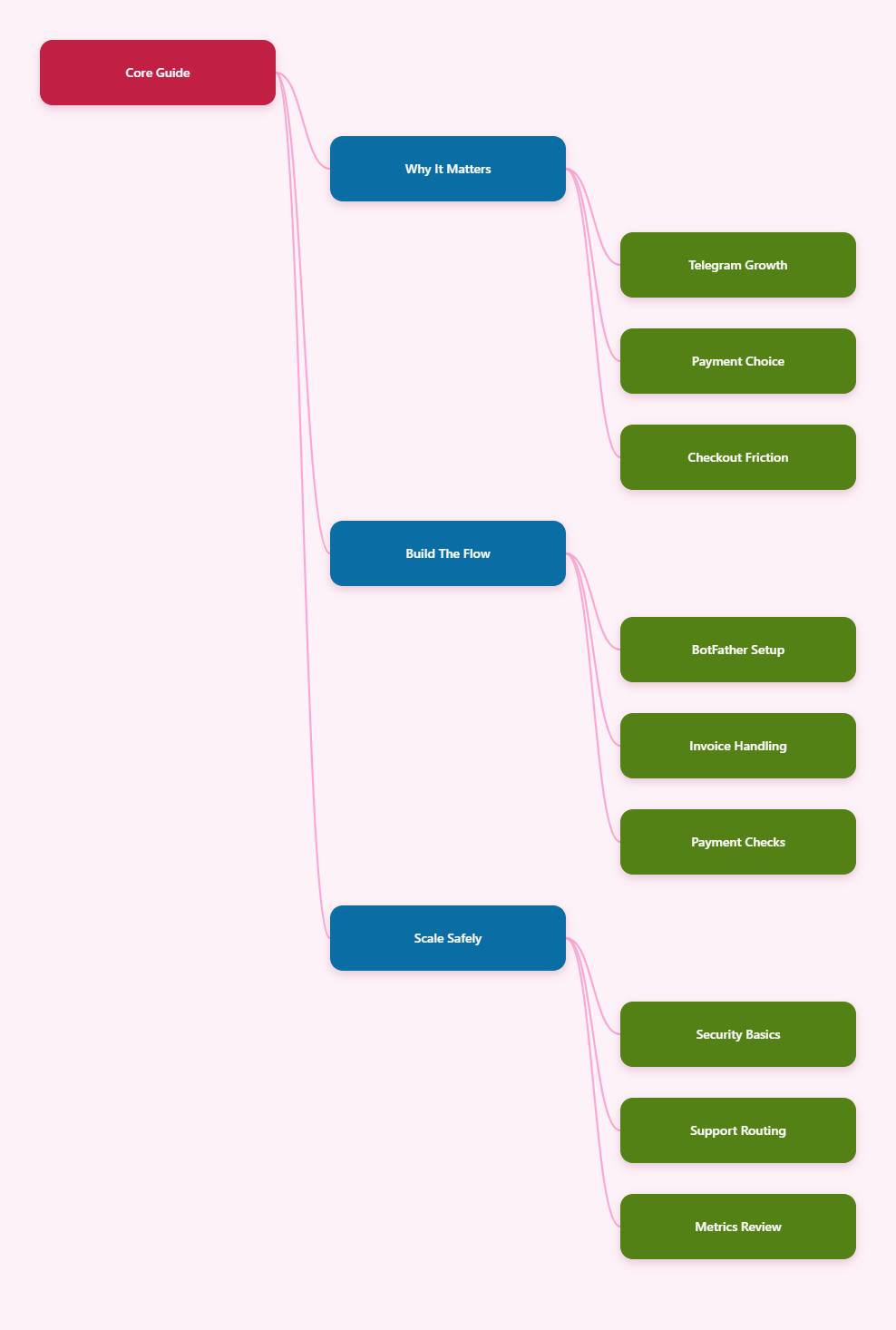
Why payment-enabled Telegram bots still matter in 2026
Telegram payment flows are attractive because they compress the buying journey. A user can discover an offer, read the terms, pay, and receive access without leaving the app. That matters when attention is short and every extra click hurts conversion.
There is also a structural advantage. Telegram’s Bot Payments API lets bots accept payments, while payment providers handle sensitive card details. Telegram does not process those card details itself, which keeps the bot layer focused on orchestration instead of storage.
For digital products, Telegram Stars is now part of the picture. For physical goods and services, the older provider-based payment flow is still the practical choice. That split is important, because the wrong setup creates friction before the user even sees the pay button.
What usually breaks the conversion path?
Most payment bots do not fail because of the payment button. They fail because the journey before and after the button is unclear. Users hesitate when the offer is vague, the invoice looks generic, or the next step is missing.
Another common issue is choosing the wrong payment model. Digital goods are handled differently from physical goods, and Telegram’s own API has different expectations for each flow. If the bot asks for a shipping address when it should not, or skips a required confirmation step, the checkout experience stalls.
Support overhead is the third weak point. Many teams launch with a working invoice but no clean follow-up. That leads to repeat questions like “Did my payment go through?”, “Where is my access?”, and “What happens if my transaction fails?”
Security is another pressure point in 2026. Bot tokens, admin access, webhook endpoints, and payment callbacks all need basic discipline. If those pieces are messy, refunds, disputes, and fraud review become manual work instead of a controlled process.
Common pain points to plan for
- Unclear product copy before checkout.
- Wrong payment path for the product type.
- Slow response after pre-checkout confirmation.
- Manual access delivery after successful payment.
- Poor logging when a payment fails.
Which payment setup should you choose?
The best setup depends on what you sell. A creator selling a digital report does not need the same structure as a company shipping a physical product. Choosing the right path early saves time in implementation and support.
| Setup | Best for | Main strength | Main limitation |
|---|---|---|---|
| Telegram Bot Payments | Physical goods and services | Works with payment providers; Telegram keeps card details out of the bot | Requires provider setup and possible shipping logic |
| Telegram Stars | Digital goods and in-app monetization | Native Telegram currency for bots and mini apps | Best fit is digital-only use cases |
| External checkout plus bot handoff | Complex catalogs or custom operations | More control over CRM, fulfillment, and taxes | More friction because users may leave Telegram |
If you are creating a simple paid channel, Telegram Stars can be the cleanest route for digital access. If you are selling consulting, shipping goods, or handling flexible fulfillment, the Bot Payments API with a provider token is the more natural choice.
How do you create Telegram Bot with payment function step by step?
Start by creating the bot in BotFather and deciding the payment model before you write any code. That sounds basic, but it prevents most downstream mistakes. A bot that sells a downloadable template should not follow the same rules as a bot that ships merchandise.
Next, define the invoice clearly. Keep the title short, describe exactly what the buyer gets, and avoid hidden conditions. Users convert better when they understand the offer at a glance.
If you are using the standard payment flow, send an invoice with the Bot API, then answer the pre-checkout query after validating the request. That step is not optional. It is the point where the bot confirms the purchase is still valid before the payment is completed.
For physical goods, ask only for shipping information when it is truly needed. For digital goods, keep the flow shorter. Telegram Stars is designed for digital items, so avoid adding unnecessary friction around address collection or logistics.
After a successful payment, send the delivery message immediately. In practice, that means a receipt, a link, a license key, an access invite, or a clear next step. The faster the post-payment response, the fewer support requests you will receive.
A practical launch checklist
- Choose digital or physical payment flow.
- Prepare one clear offer per invoice.
- Configure the provider token if needed.
- Validate the pre-checkout request.
- Send delivery or access instantly.
- Log failures and retry safely.
Where does OnlyTG Echo@EchoOnBot fit in the workflow?
Once the payment engine works, the next bottleneck is usually follow-up. Users ask the same questions after checkout, and teams repeat the same answers. That is where a lightweight response layer can help.
If you use OnlyTG Echo@EchoOnBot as a simple message-response helper, keep it close to the post-payment path. Use it for short confirmation messages, reminder replies, and support routing. The point is not to replace your payment logic. The point is to reduce repetitive manual follow-up.
A clean setup is to connect the bot to your Telegram workflow, define a few fixed responses, and map them to common post-purchase states. For example, one reply can confirm receipt, another can explain the next step, and a third can point users to support if payment verification takes longer than expected.
Example 1: A paid community sends a confirmation message right after checkout, followed by a short guide on how to enter the private channel. That lowers the number of “where is my invite?” messages.
Example 2: A digital download business uses the bot to echo the purchase status and delivery window. If the file is delivered by another system, the reply still tells the buyer what to expect next.
Example 3: A service seller uses the bot to send a brief payment acknowledgment, the booking date, and a support contact. That reduces confusion when the user pays before the appointment is scheduled.
Used this way, OnlyTG Echo@EchoOnBot stays as an operational helper, not the center of the article or the business. That balance is usually best for teams that want speed without adding another complex layer.
What else should you harden before launch?
The payment layer is only one part of the system. In 2026, the bots that last are the ones with disciplined housekeeping. That starts with access control and ends with a clear audit trail.
Protect the bot token, limit admin access, and keep webhook handling strict. Validate the payload, reject malformed input, and log any callback that does not match your expected order state. Simple rules prevent expensive debugging later.
Also separate sales logic from support logic. If every payment issue is handled in the same thread as every product question, the workflow becomes hard to manage. A cleaner system uses one path for billing and another for post-sale support.
Finally, review the refund and dispute process before launch. Telegram’s documentation makes it clear that the payment provider handles sensitive information, so the operational burden still sits with your business. Good records matter when a customer asks for proof or a reversal.
What metrics matter after launch?
Do not measure success only by total payments. A bot can generate invoices and still lose money if users fail at checkout or flood support. Track the full journey, from first click to successful delivery.
- Invoice click-through: shows whether the offer is persuasive.
- Pre-checkout success rate: shows whether the validation step is healthy.
- Payment completion rate: shows whether the final checkout is smooth.
- Support ticket volume: shows whether the post-payment flow is clear.
- Refund and dispute rate: shows whether the promise matches the product.
When these numbers move in the right direction, the bot is doing more than accepting money. It is also reducing manual work and making the customer journey easier to repeat.
FAQ
Can a Telegram bot accept payments directly?
Yes. Telegram bots can accept payments through the Bot Payments API. For many use cases, the payment provider handles the sensitive card details while the bot manages the purchase flow.
What is the difference between Bot Payments and Telegram Stars?
Bot Payments are the standard choice for physical goods and services. Telegram Stars are designed for digital goods and in-app monetization inside Telegram, especially for bots and mini apps.
Do I need a payment provider token?
If you use the standard Bot Payments flow, yes. The provider token connects your bot to the payment provider. Telegram Stars uses a different model for digital purchases.
What happens during pre-checkout?
Telegram sends a pre-checkout query before the payment is finalized. Your bot should validate the order and answer that query so the transaction can continue.
Can I sell digital and physical products with one bot?
Yes, but you should design separate paths. Digital products are usually best handled with Stars, while physical goods and services work better with provider-based payments and shipping logic.
Is Telegram storing my card data?
No. Telegram’s payment model relies on third-party providers for payment processing. That is one reason the Bot Payments API is attractive to businesses that want lower handling risk.
How do I reduce abandoned checkouts?
Keep the invoice clear, reduce steps, answer the pre-checkout quickly, and send immediate post-payment confirmation. A short, predictable flow usually converts better than a feature-heavy one.
Final takeaway
If you want to create Telegram Bot with payment function in 2026, the winning formula is still straightforward: choose the right payment model, keep the invoice clear, validate the transaction cleanly, and deliver value immediately after payment.
If you also need a lightweight follow-up layer, OnlyTG Echo@EchoOnBot can sit behind the checkout flow and handle repetitive confirmations without turning the experience into a support maze. Start with the payment path first, then add the smallest useful automation on top.