
Telegram is no longer just a messaging app. In 2026, it gives creators, educators, community owners, and businesses several real ways to publish premium content, charge for access, and manage members inside the platform.
This guide explains how these pieces fit together, what is officially supported by Telegram, and which model makes sense depending on what you want to sell.
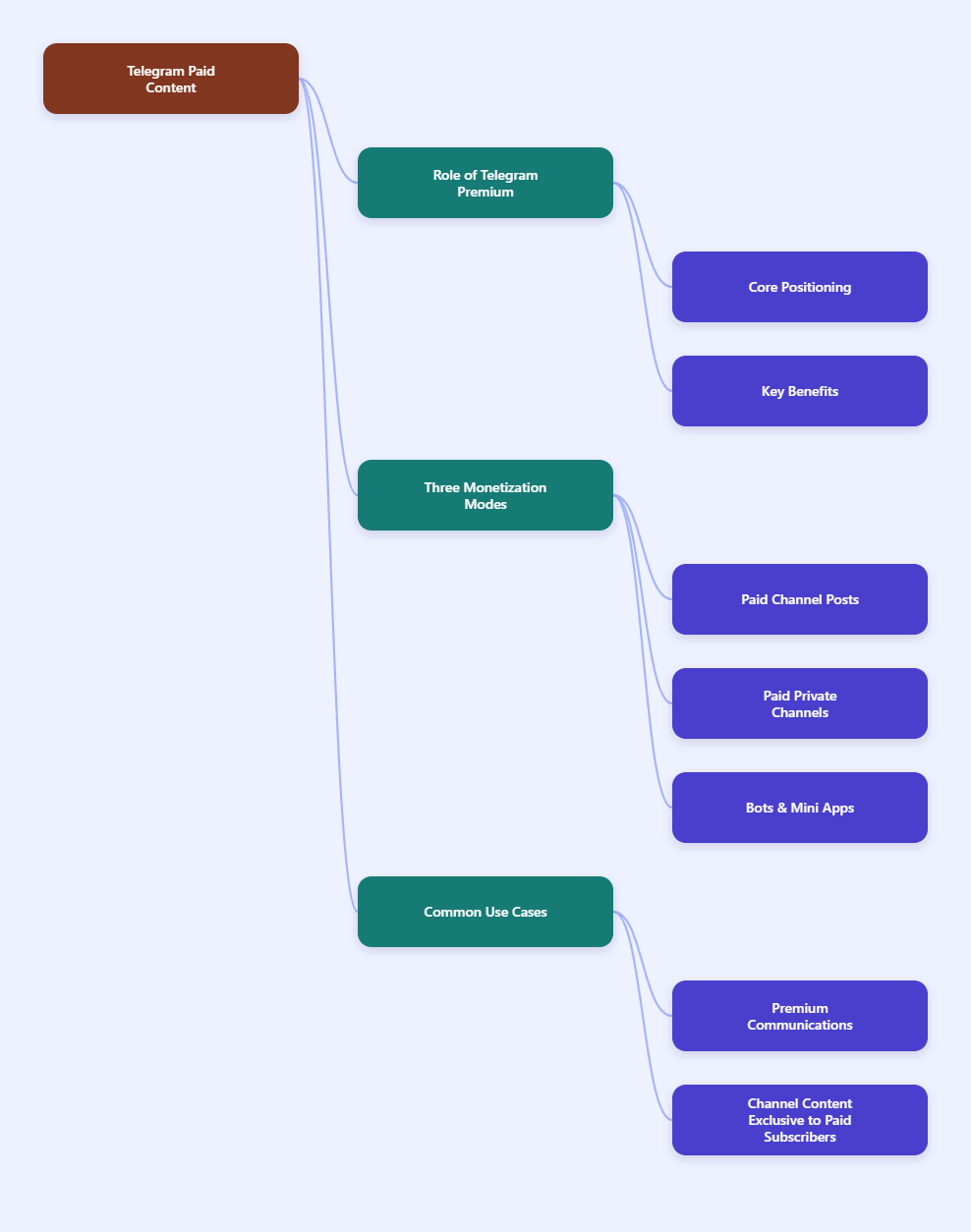
What “Telegram Premium Content” Usually Means
In practice, most people use the phrase “Telegram premium content” to describe content that is restricted, monetized, or reserved for paying members.
On Telegram, that can include:
- Paid posts in channels.
- Private channels with paid access.
- Subscription communities managed with bots.
- Digital goods sold through bots or mini apps using Telegram Stars.
- Exclusive updates, files, tutorials, alerts, media, or member-only chat access.
Telegram supports several of these natively, while other setups rely on third-party membership bots built on Telegram’s bot platform.
How Telegram Premium Fits In
Telegram Premium is an optional subscription for users. According to Telegram’s Premium FAQ, it unlocks additional features while helping fund the platform.
It does not automatically turn your channel into a paid membership product. Instead, it gives users added app-level features. Official Telegram materials also show that some business-related functions are available to Premium subscribers.
Premium can matter for content creators in indirect ways because it adds tools such as:
- Extra story-related features.
- Higher limits in several parts of the app.
- Access to Telegram Business features for eligible users, according to Telegram’s official business documentation.
That means Telegram Premium is best understood as a feature upgrade for the account holder, not as the main payment system for selling your content.
The Main Ways to Sell Premium Content on Telegram
As of 2026, there are three practical models used most often.
| Model | How it works | Best for | What to know |
|---|---|---|---|
| Paid posts in channels | Readers unlock specific posts with Telegram Stars | Creators selling individual pieces of content | Native Telegram option, but only applies to eligible paid content posts |
| Paid channel subscriptions | Users pay for access to a private channel or community | Recurring memberships, exclusive updates, courses, signals | Can be done through Telegram-native subscription features or external membership tools |
| Bots and mini apps | Users buy digital goods or services through bots using Stars | Downloads, tools, services, automated delivery | Useful when you need workflows, automation, and product logic |
1. Paid Posts in Telegram Channels
Telegram introduced paid media and later expanded monetization options for channels, bots, and business accounts. Official Telegram blog posts and content creator terms confirm that creators can publish content that stays locked until users pay with Telegram Stars.
This is one of the clearest native answers to the question, “How do I post premium content on Telegram?”
With paid posts, you can monetize individual items instead of the entire channel.
Typical use cases include:
- Exclusive videos or photo sets.
- Paid research notes or reports.
- Bonus lessons and files.
- Early access announcements.
- Limited campaign drops or one-time releases.
Important details from Telegram’s official materials:
- The buyer pays using Telegram Stars.
- Channel owners receive Stars from those unlocks.
- Telegram states that creators can later convert earned Stars into rewards, with official materials referring to Toncoin-based rewards in some contexts.
- Telegram also states it takes technical measures to reduce downloading, screenshotting, or redistribution of paid content, but that does not mean leakage is impossible.
This model works well when you want low friction for buyers. They do not need to leave Telegram, negotiate payment manually, or message an admin for access.
When paid posts work best
- You already have a free audience and want to monetize selected high-value posts.
- You do not want to put the whole channel behind a paywall.
- You want impulse-friendly purchases inside Telegram.
- You sell content in small units rather than ongoing memberships.
2. Paid Access to Private Channels
Telegram’s Channels FAQ makes a basic but important distinction:
- Public channels can be found in search and joined by anyone.
- Private channels require the owner to add members or provide an invite link.
That private-channel structure is the foundation of many premium content businesses on Telegram.
A paid private channel is usually built around one promise: subscribers pay, and only paying members can access the content inside.
This model is often used for:
- Premium newsletters.
- Trading or market commentary channels.
- Coaching communities.
- Paid media libraries.
- Language learning or educational releases.
- Niche industry briefings.
Telegram’s 2024 update on subscriptions confirms that channel owners can create special invite links with a monthly fee. That gives Telegram a more native route for recurring access than older manual setups.
At the same time, many creators still use third-party subscription bots because they want extra control over:
- Billing options.
- Access rules.
- Renewal reminders.
- Coupon codes.
- Multiple plans or bundles.
- Connections to Stripe, PayPal, or crypto gateways.
If your business depends on recurring membership, access enforcement is the key operational issue. Someone must add paid members, remove expired members, and manage renewals. Bots are popular because they automate that work.
What to check before launching a private paid channel
- Decide whether your content is better sold monthly or per post.
- Define a posting schedule you can actually maintain.
- Make sure the value proposition is specific, not vague.
- Set clear rules about forwarding, redistribution, refunds, and support.
- Review Telegram’s terms so your content and payment flow stay compliant.
3. Selling Digital Goods Through Bots and Mini Apps
Telegram’s official documentation for digital goods explains that bots and mini apps can sell digital goods and services in exchange for Telegram Stars. This is a major option if your premium content is more product-like than community-like.
Examples include:
- E-books.
- Templates.
- Reports.
- Access codes.
- Video lessons.
- Premium tools inside mini apps.
This model is useful when you need automation, including:
- Payment confirmation.
- Instant delivery.
- Tiered access.
- Support messages.
- User-specific unlocks.
Telegram also documents payments for physical goods separately, so it is important not to mix the two systems. For digital products and services inside Telegram, Stars are the central mechanism in the official documentation.
Telegram Stars: Why They Matter
Telegram Stars are Telegram’s in-app virtual currency for digital purchases and creator monetization features.
Based on Telegram’s official documentation and blog posts, Stars can be used for:
- Buying digital goods and services from bots and mini apps.
- Unlocking paid media.
- Supporting creators in eligible monetization features.
- Powering some subscription and paid interaction flows introduced in later updates.
For creators, the practical advantage is simple: Stars reduce payment friction inside the app.
For buyers, the purchase flow is faster than being redirected to an external store.
For sellers, the tradeoff is that you are working inside Telegram’s monetization framework rather than owning the entire checkout experience.
Telegram Business and Premium Content
Telegram Business is relevant if your premium content strategy includes client communication, support, or automated replies.
Telegram’s official business documentation lists features such as:
- Business hours.
- Location.
- Quick replies.
- Greeting messages.
- Away messages.
- Custom start pages.
- Chatbot support.
Telegram also states that, for the moment, Telegram Business features are available for free to Premium subscribers. In addition, later Telegram updates expanded paid content options to bots powering business accounts.
That matters if your business sells premium content but also needs customer handling inside Telegram.
For example, a business account can help you:
- Answer presale questions faster.
- Route users to the correct plan.
- Send structured onboarding replies.
- Connect bot support without moving users to another platform.
Best Use Cases for Telegram Premium Content
Not every business model performs equally well on Telegram. The platform tends to work best when the content is timely, direct, and easy to consume in chat format.
Strong fits include:
- Education: short lessons, files, premium notes, cohort updates.
- Creator content: bonus posts, behind-the-scenes media, member-only drops.
- Communities: subscription channels, VIP groups, private discussion spaces.
- Professional insights: niche research, alerts, analysis, curated updates.
- Digital products: templates, downloads, paid access tools, mini app unlocks.
Weaker fits include products that require heavy account management outside Telegram, complex compliance flows, or broad public discovery without an audience source.
How to Choose the Right Model
If you are unsure which setup to use, start with the product, not the tool.
| If you sell… | Best starting model |
|---|---|
| Single high-value posts or media | Paid posts with Stars |
| Ongoing exclusive updates | Private paid channel |
| Member access plus automation | Subscription bot or business workflow |
| Downloads or in-app digital products | Bot or mini app with Stars |
| Client communication plus premium support | Telegram Business with bot integration |
Practical Setup Tips That Matter in 2026
Telegram gives you the tools, but execution still determines whether premium content converts.
Focus on these specifics:
1. Be clear about what users get
“Exclusive content” is too generic. A stronger offer is concrete:
- Three premium posts per week.
- Daily market brief before a fixed time.
- Full file archive plus monthly Q&A.
- Unlockable video breakdowns on selected posts.
2. Keep free and paid layers separate
Many Telegram creators perform better with a two-layer approach:
- A free public channel for discovery and trust.
- A paid layer for premium material or recurring access.
This works especially well with paid posts because you can monetize only the strongest items without hiding everything.
3. Protect access operationally
If you run a recurring paid channel, the product is not just the content. It is also the enforcement of who stays inside.
That is why private channels, invite links, and subscription bots matter so much. Without proper access control, churn and leakage become admin problems quickly.
4. Do not overpromise privacy or protection
Telegram does provide privacy settings, private invite links, and technical protections around paid content. But no platform can guarantee that paid material will never be copied, retyped, photographed, or redistributed.
Use reasonable protections, and price your content with that reality in mind.
5. Stay inside Telegram’s rules
Telegram’s terms prohibit spam, scams, illegal goods and services, copyright infringement, and harmful misinformation in the cases outlined by its policies. If you publish premium content, rights ownership and compliance matter.
This is especially important for:
- Licensed media.
- Third-party course materials.
- Reposted videos or files.
- Financial or health-related claims.
Common Misunderstandings
“Telegram Premium is the same as paid content”
No. Telegram Premium is a user subscription for extra app features. Paid content is a separate monetization concept.
“Private channels are impossible to share”
No. Private channels are controlled by invite links or admin access, but content can still be forwarded or leaked depending on settings, permissions, and user behavior.
“You need to build your own payment stack”
Not always. Telegram already supports native monetization paths such as Stars, paid media, and subscription-related features. Third-party tools are helpful when you need more billing flexibility or automation.
“Premium content only works for large creators”
No. Telegram’s monetization tools can also work for smaller niche audiences if the offer is specific and useful. A narrow, high-trust audience often converts better than a broad but weakly engaged one.
Final Thoughts
In 2026, Telegram premium content is not one feature. It is a group of monetization options built around channels, bots, private access, Telegram Stars, and account-level tools like Telegram Premium and Telegram Business.