
If your business or community uses Telegram, the first interaction matters. A new customer who joins your group or opens your bot expects a fast, helpful response. If nothing happens, the experience feels cold and easy to miss. That is why Welcome messages have become one of the simplest ways to improve onboarding, reduce friction, and set expectations from the start.
This guide shows two reliable ways to do it in 2026. The first is the code-based approach, which gives you full control if you want to build your own flow. The second is the no-code approach using a Telegram bot workflow, which is faster for teams that want to launch without engineering effort.
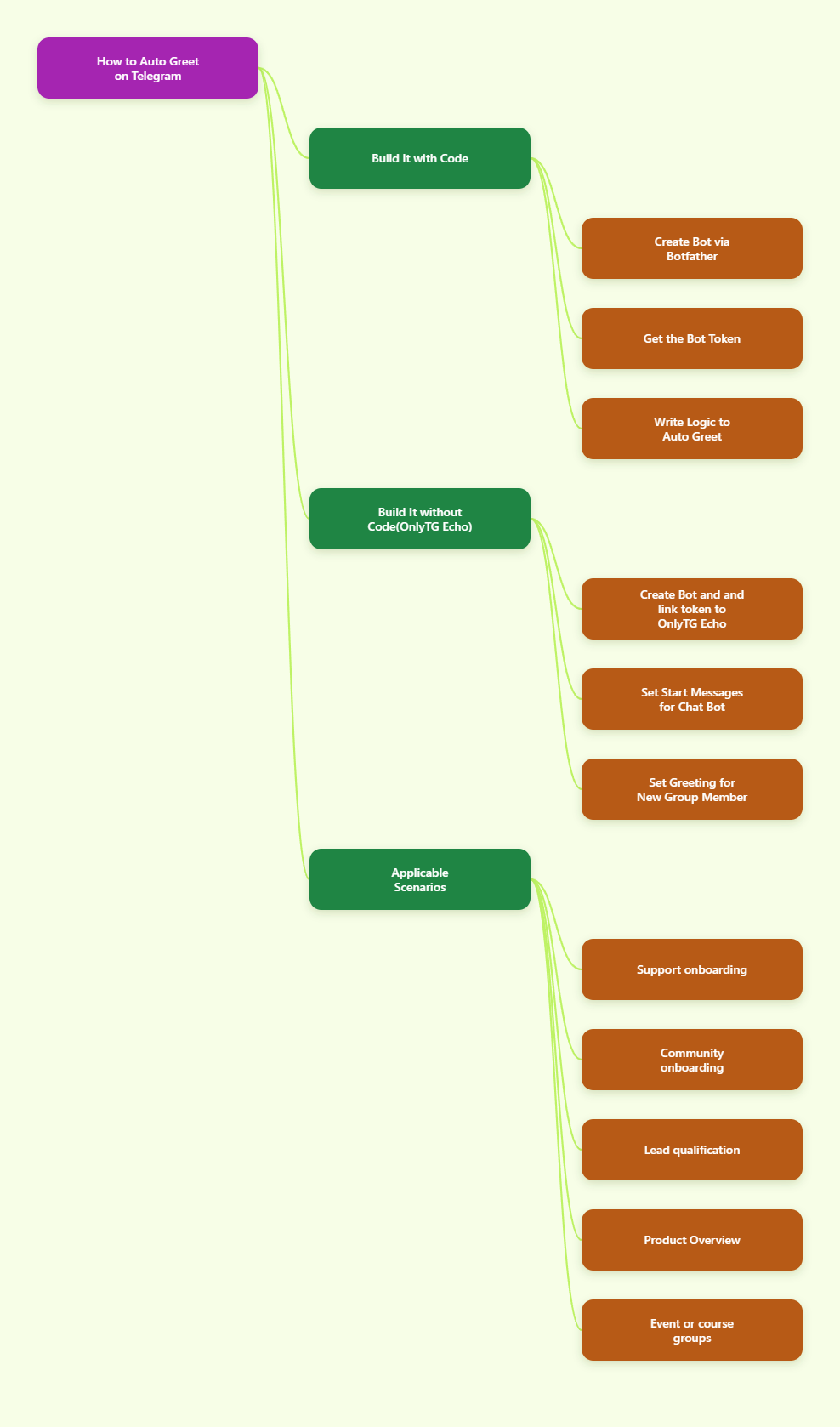
Two Ways to Automatically Greet New Customers on Telegram
There are two common ways to automate greetings in Telegram:
- 1) Build it with code. This is the most flexible route. You create a Telegram bot with @BotFather, get the bot token, and then write logic that detects a new user or handles the
/startcommand. Telegram’s bot tutorial confirms that each bot gets a unique token from BotFather, and the Bot API supports developer workflows for creating chat and group experiences. - 2) Use a no-code Telegram bot platform. This is the quicker route for non-developers. You still create a bot in @BotFather, then connect that token to a bot builder or automation tool. From there you configure welcome text, buttons, and group greeting rules through a visual interface instead of code.
Step by Step Guide
No-code Telegram bot builders usually follow the same core steps:
- Create the bot in @BotFather.
- Copy the token.
- Connect the token to the bot builder.
- Configure the welcome message feature.
Telegram’s own platform supports bots in private chats, groups, and channels, and many no-code tools build on that foundation by giving you a visual editor for welcome flows. The main benefit is speed: you can create a usable greeting experience without deploying code or maintaining infrastructure.
Tool Recommendation: Build It with OnlyTG Echo
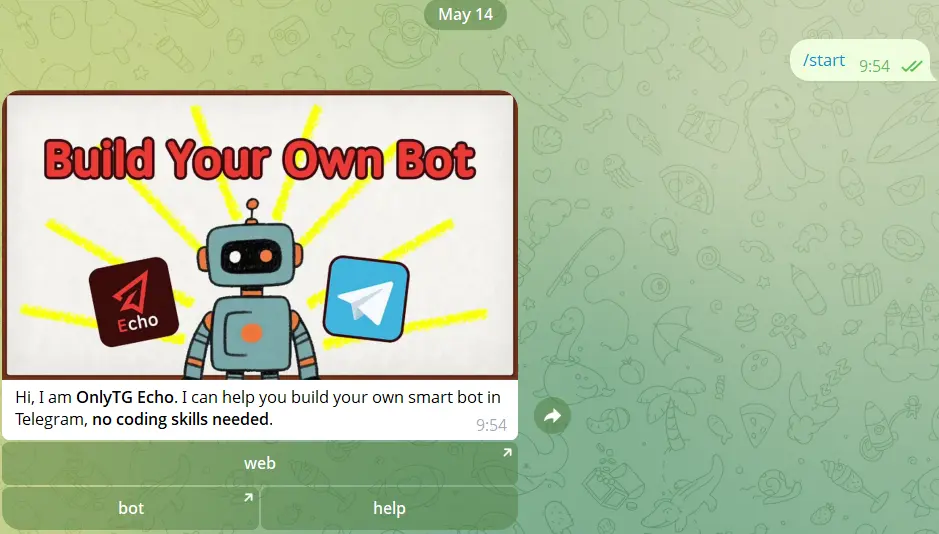
If you want a practical no-code way to create an auto-greeting Telegram bot, OnlyTG Echo(@EchoOnBot) is a strong option. It can either automatically send a welcome message when a user enables the bot, or have the bot send a welcome message to new members who join the group.
Preparation:
- Create the bot in @BotFather.
- Copy the token.
- Send the token to the @Echoonbot.
Set up a welcome message for enabled bots
- Send /start command to your bot.
- Click Chat Setting in the menu.
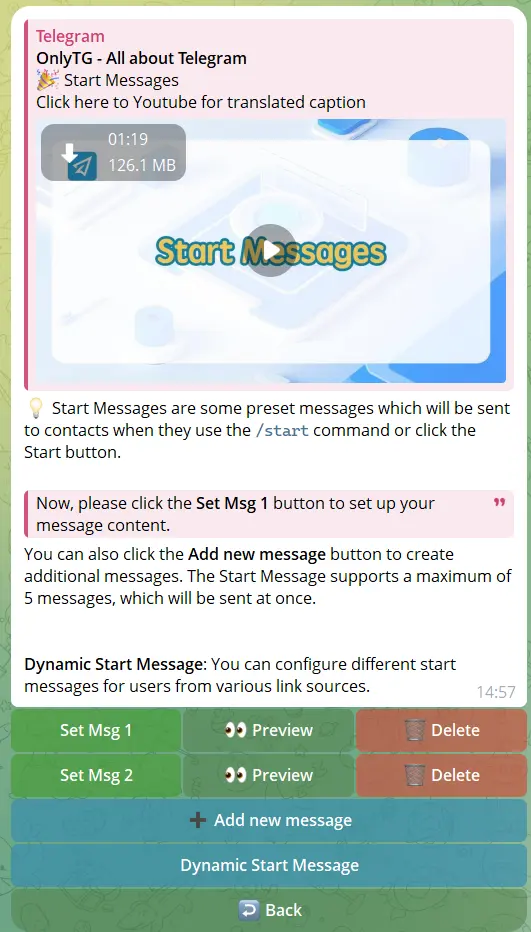
- Click Start Messages and click Add new message.
- You can configure text/media/button for the messages.
- You can configure multiple start messages at the same time, they will be sent in sequence.
In addition: You can also select Dynamic Start Message. This feature can configure different start messages for users from various link sources.
Set up greeting message for New Member Joining Group
- Send /start command to your bot.
- Click Group Setting in the menu.
- Follow the prompts to add your group to the management list.
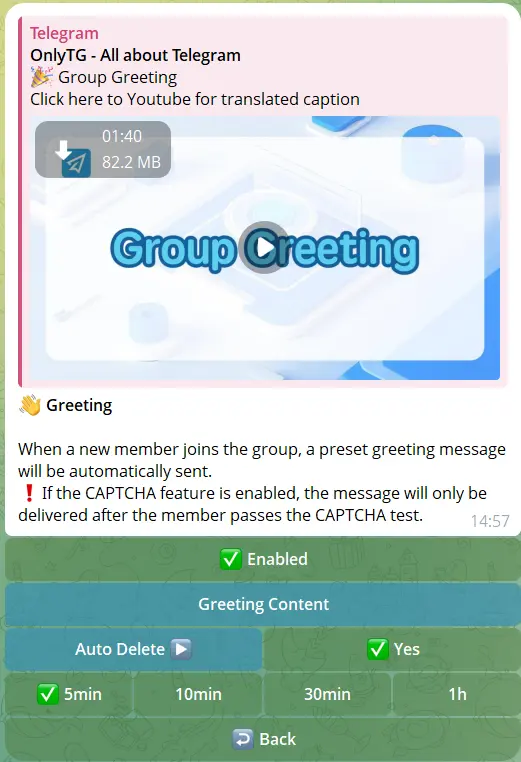
- Select your group and click Greeting.
- Enable this feature and configure the message content, including text, media, and buttons.
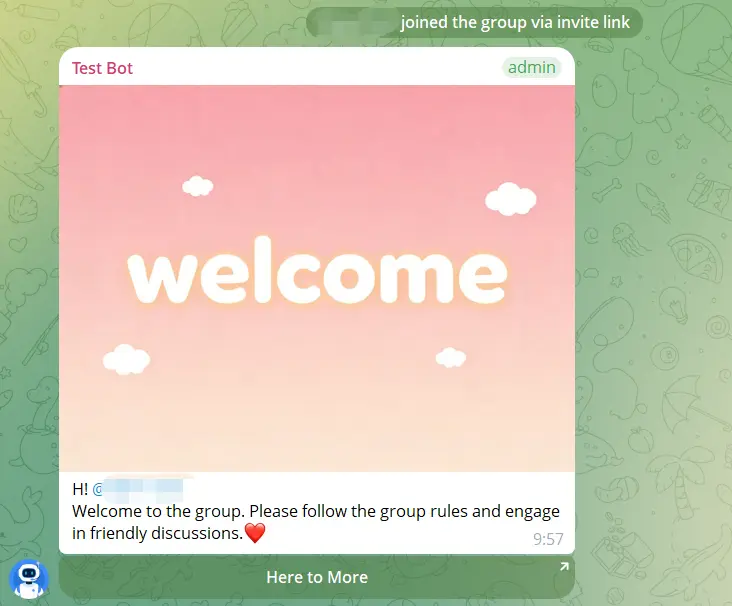
The highlight of OnlyTG Echo is that it requires zero coding with user‑friendly operations. It also delivers comprehensive features. Beyond auto‑welcome messages, it includes practical tools such as auto‑replies, quick replies and user data analytics, making it perfectly adaptable to various scenarios.
What should a welcome message include?
A strong greeting usually includes three pieces: who you are, what the bot can do, and what the customer should do next. For example:
- Welcome: “Thanks for joining.”
- Value: “I can help with account setup and support.”
- Action: “Tap the button below to see the FAQ.”
Tips for Better Results
- Keep the first message short. Long introductions are easy to skip.
- Use one primary CTA. Too many buttons can confuse new customers.
- Match the greeting to the context. Private support chats and public groups need different tones.
Real-World Use Cases
Automatic greetings are useful in more than one Telegram workflow. Here are some common customer-facing scenarios:
- Support onboarding: A new customer opens your bot and gets a welcome message with links to FAQ, live support hours, or troubleshooting steps.
- Community onboarding: A new member joins a brand group and receives a greeting that explains the rules, discussion topics, and next steps.
- Lead qualification: The bot welcomes the user and points them to a menu that asks what they need, such as pricing, demo, or sales contact.
- Product Overview: The greeting introduces core features, helping users move from curiosity to activation.
- Event or course groups: The bot greets attendees, shares the schedule, and links to materials or announcements.
FAQ
1. Do I need coding skills to set up a welcome bot?
No. You can use a no-code Telegram bot tool such as OnlyTG Echo to configure greeting messages, buttons, and onboarding flows without writing code.
2. What do I need before I can build a Telegram greeting bot?
You need to create a bot in @BotFather and get the token. That token is then connected to your bot software or no-code platform.
3. Can I send buttons or links in the welcome message?
Yes. Telegram bot workflows support interactive bot interfaces, OnlyTG Echo support for messages with text, media, and buttons.
4. What is the best welcome message style for customers?
Keep it short, friendly, and action-based. Mention what the bot does and give one clear next step, such as opening help, reading rules, or choosing a service category.
Conclusion
Automatically greeting new customers on Telegram is one of the easiest ways to improve onboarding and make your brand feel responsive. If you want full control, build it with code. If you want speed and simplicity, use a no-code workflow.
For most teams, OnlyTG Echo is a practical way to launch a polished Telegram greeting bot quickly.